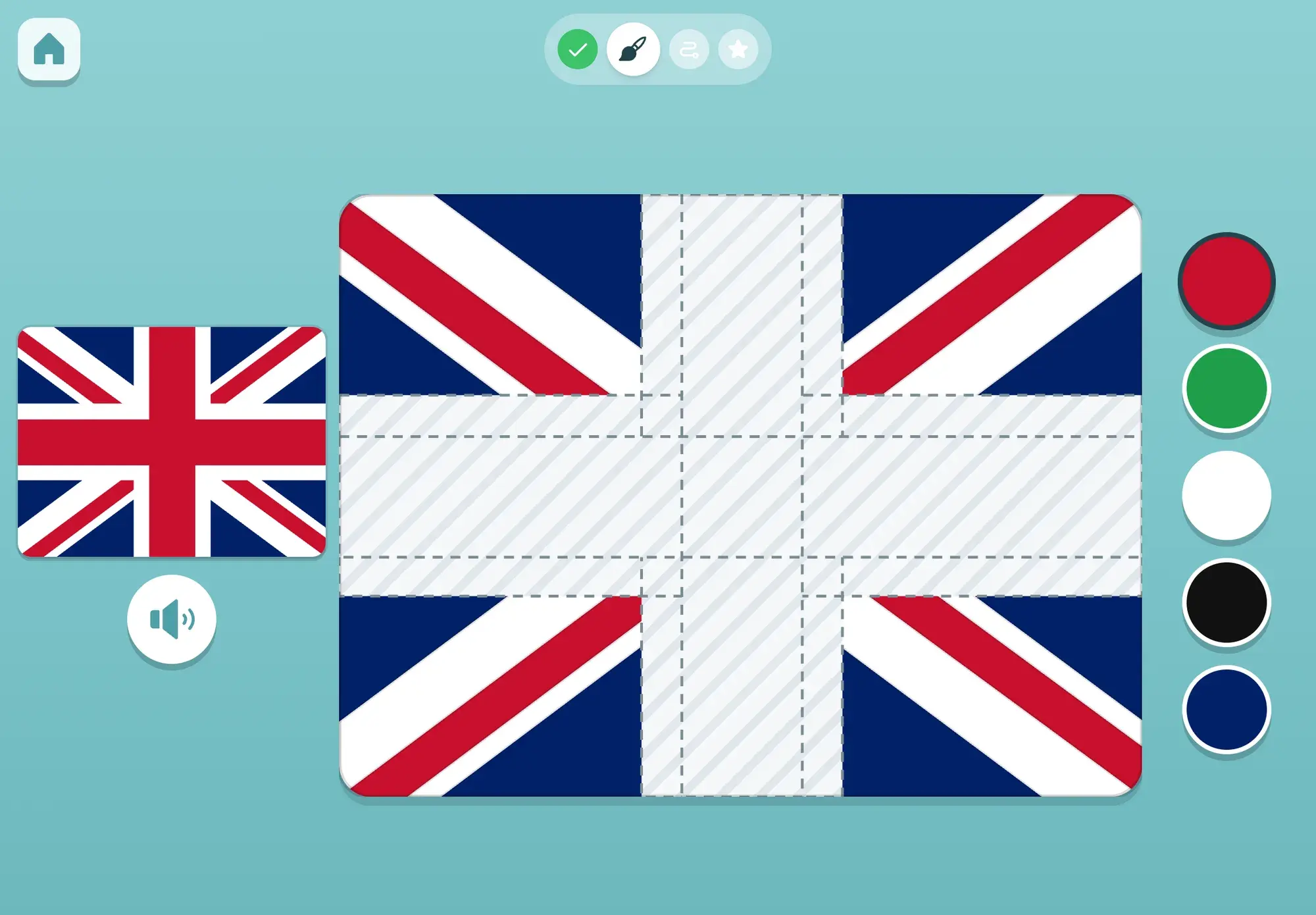
Meet a country, paint its flag, drive there, and earn a passport stamp
Ages 3–6GeographyCoding
One iPad app, 22 games, and not a word to read. Your child walks a little town where each building is a game: a harbor with a crane for numbers, a school with letter blocks for phonics, a robot workshop for coding, a lab with a giant microscope for science. Pick a skill or an age below, or browse them all.
Flags, countries, hello words, capitals and the world map.
Meet a country, paint its flag, drive there, and earn a passport stamp
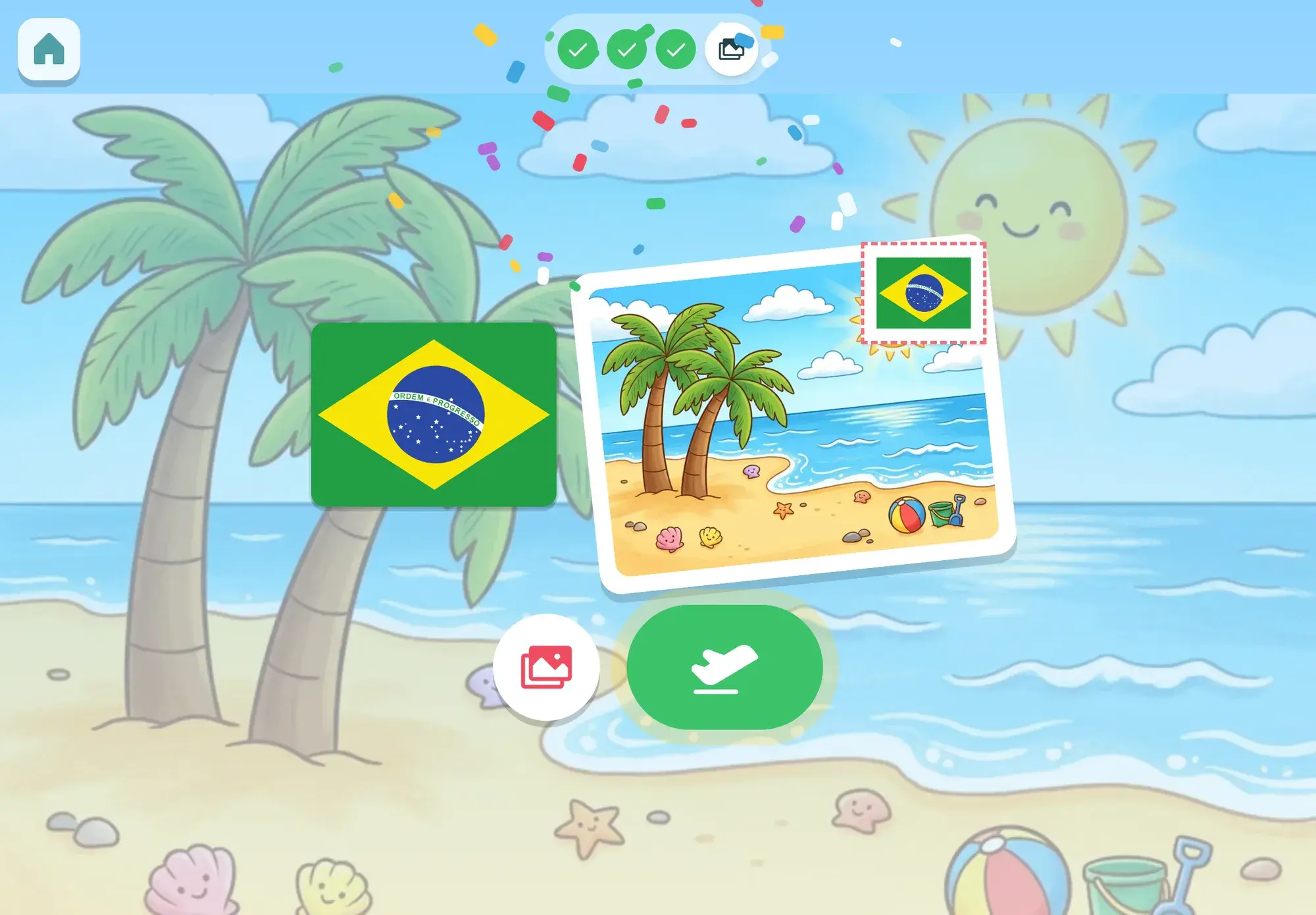
Ticket, suitcase, flight and postcard: a trip to a country your child knows
Letter sounds in phonics order, tracing, first words and little books.
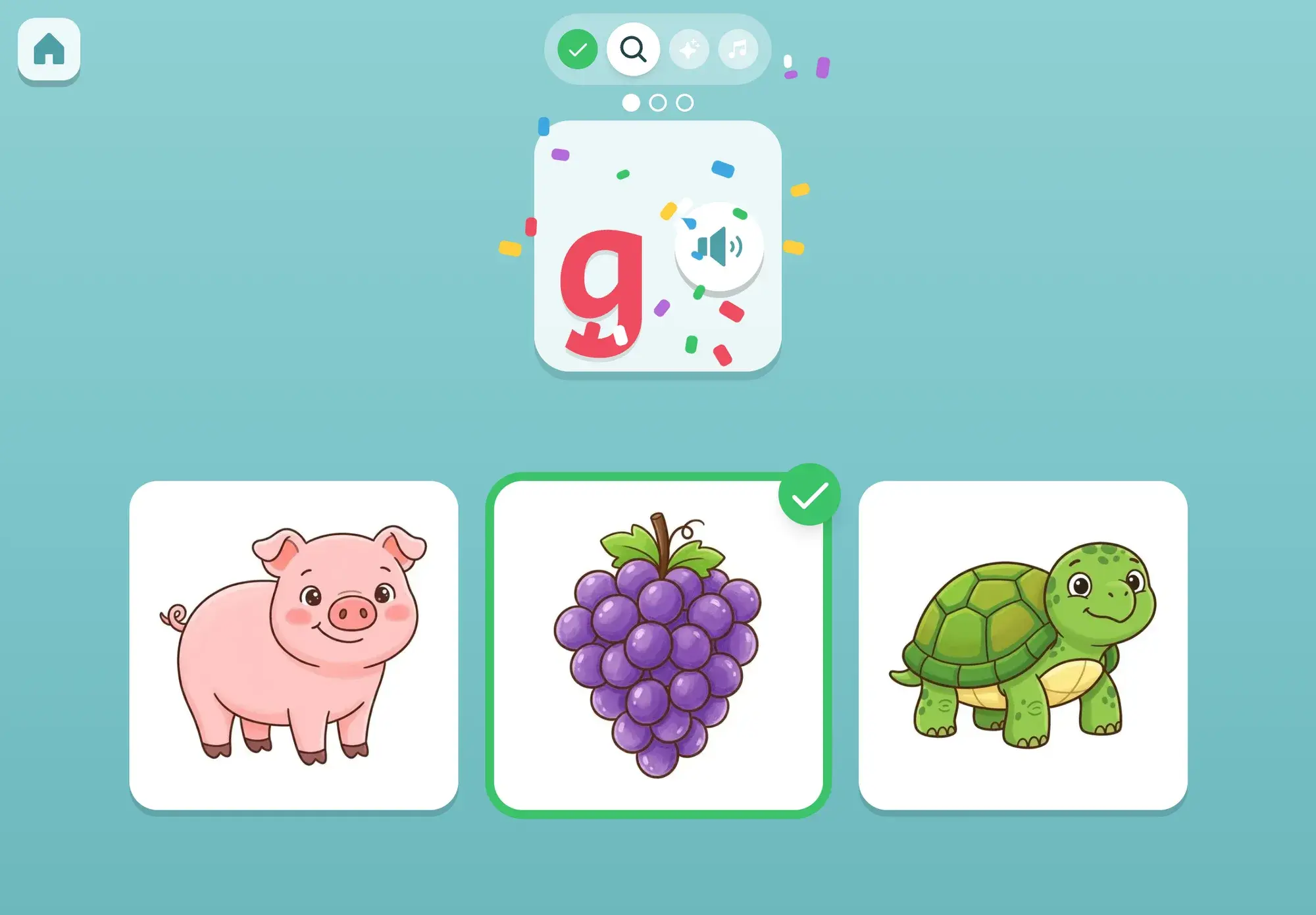
One letter sound at a time, from s, a, t, p to sh and ee, then little books
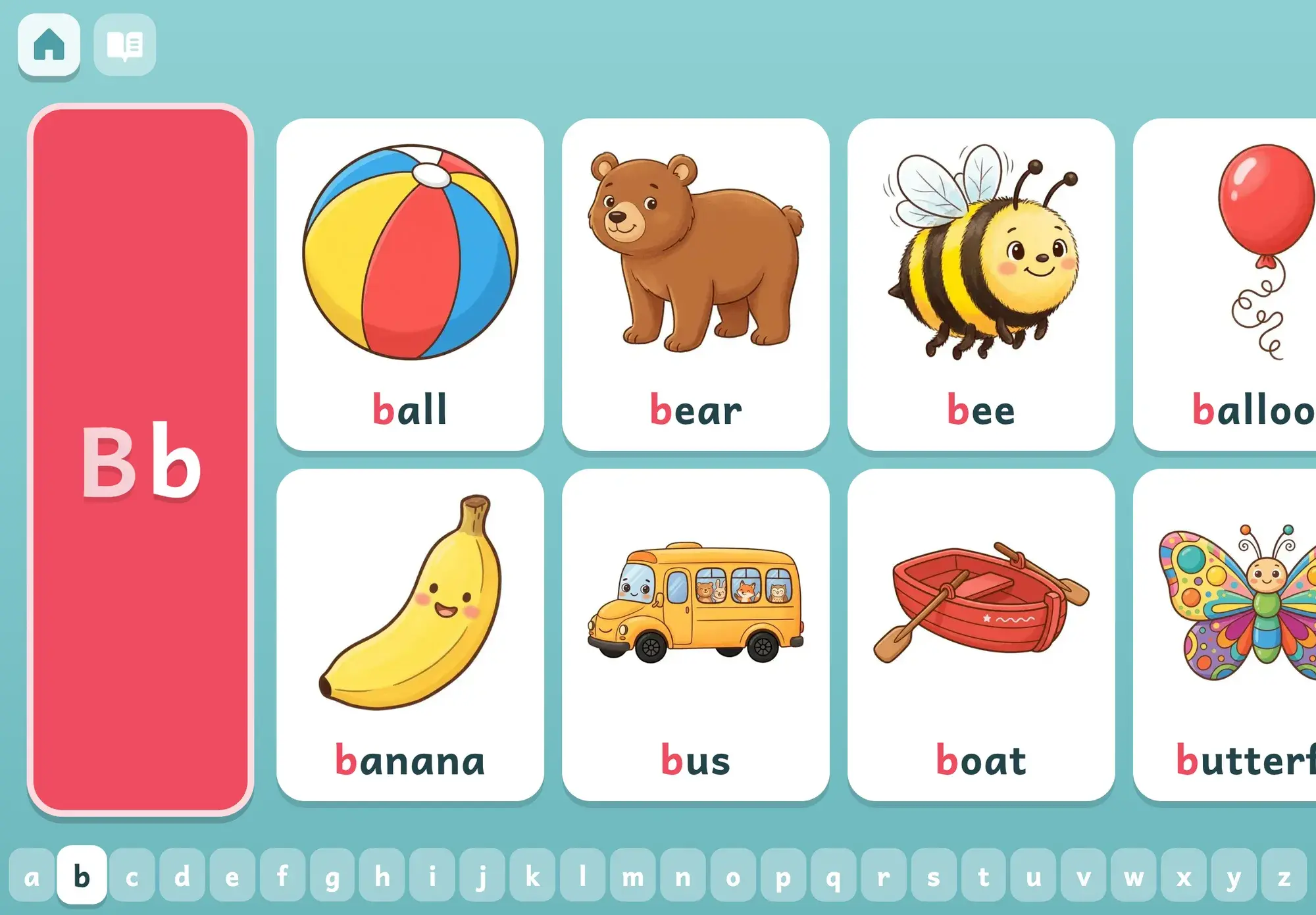
Swipe from A to Z and round again. Every picture says its name.
Counting, the number line, making numbers, patterns and early money.
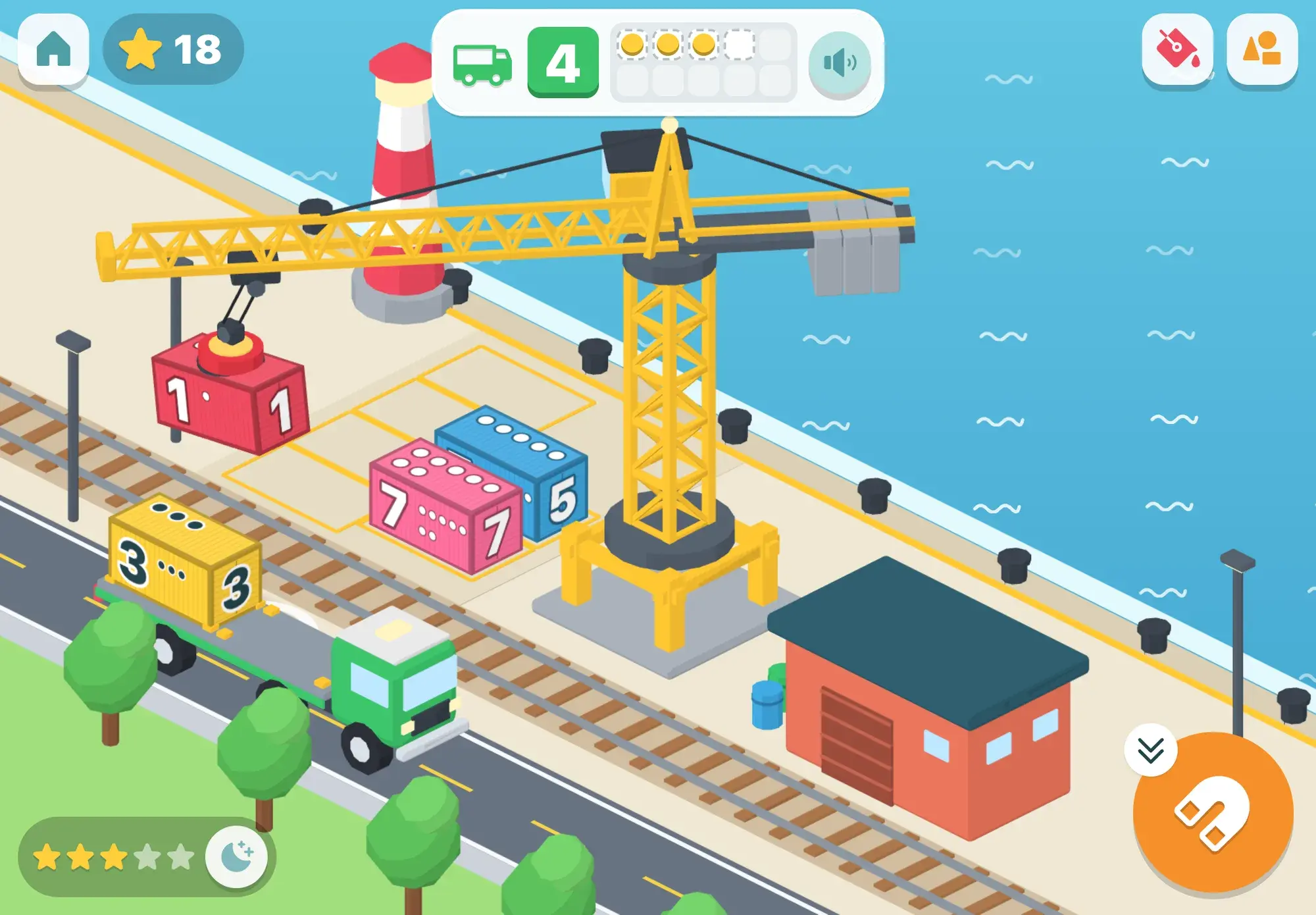
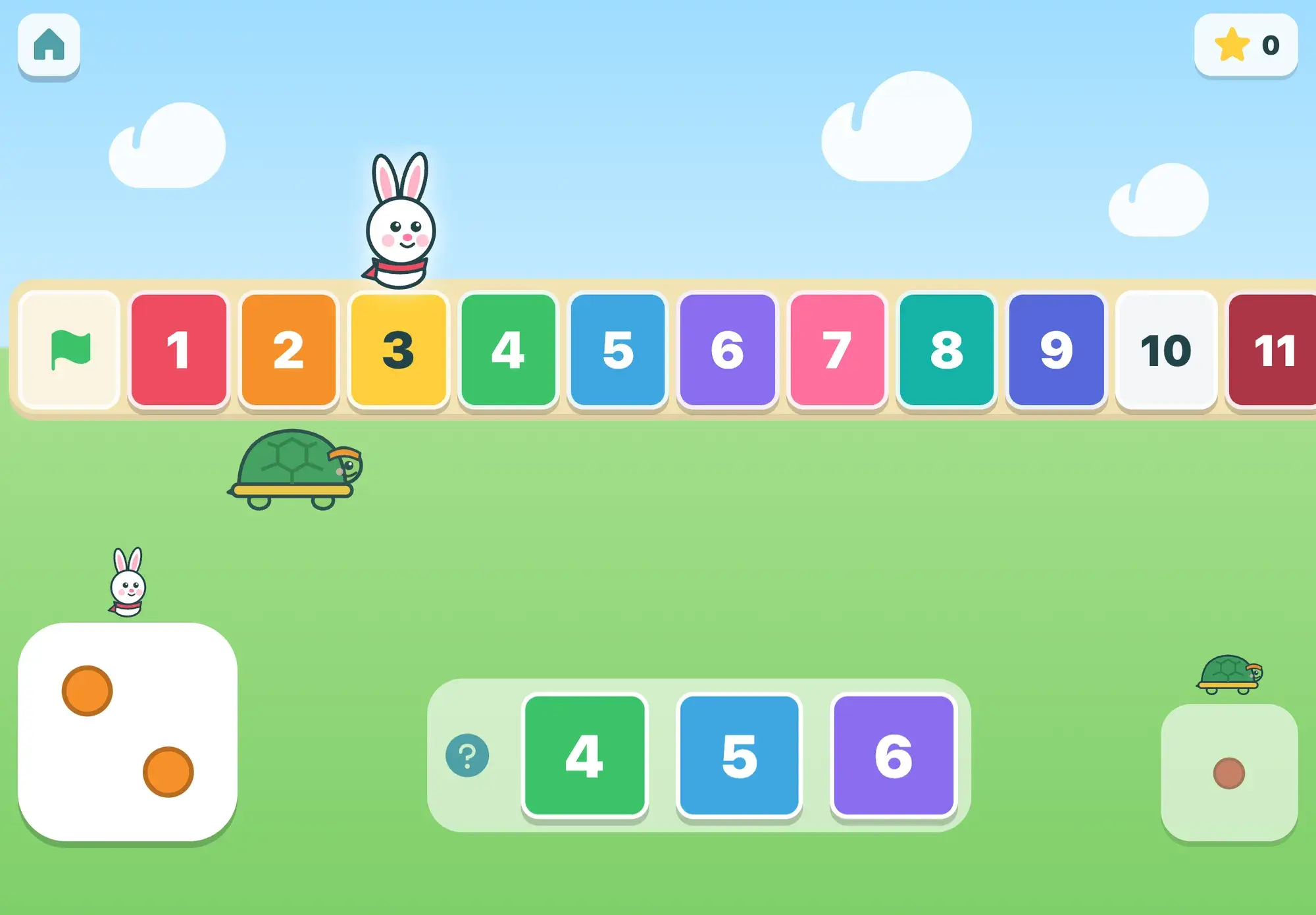
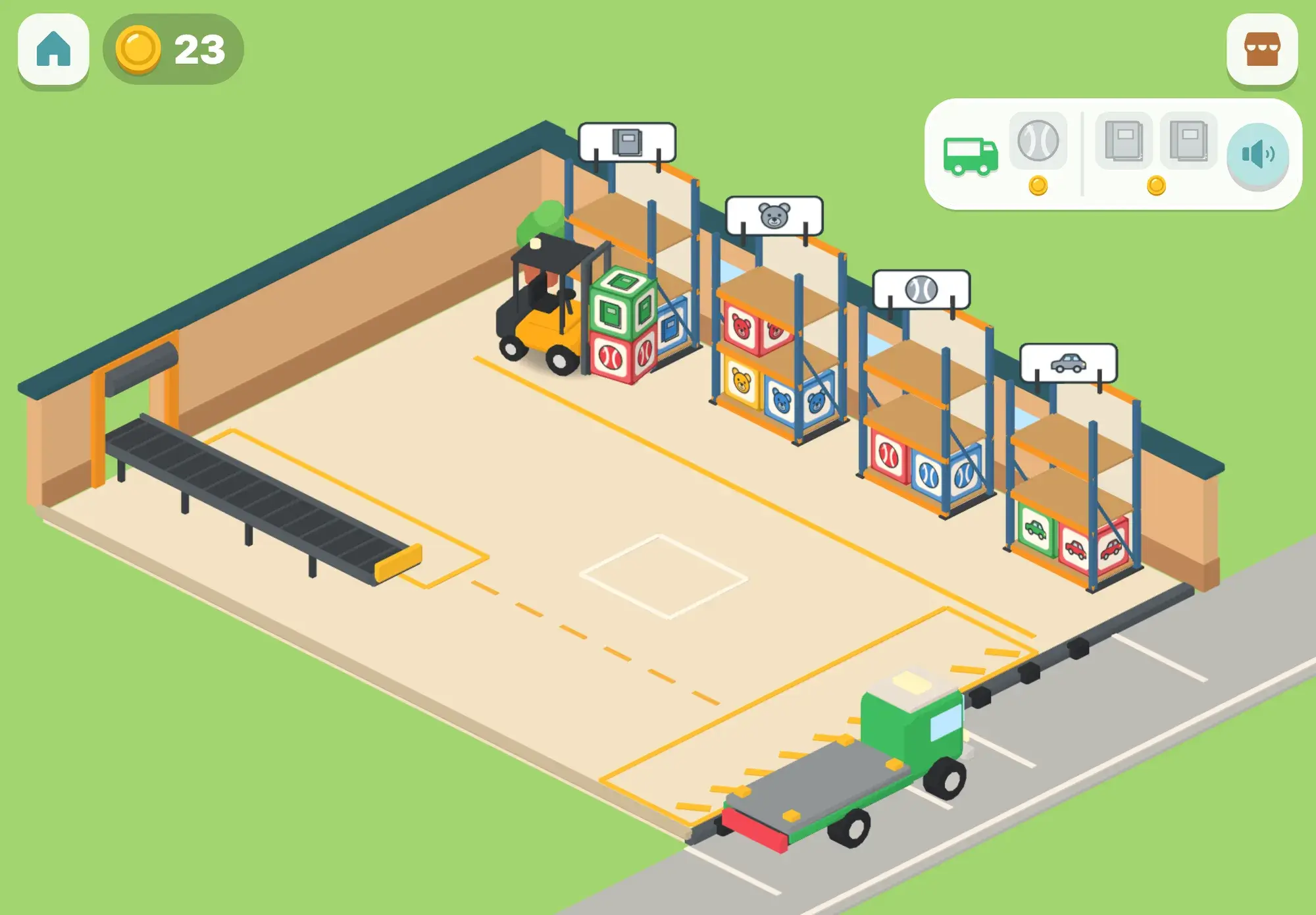
Sort the boxes, fill the trucks, and save up for a faster forklift
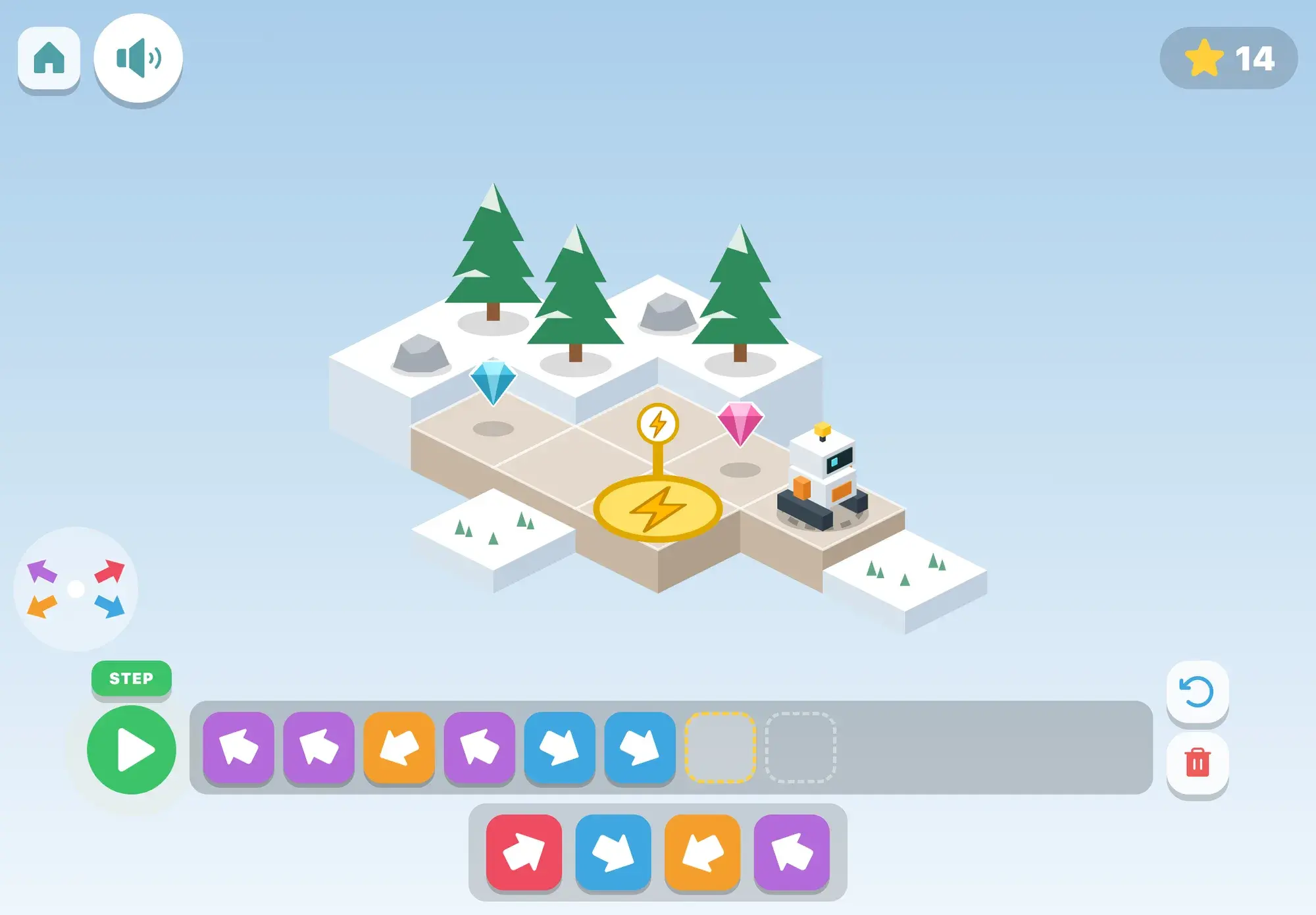
Sequences, debugging, loops and functions with arrow blocks.
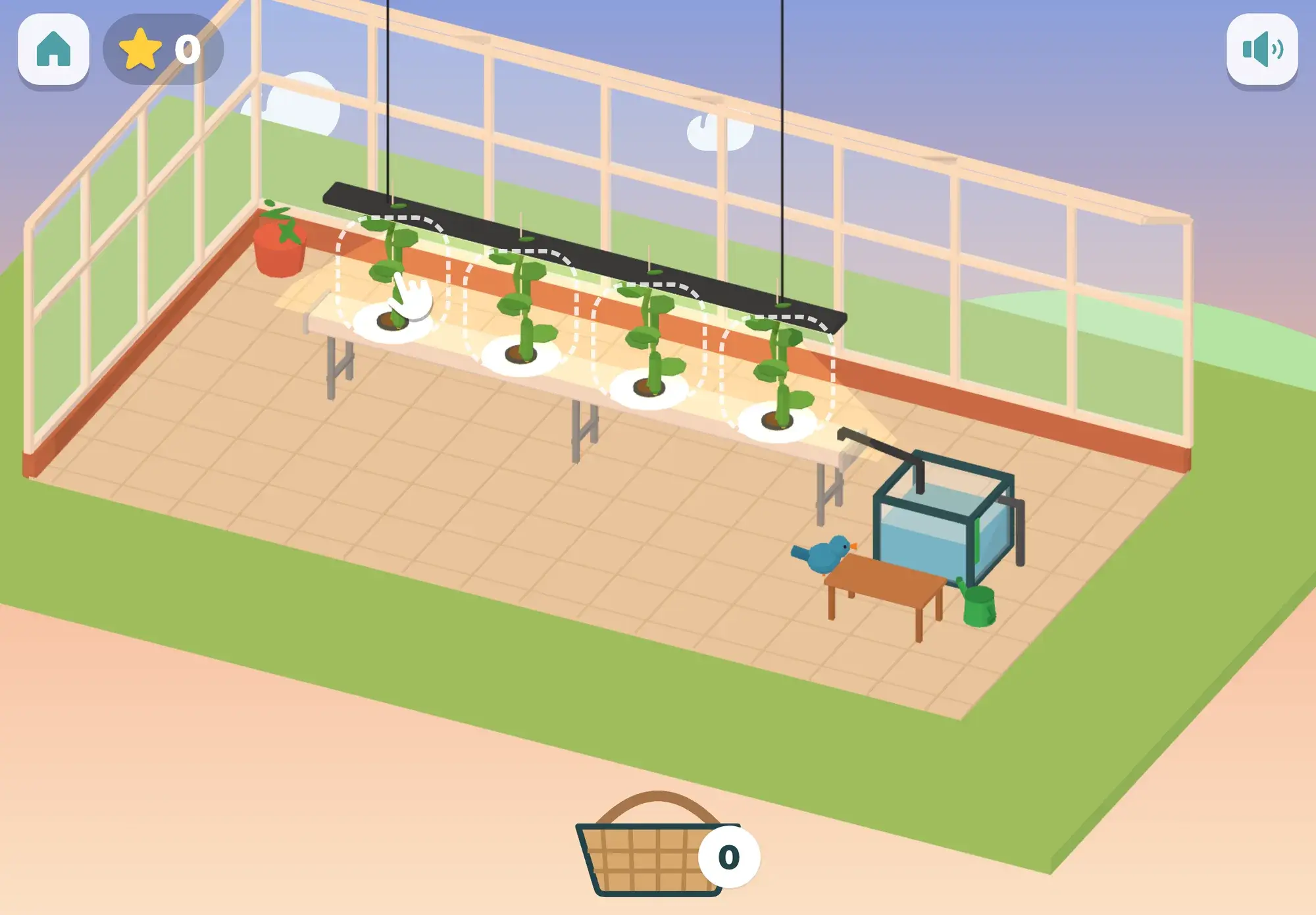
Microscopes, germs, plants, motion and the science of sleep.
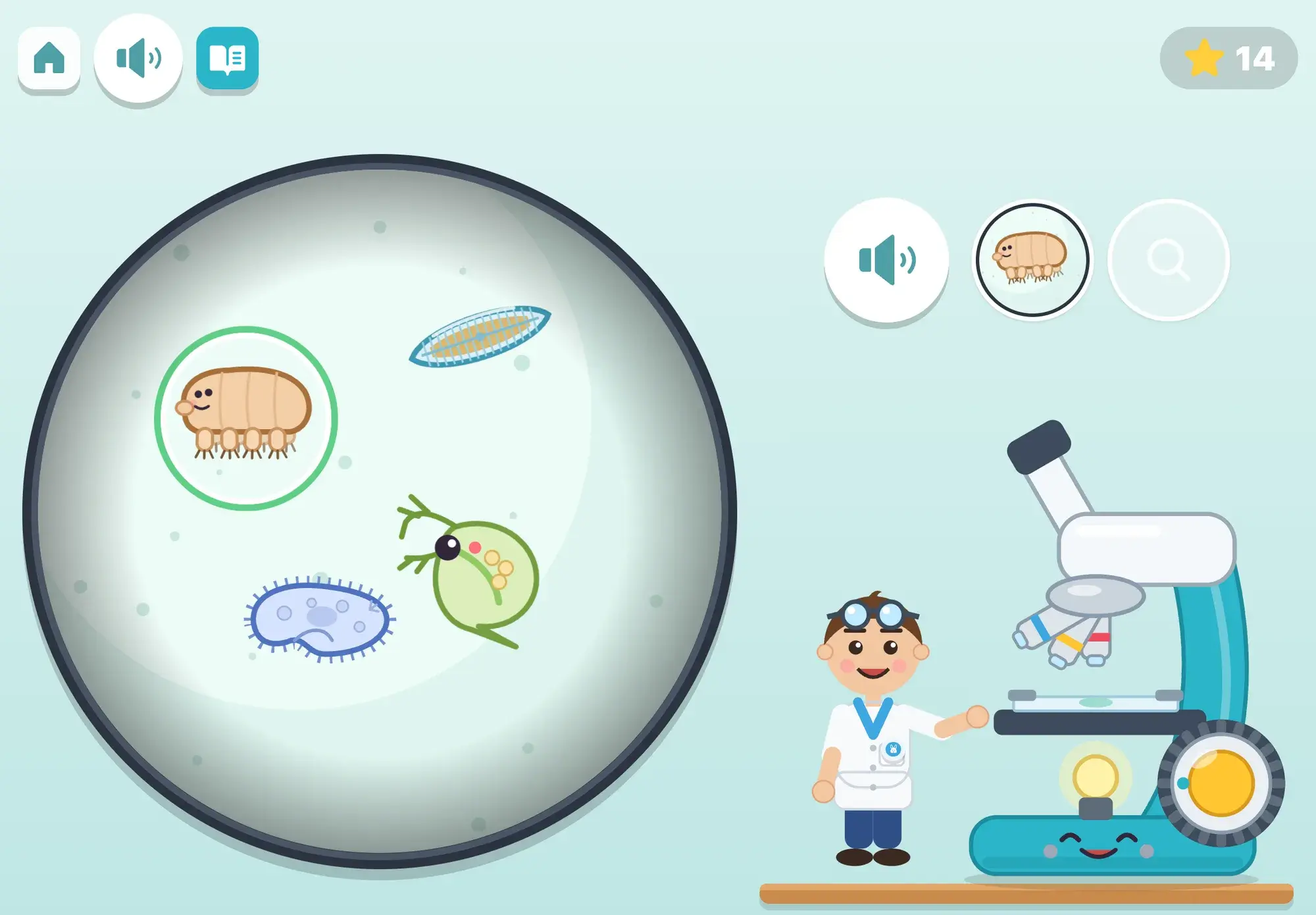
Turn the focus knob, catch a water bear, and find out what soap does.
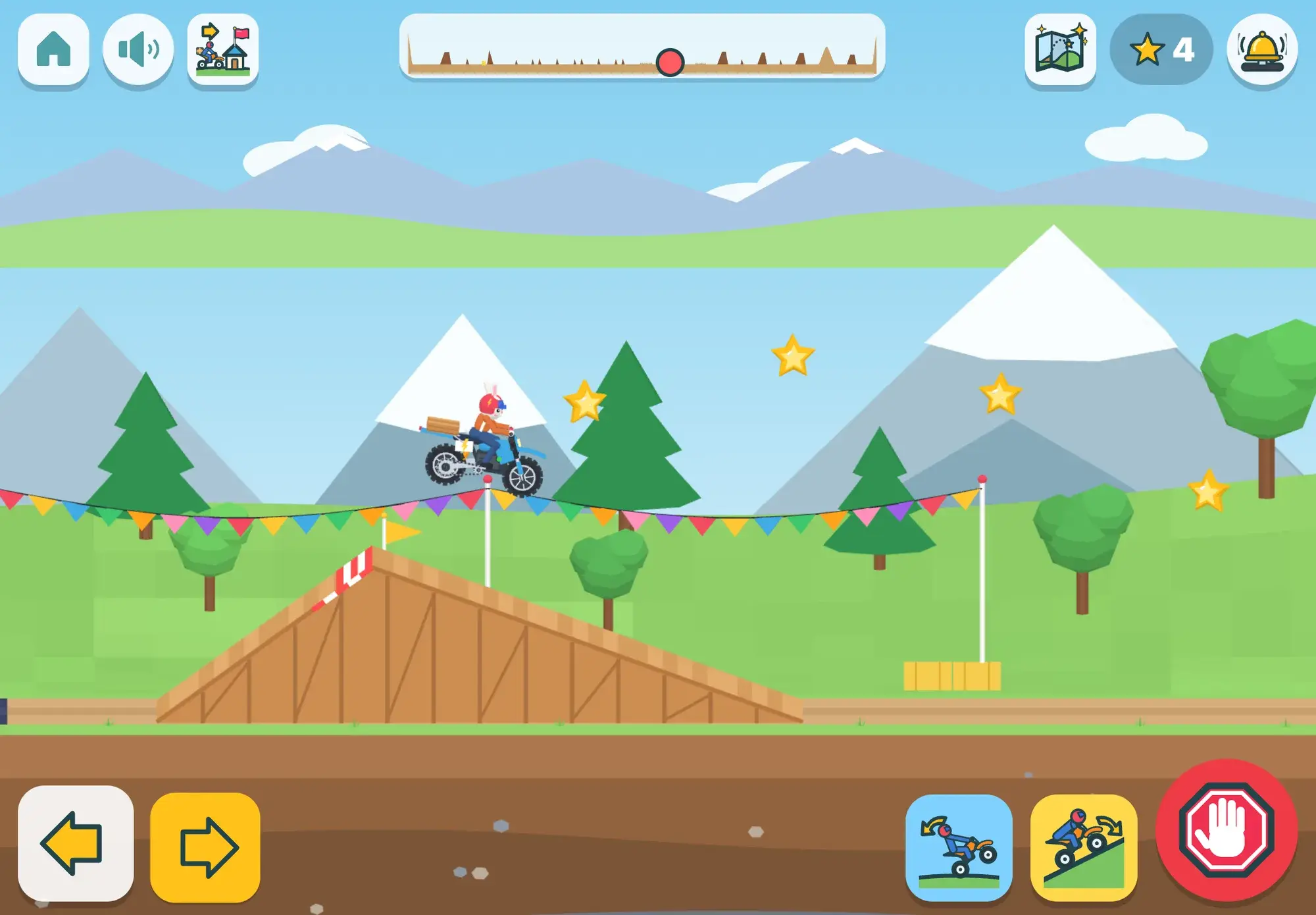
Deliveries by electric dirt bike, and the science of motion in every hill and jump.
Build it, test it, fix it: bridges, diggers and blocks.
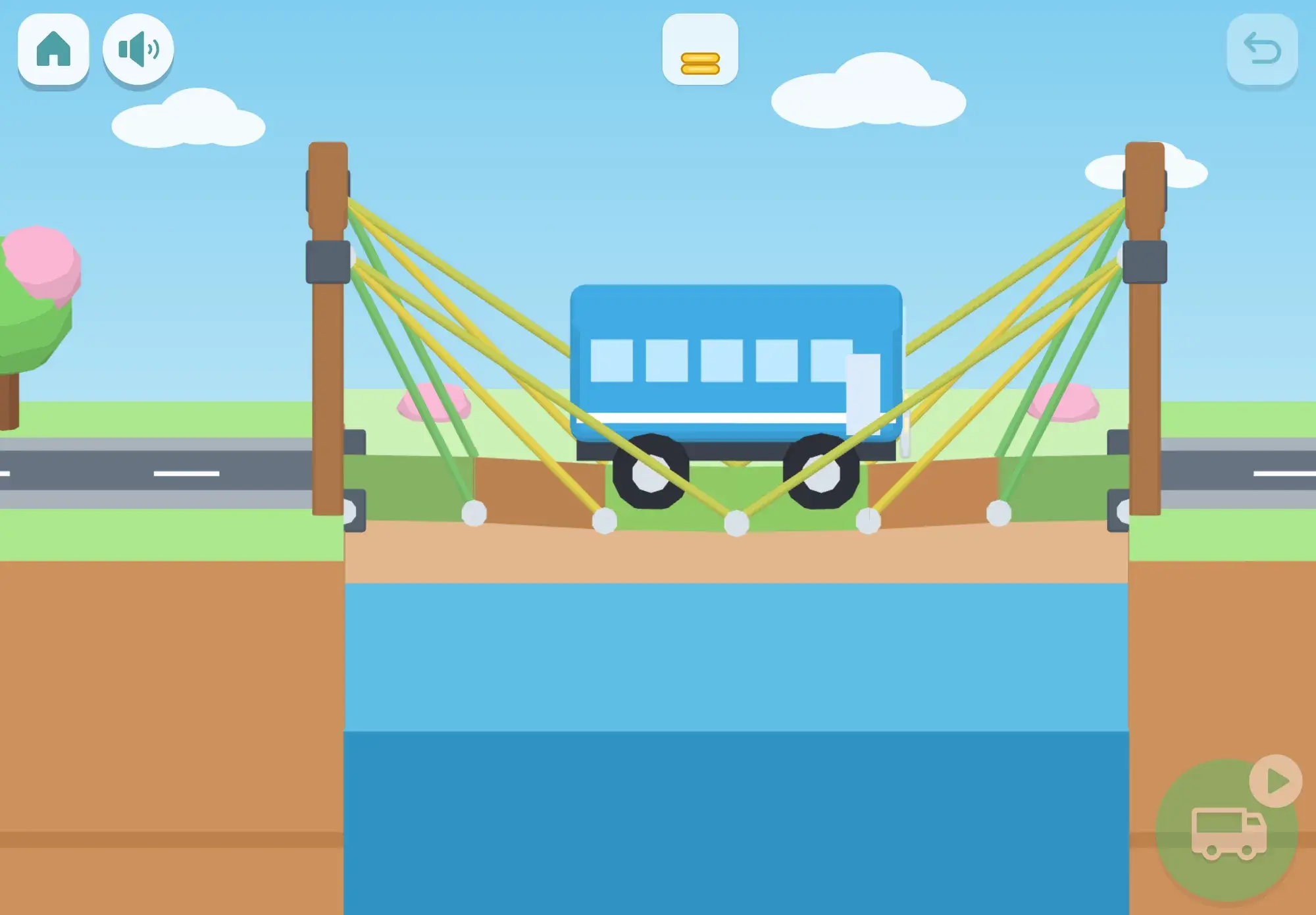
Join the dots, send the truck across, and see what happens
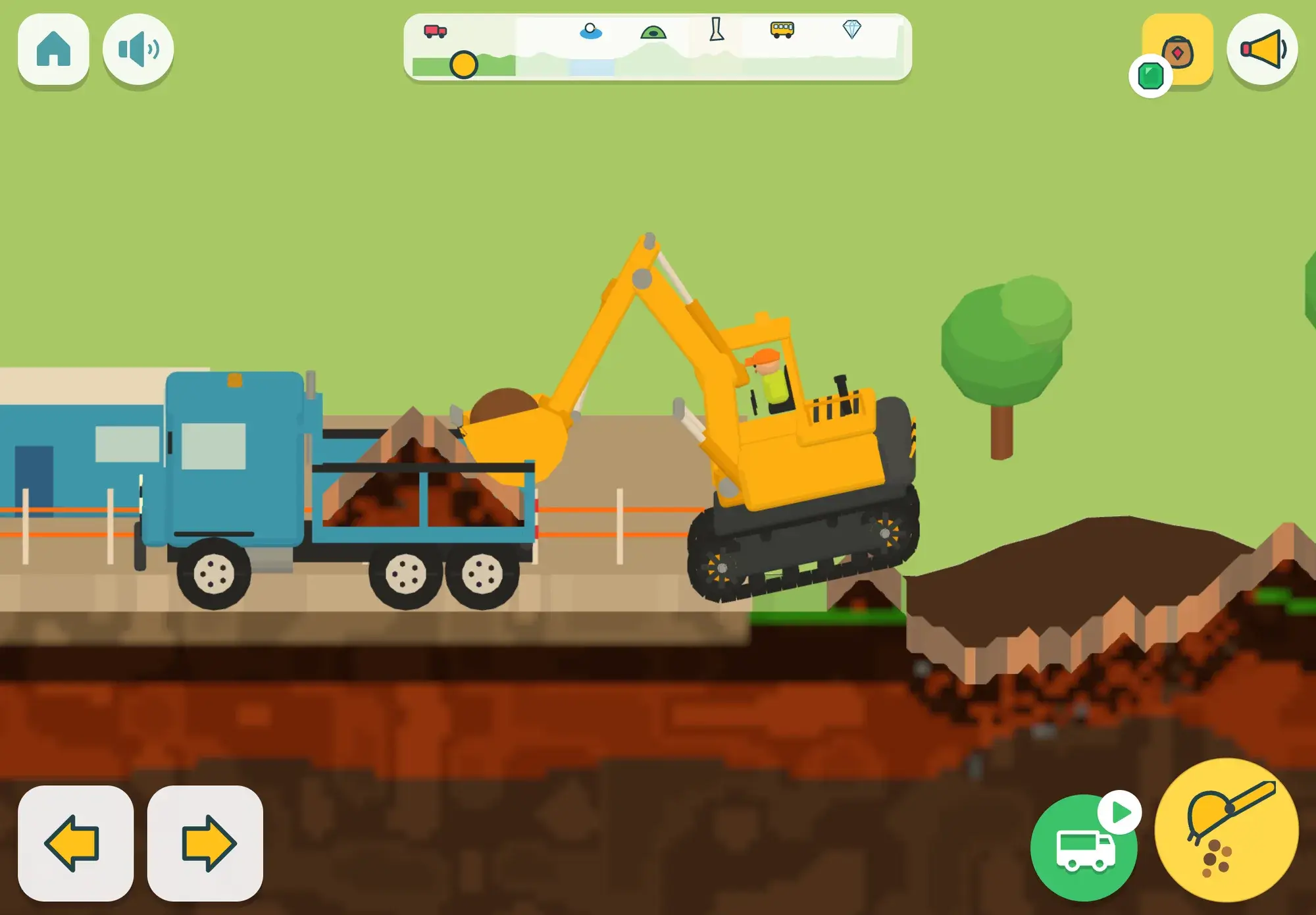
A digger to drive yourself, a world to explore, and no levels at all.
Shapes, turning, building from photos and seeing the other side.
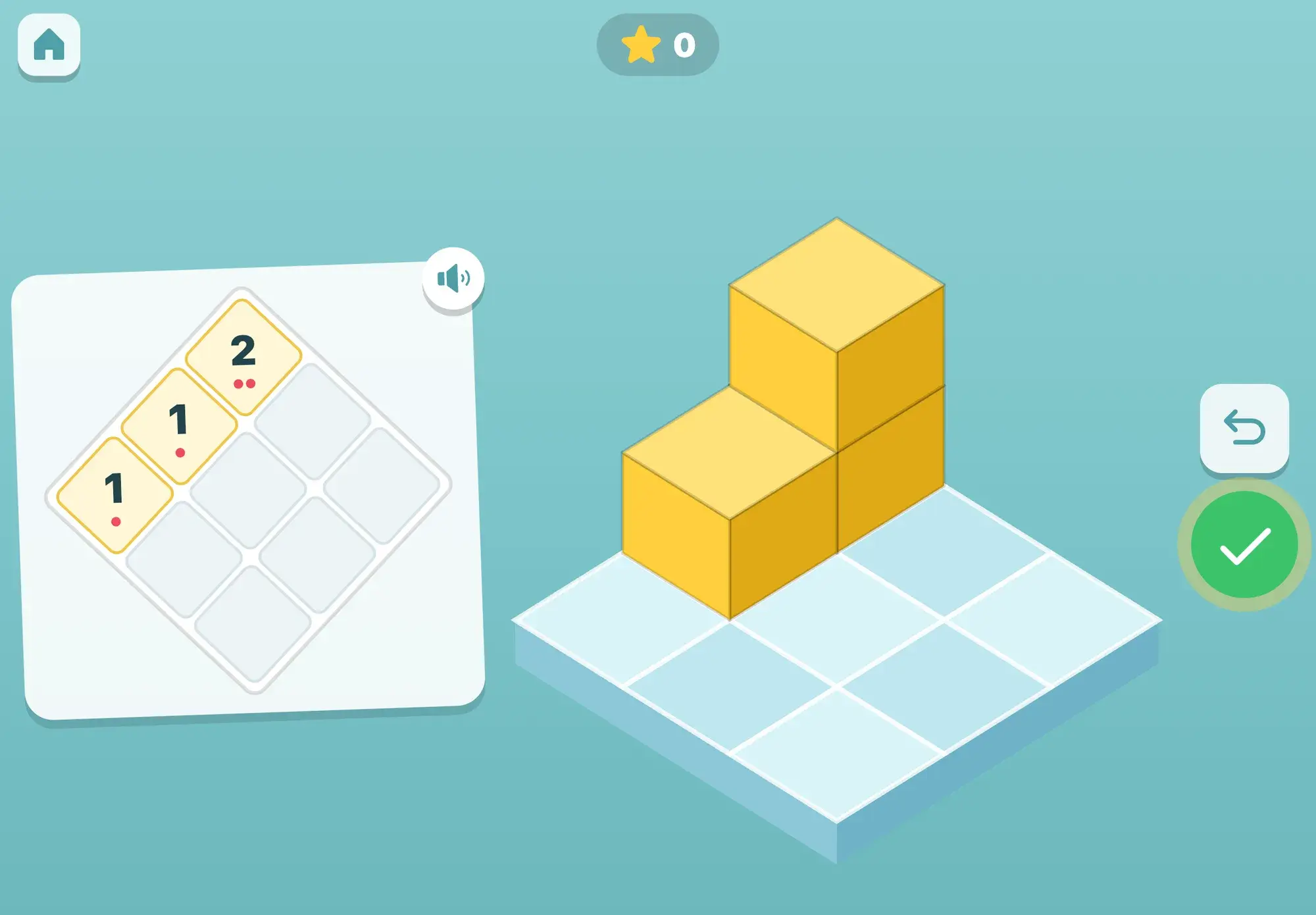
Copy the build, then build what the puppy’s camera sees from the other side
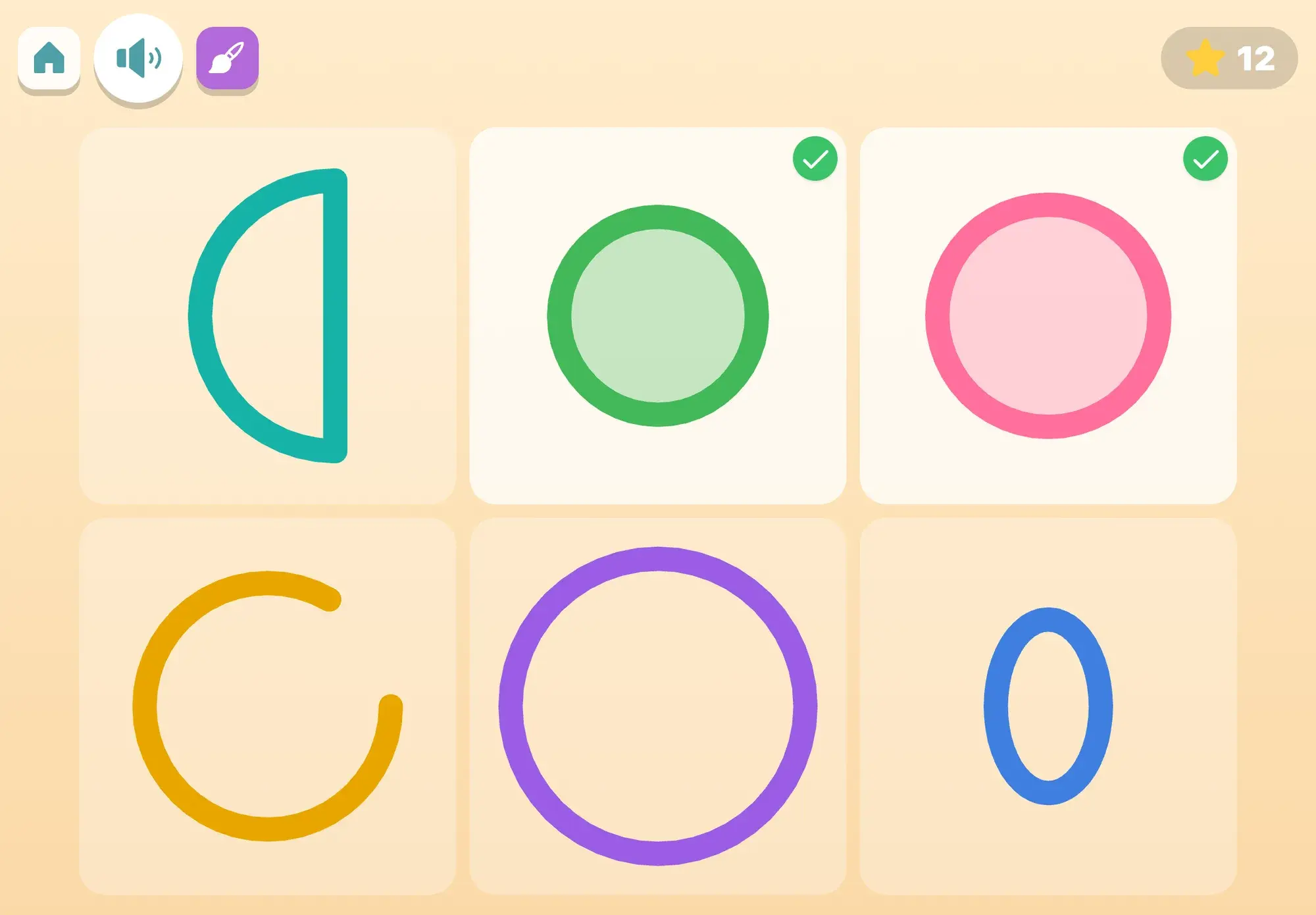
Six colored shapes, a tap to turn them, and pictures that can always be finished.
Food, handwashing, teeth, routines and sleep.
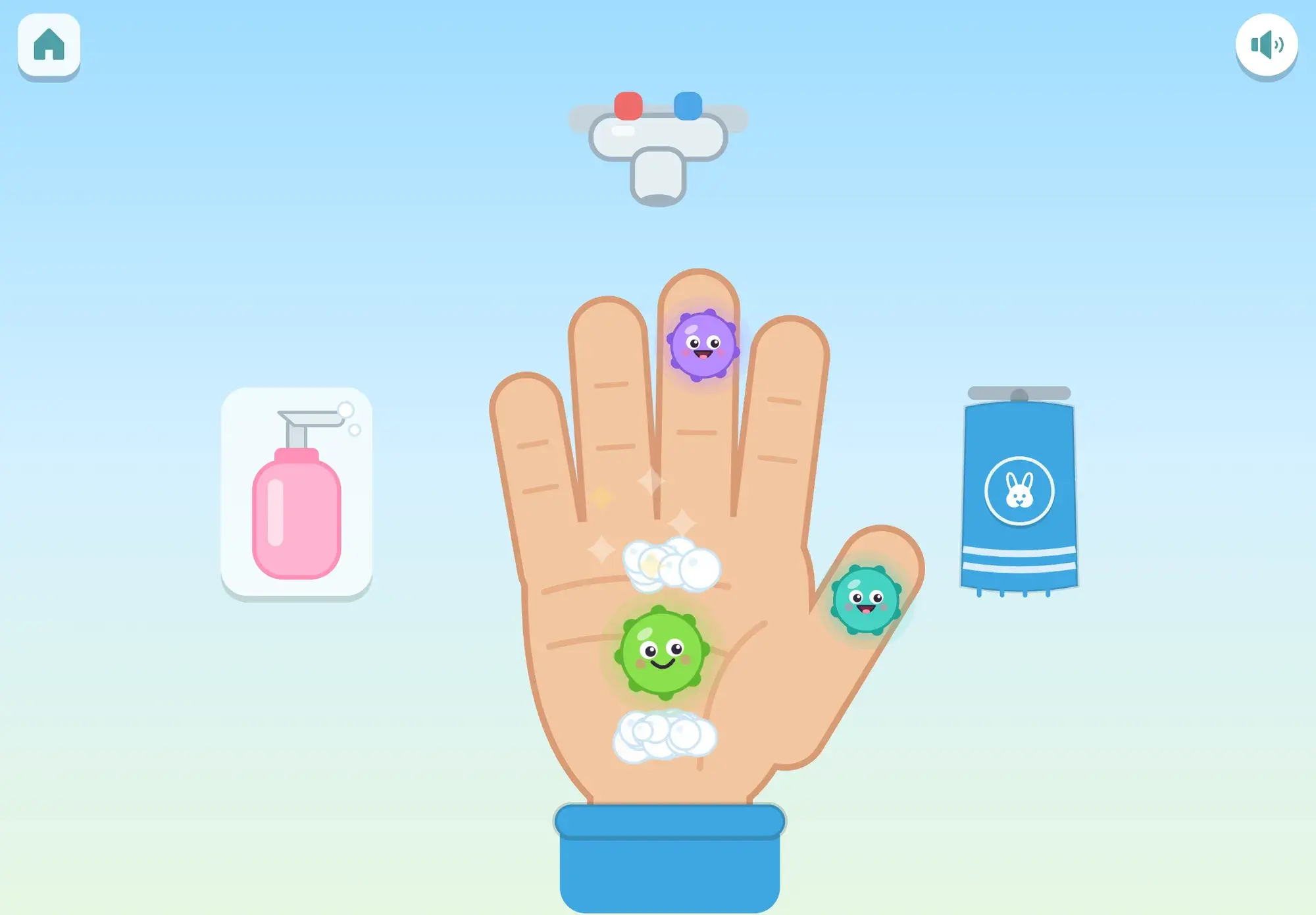
A family home with four rooms, each one full of everyday life to practice.
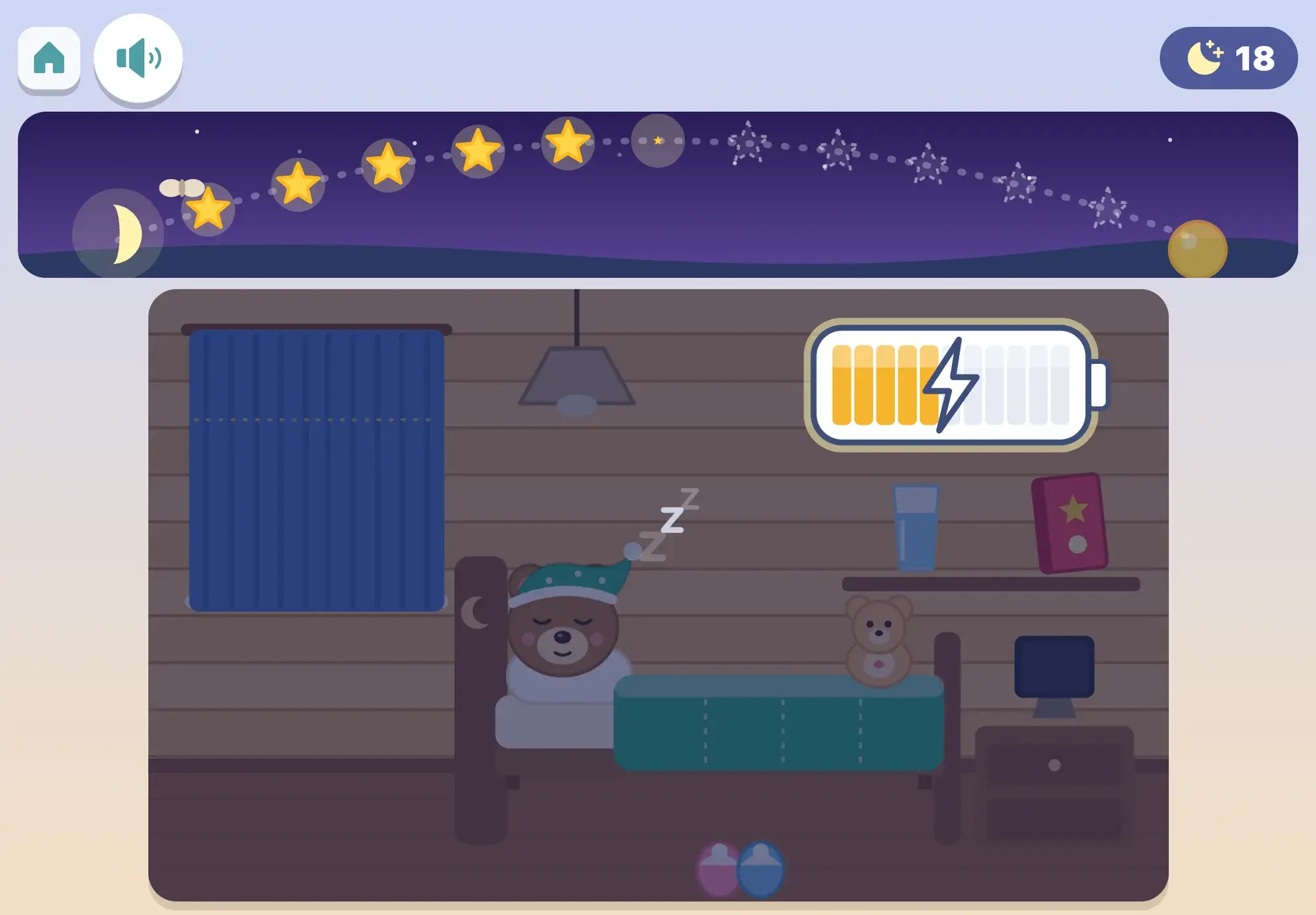
Sleep charges you up, like a battery: a gentle game about bedtime.
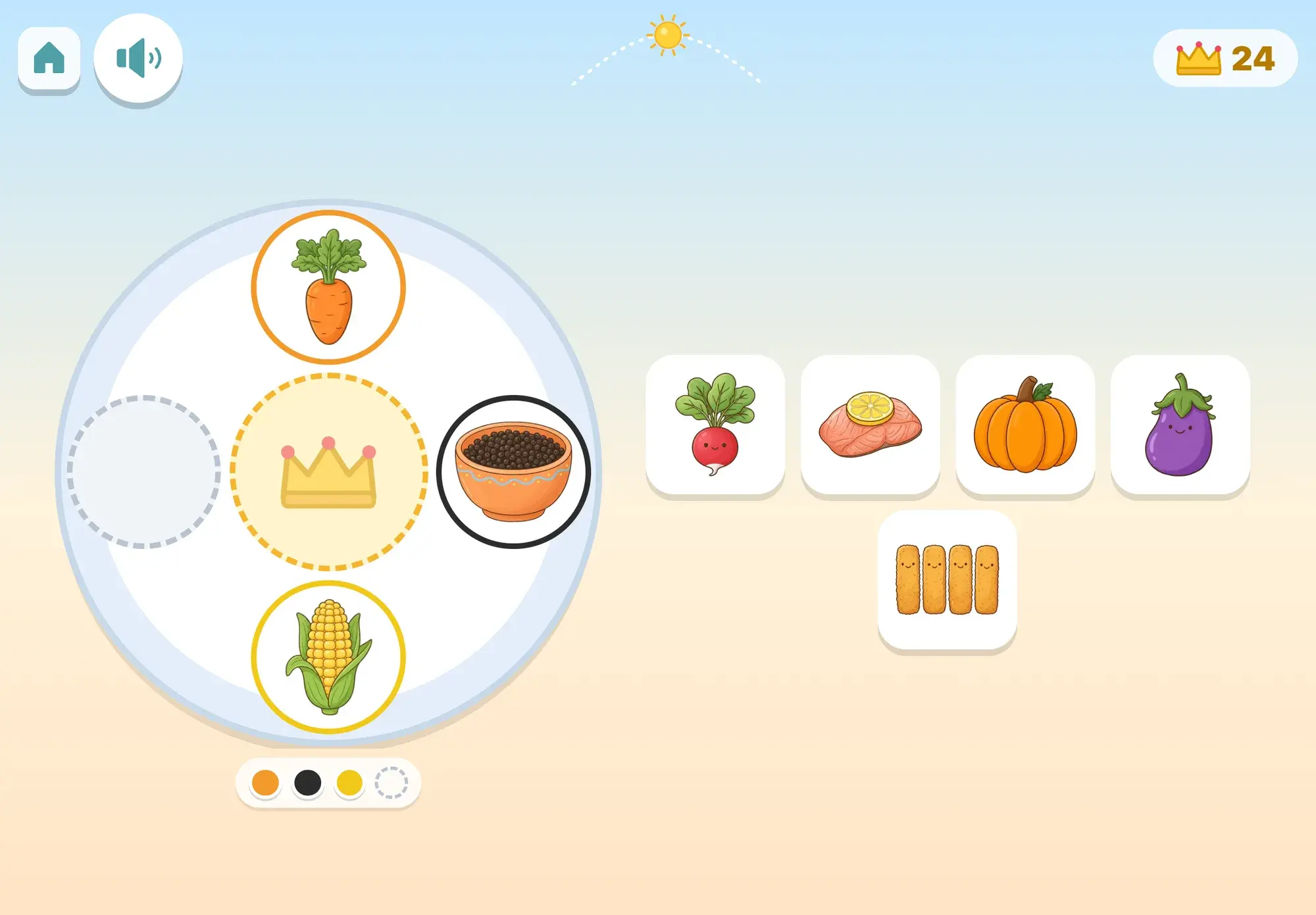
Bo has never eaten at a table before. Your child shows him how.
Planning, needs and wants, manners, money and helping others.
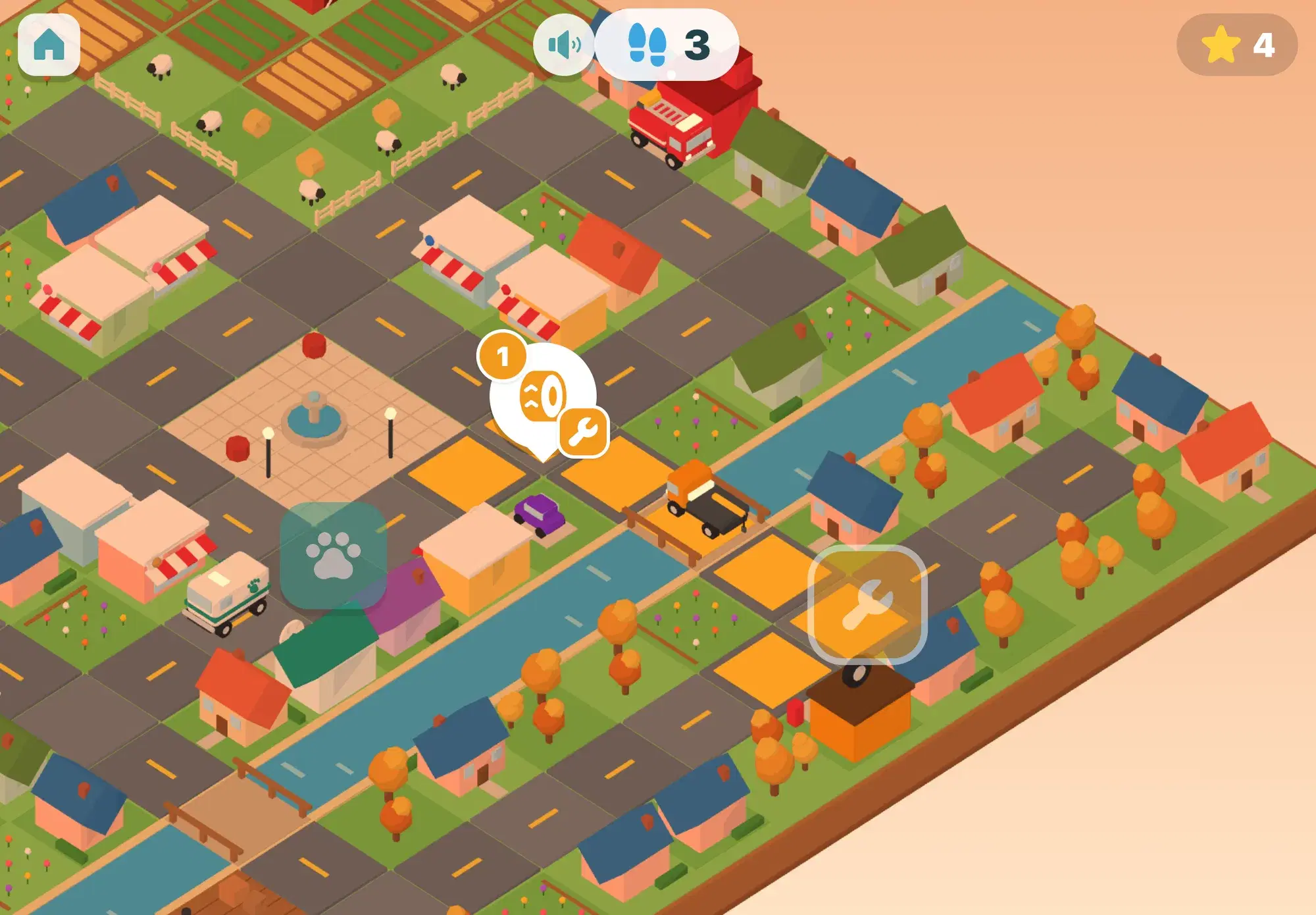
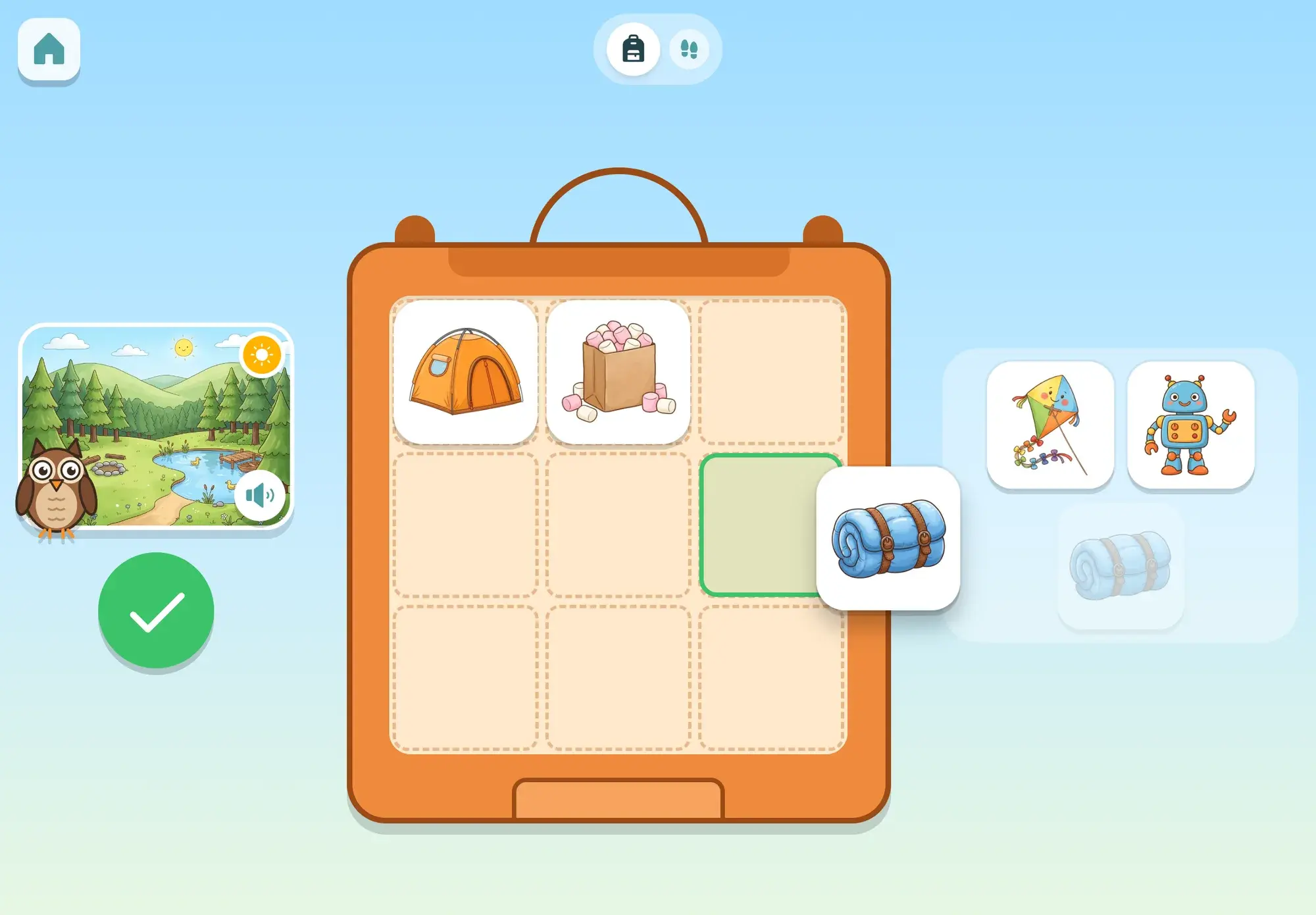
Pack what the trip needs, make room for a toy, and count coins at the shop.
First words and little sentences in another language.
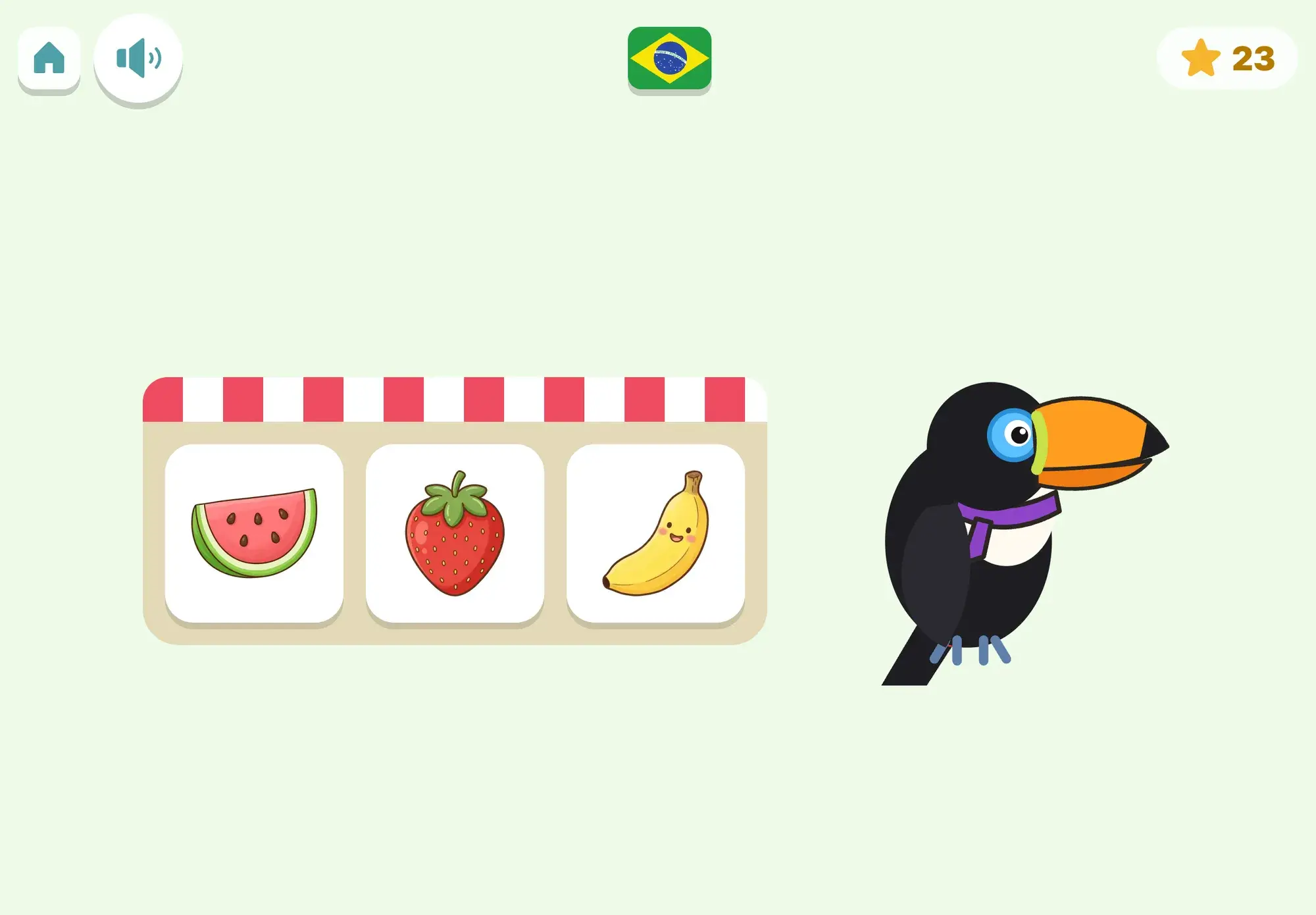
Hello, colors, fruits and numbers in Portuguese, from a toucan who speaks nothing else.
Beat, rhythm, high and low, and bands from around the world.
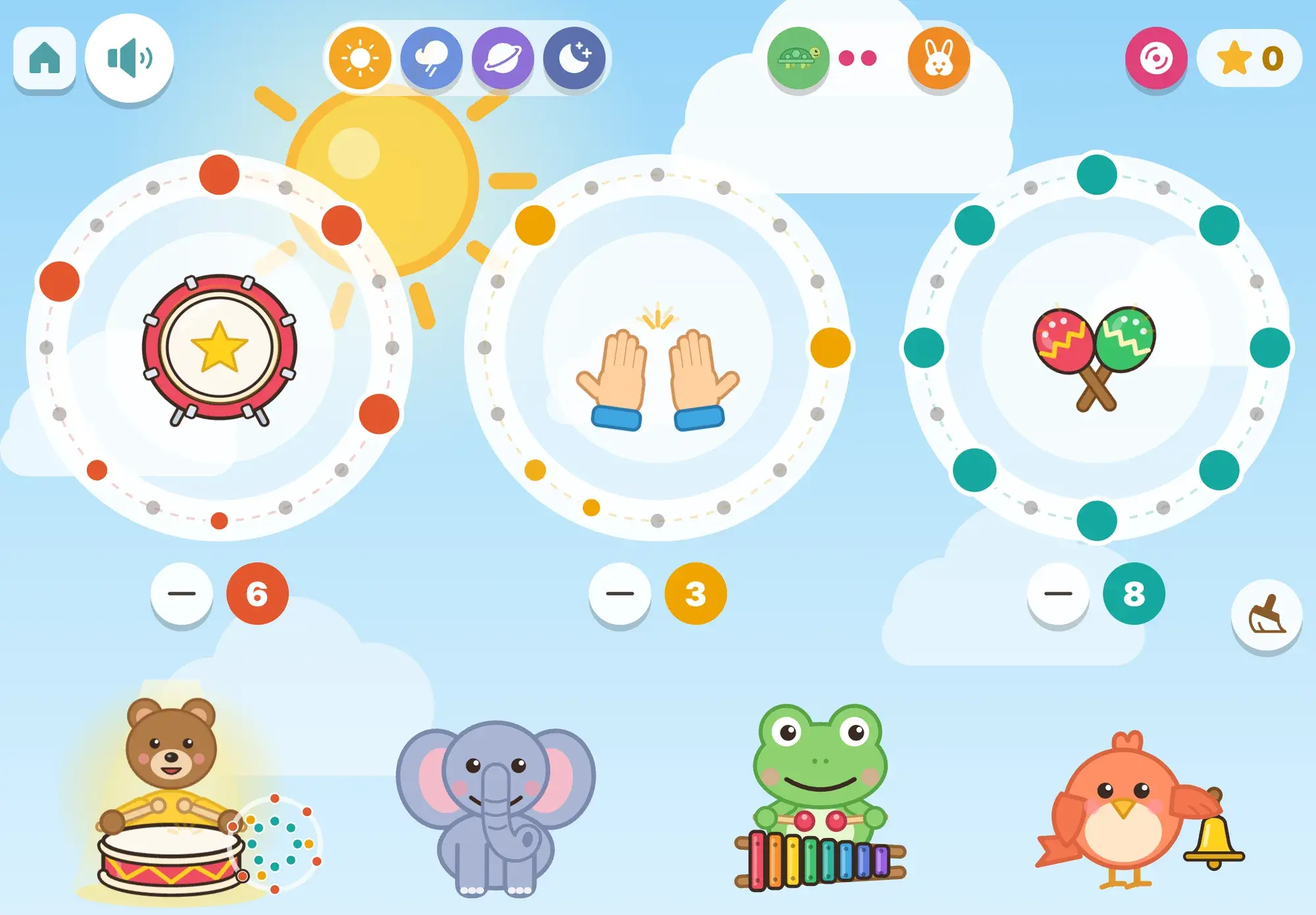
Every note lands in time and in tune, so your child sounds good from the first tap.
By age
The town opens new buildings as your child gets older. Here is what each age gets.
First sounds, first numbers, first flags. All spoken, all tap.
11 games open
Coding with arrows, the airport, the microscope and more.
18 games open
Bridges, the warehouse, the plant lab and the adventure planner.
22 games open
The top of every ladder: loops, functions, look-alike flags.
22 games open
Ages 3 to 5: the whole town, one building at a time.
22 games open
Ages 5 and 6: the top rungs of every game.
22 games open
Every game in Maestri World climbs its own ladder of skills. The port starts with loading a truck that wants a small number and goes on to teen numbers and making two trucks carry the same. The robot starts with a few arrows and ends with repeat blocks and a magic block. Your child never picks a level from a menu: the game moves up after a couple of clean rounds and gives more help after a hard one.
Above the town, the sun opens today's trip: a short daily mix of things learned anywhere in the app, with the ones due for review first. Its reward is the garden, where waiting for a bigger reward is practiced. When the session time a parent chose is up, the break screen gives a small mission to do at home.
A pre-reader finds things by what they look like and where they are, not by their labels. So each game is a building that shows what happens inside and stays in the same spot every day, and every name, question and hint is spoken aloud.
Children aged three to six tap small targets much less accurately than adults (Vatavu, Cramariuc and Schipor, 2015), so the town's buttons are about 2.5 cm across and never touch. Inside the games, mistakes are safe: no lives, no red crosses and nothing that runs out.
FAQ
Children aged about 3 to 6. Most games open at three, some at four and the most demanding ones at five, worked out from the birth month a parent enters. A parent can show or hide any game for any child.
No. Every instruction is spoken, every button is a picture, and the home screen is a little town where each game is a building that shows what happens inside.
Each game has a ladder of skills. After a couple of clean rounds it moves up a rung, and after a hard round it gives more help. Today's trip, a short daily mix, brings back things learned anywhere in the app so they are not forgotten.
Nothing bad. There are no lives, no red crosses and no timers that run out. Mistakes are part of playing, and many games make a wrong try gently funny.
Yes. Each child has their own progress and their own age-matched town. A parent switches between children in the parent area.
No. There are no ads in Maestri World, and the parent area sits behind a grown-up gate.
Spoken from the first tap, no reading needed, no ads, and progress that stays on your iPad.