7 min read
Phonics order for preschoolers: why s, a, t, p, i, n come first
Why phonics teaches letter sounds in an order like s, a, t, p, i, n, how to say the sounds, and simple ways to practice them at home with a 3–6-year-old.
Read the guide
The word book
Swipe from A to Z and round again. Every picture says its name.
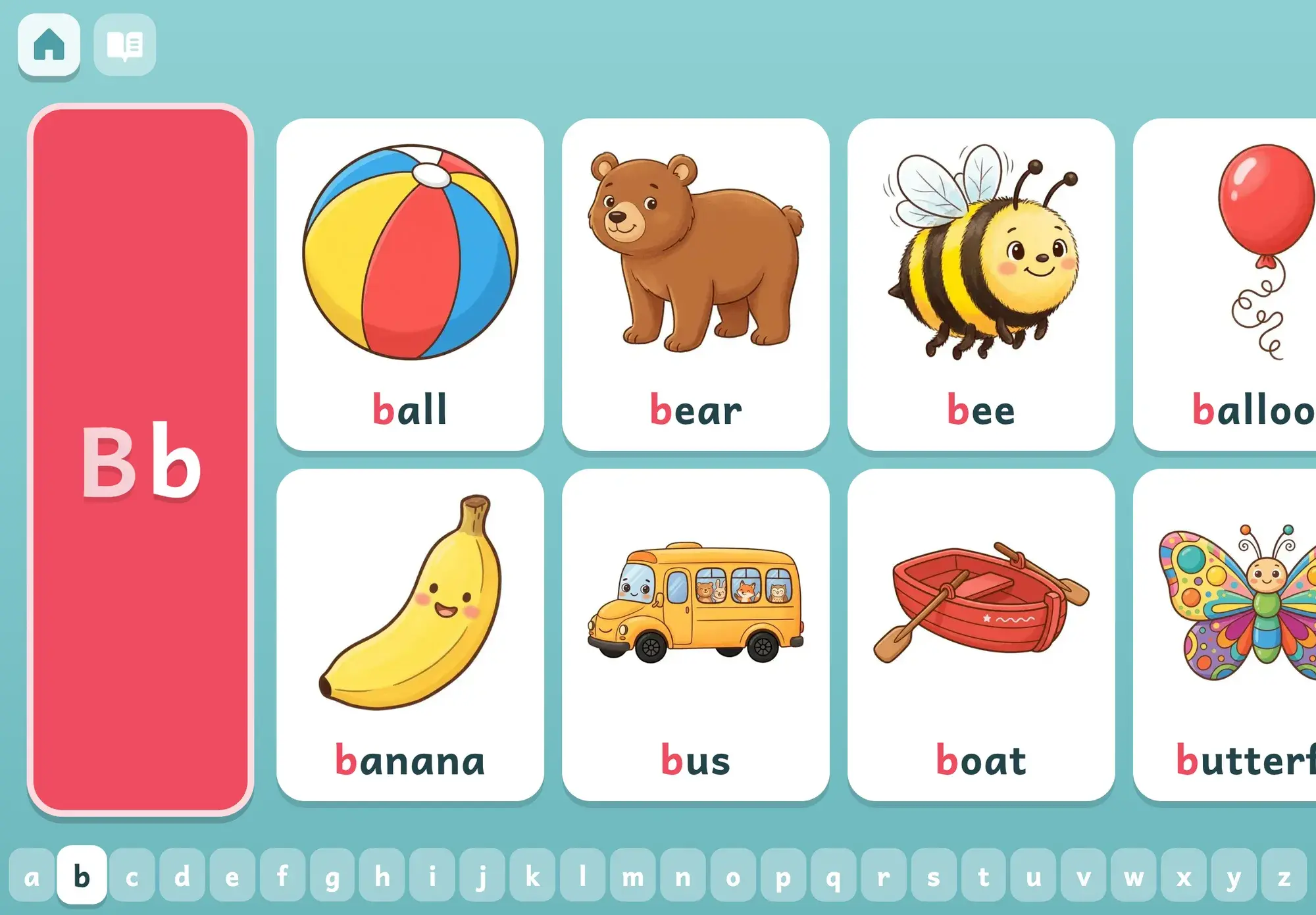
The word book is a big picture book to explore, with no levels and no score. It scrolls sideways from A to Z, and after Z it comes round to A again. Each letter has its own page: the letter in large print, capital and lowercase together (“Mm”), then about seven pictures in two rows, from apple and alligator to zebra and zucchini.
Tap a picture and it says its name: “Monkey!” Tap it again and it sounds out its first letter too: “mmm… monkey!” Tap the big letter and the voice says “This is the letter M! It says mmm.” A strip of letters along the bottom jumps straight to any page.
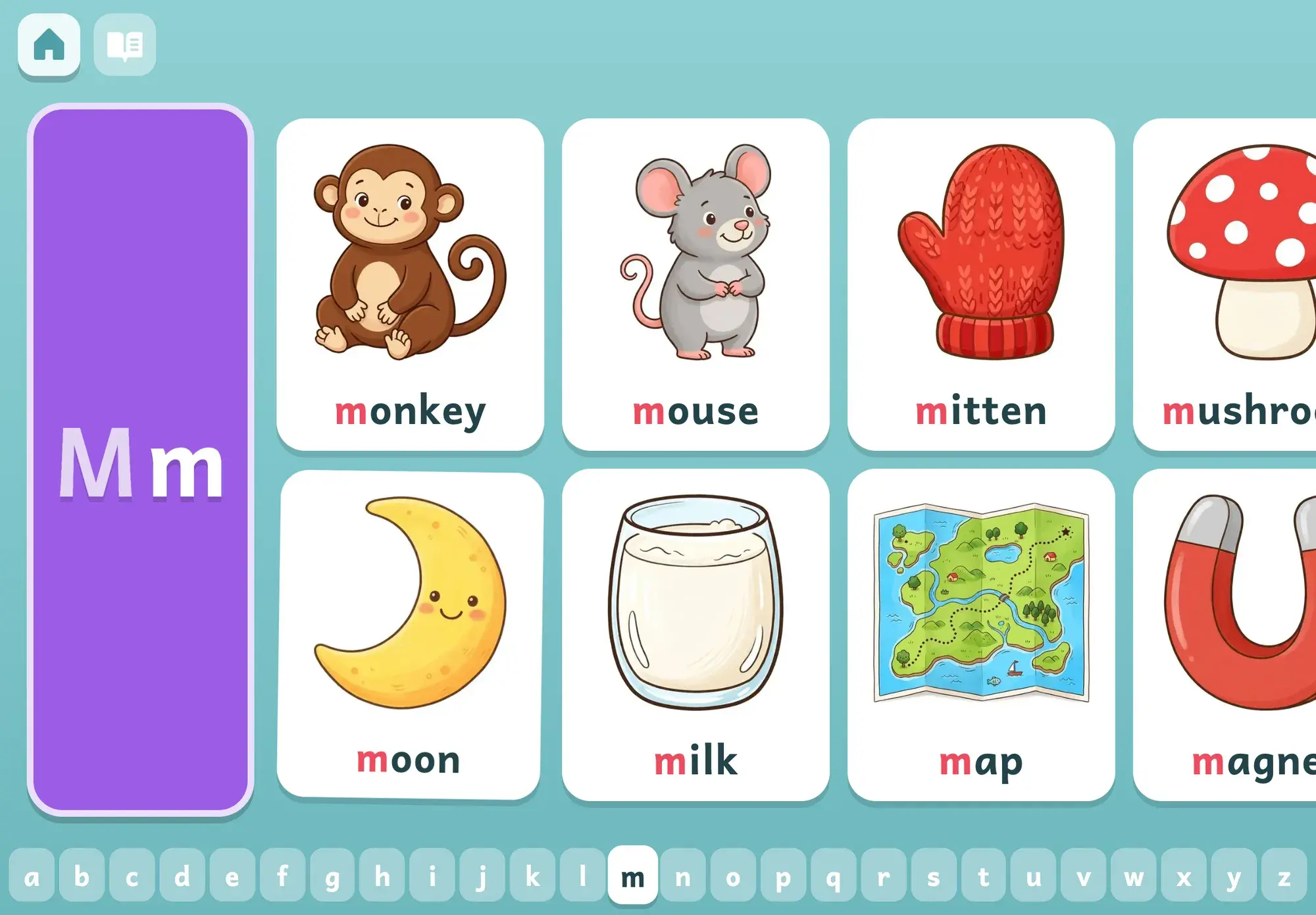
When your child goes quiet for a while, the book asks about something on the screen: “Where can we find the monkey?” Once they have learned some letter sounds on the Letters and sounds path, it sometimes asks “Can you find something that starts with mmm?” instead. Finding it gets a cheer and a burst of confetti.
How it plays
Your child moves the book with a finger, like turning pages sideways. The letter strip at the bottom shows where they are, and one tap on a letter jumps there and says its sound. There is no last page: after zebra, zipper and zucchini, the book comes round to A again.
A first tap says the word. The next tap adds its first sound, so the link between a letter and its sound is heard again and again. On the x page the sound comes at the end, so fox and box say the word first and the sound after. The dots under the library in the town show how many pictures your child has looked at.
After 15 seconds without a touch, the book asks your child to find a picture on the screen, or something that starts with a sound they know. A wrong tap names that picture and asks again, and after two tries the answer wiggles. If three questions in a row go unanswered, the book stays quiet until your child touches the screen again.
Skills
The thinking
The book keeps one strict rule: every word starts with its letter’s main sound. So it never teaches “k is for knife” or “u is for unicorn”, which really start with an n sound and a y sound. Umbrella is on the u page, and words that start with two-letter sounds, like ship, are left out of the A to Z. That way, everything your child hears here matches what the Letters and sounds path teaches.
It is also deliberately free. There are no points or stars for tapping pictures, because rewarding something a child already does for fun can replace their own reasons for doing it (the overjustification effect). The questions only come when your child goes quiet and stop after three unanswered ones, so the book never nags.
Away from the screen
Ideas to carry the game into everyday life, no screen needed.
Make a family word book: one page per letter, with drawings or cut-out pictures, keeping the rule that each word starts with its letter’s sound.
Play “Where can we find…?” around the house or at the park, then swap so your child asks you.
At the store, name a food and its first sound together: “Banana. b!”
Read paper alphabet books together, and when you meet “k is for knife”, ask your child what sound knife really starts with.
FAQ
Yes. It opens at every age and has no levels, so a young child can simply tap and listen. Children get more from the sound questions once they have learned a few letter sounds.
No. The word book is one of the ways to meet it: every page says its letter’s sound, and the big letter says its name too.
That is the main way to use it. Questions only start after 15 seconds without a touch, and after three unanswered ones the book stays quiet until your child taps again.
Yes, the words are English. For another language, the language school has Tuca the toucan teaching Portuguese with pictures, games and short sentences.
Guides
Why phonics teaches letter sounds in an order like s, a, t, p, i, n, how to say the sounds, and simple ways to practice them at home with a 3–6-year-old.
Read the guide
More to explore
One letter sound at a time, from s, a, t, p to sh and ee, then little books
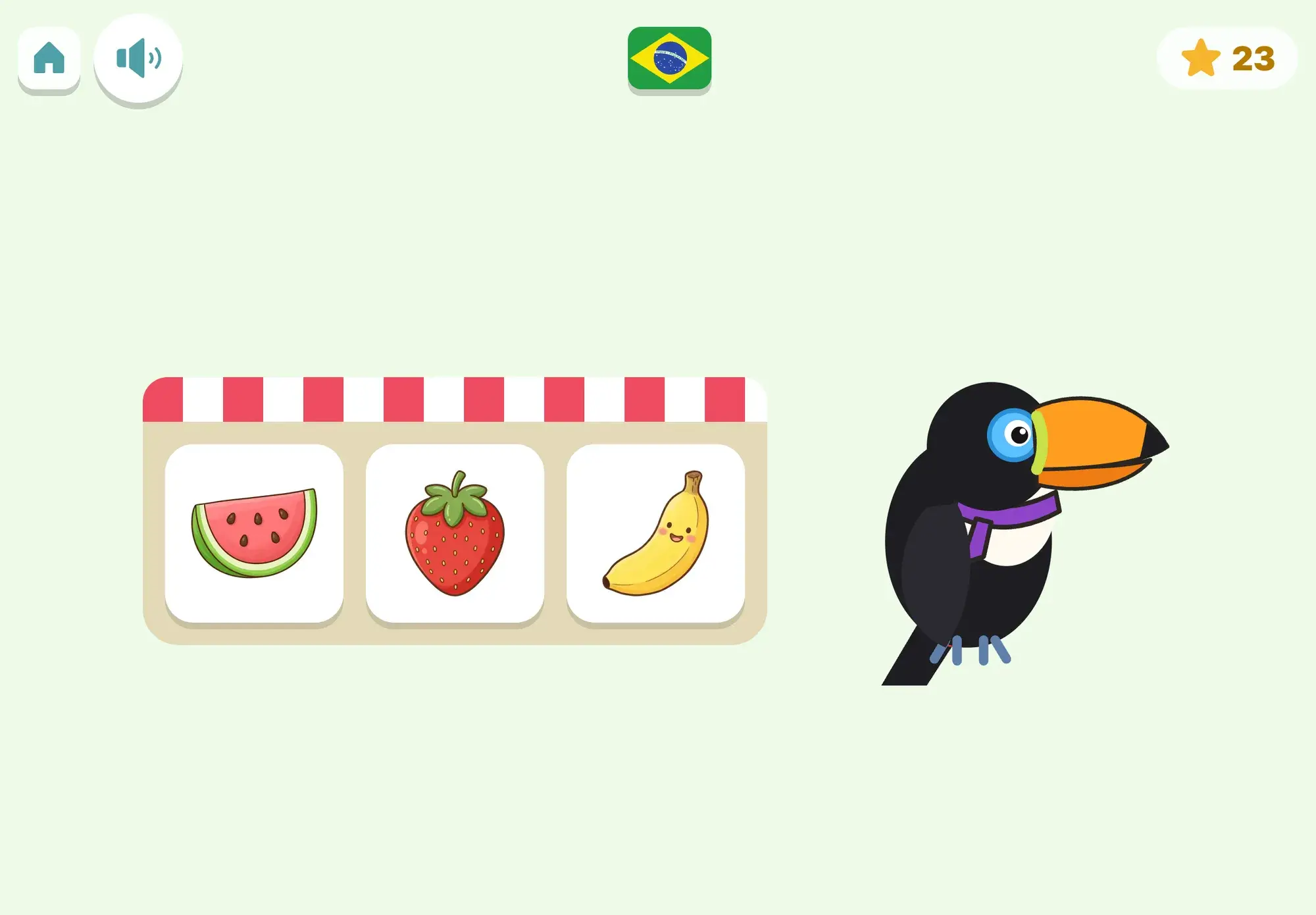
Hello, colors, fruits and numbers in Portuguese, from a toucan who speaks nothing else.
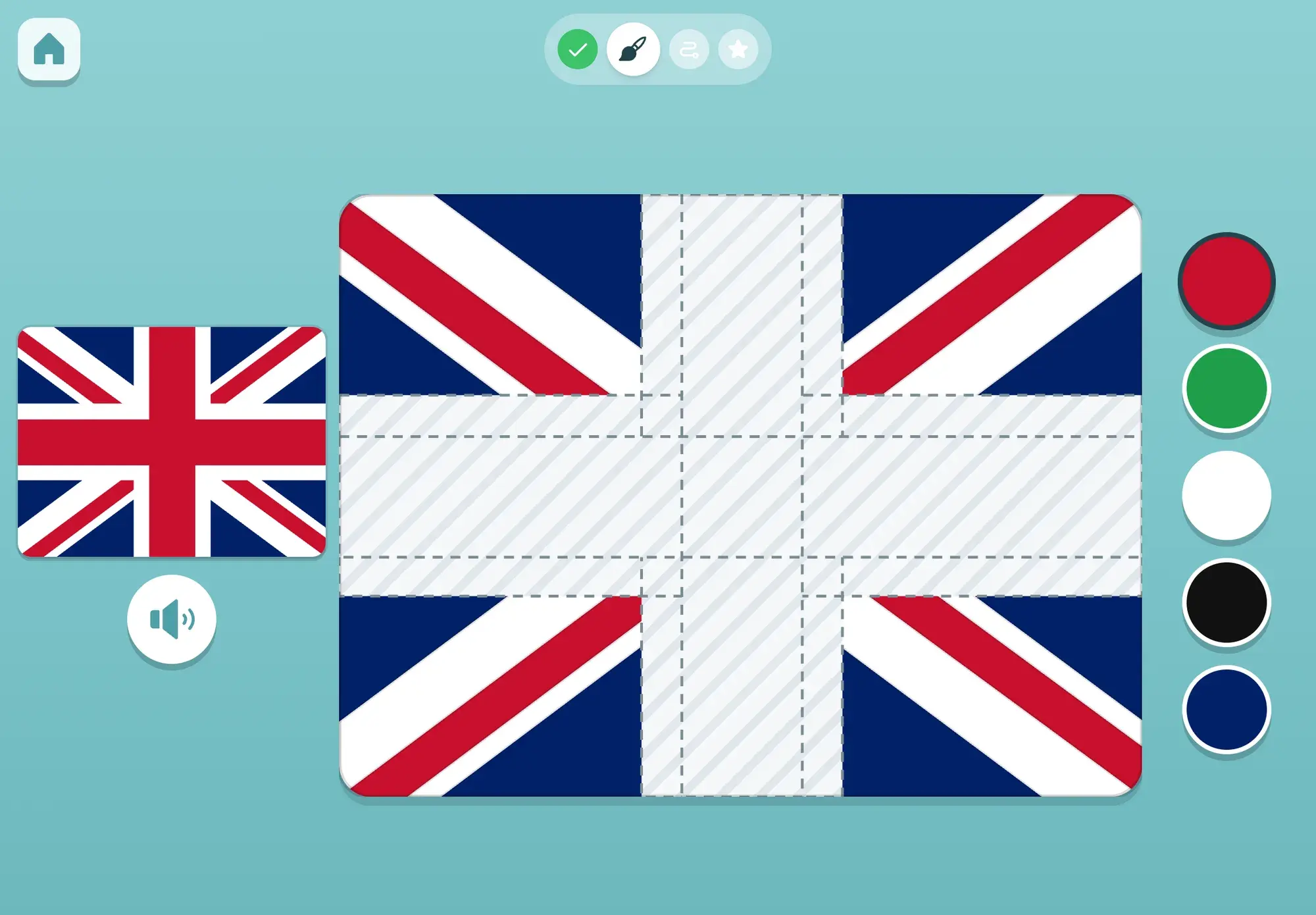
Meet a country, paint its flag, drive there, and earn a passport stamp
Spoken from the first tap, no reading needed, no ads, and progress that stays on your iPad.