7 min read
How to teach a preschooler flags and countries
Teach flags and countries to a 3–6-year-old: start with a few, give each a story, paint and puzzle the flags, and bring old ones back over days.
Read the guide
The language school
Hello, colors, fruits and numbers in Portuguese, from a toucan who speaks nothing else.
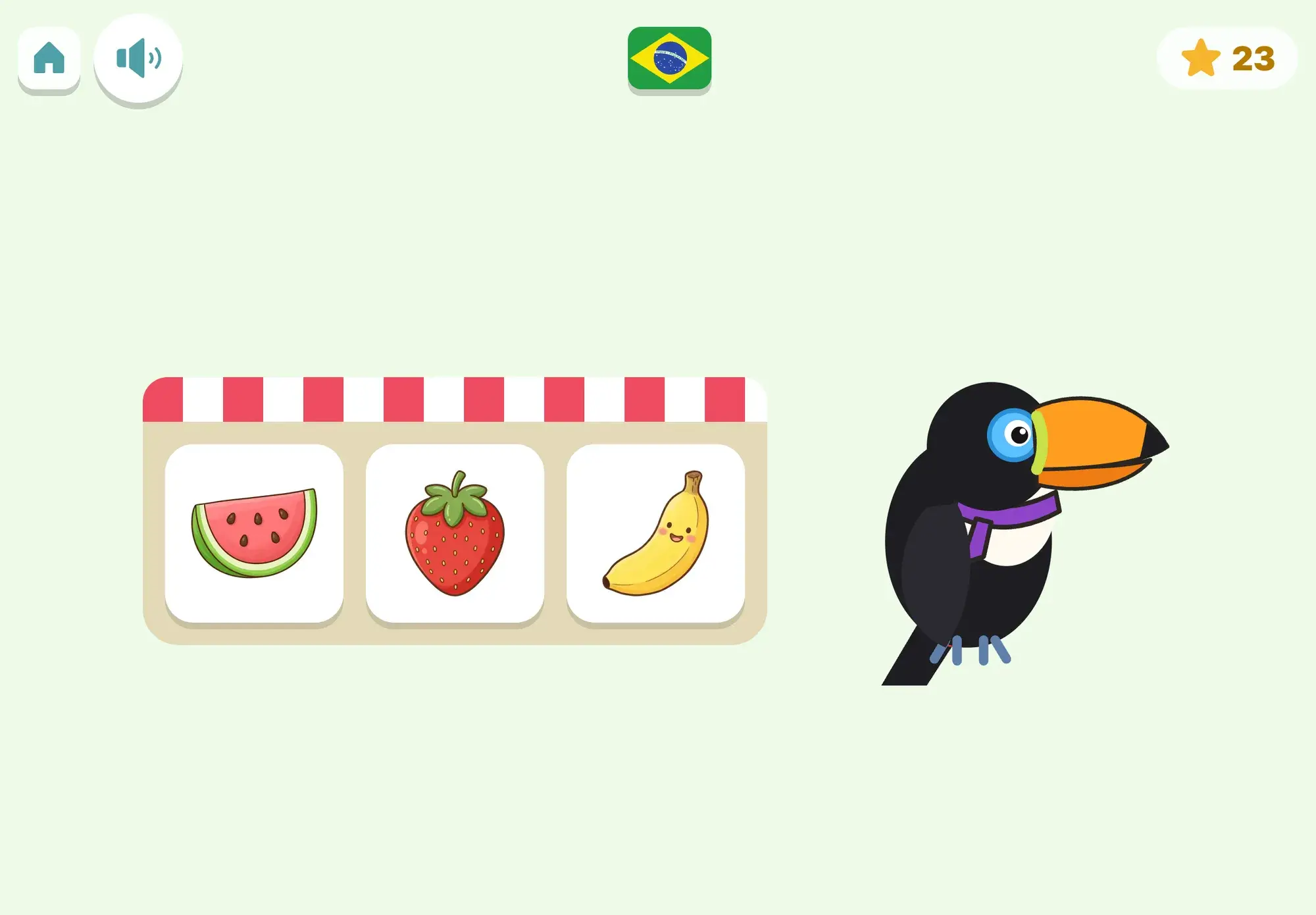
Tuca the toucan teaches a new language the way a good class for little children does: a few new words at a time, then games that ask for them by their sound only, then short sentences in a little scene. The language is Portuguese as it is spoken in Brazil, shown everywhere by Brazil’s flag. Nothing is written anywhere.
Tuca and Tuca’s friends only ever speak Portuguese, each with their own voice. The English narrator explains what to do and never says a word of Portuguese. Tuca’s beak moves while he talks, so your child can always tell who is speaking.
New words arrive as presents. Your child taps one, the word comes out big, the narrator says it in English (“Red!”), and Tuca says it in Portuguese, then slowly. An ear in a bubble shows it is your child’s turn to say it out loud. Nothing listens or records: saying it is just for them, and for anyone playing along.
How it plays
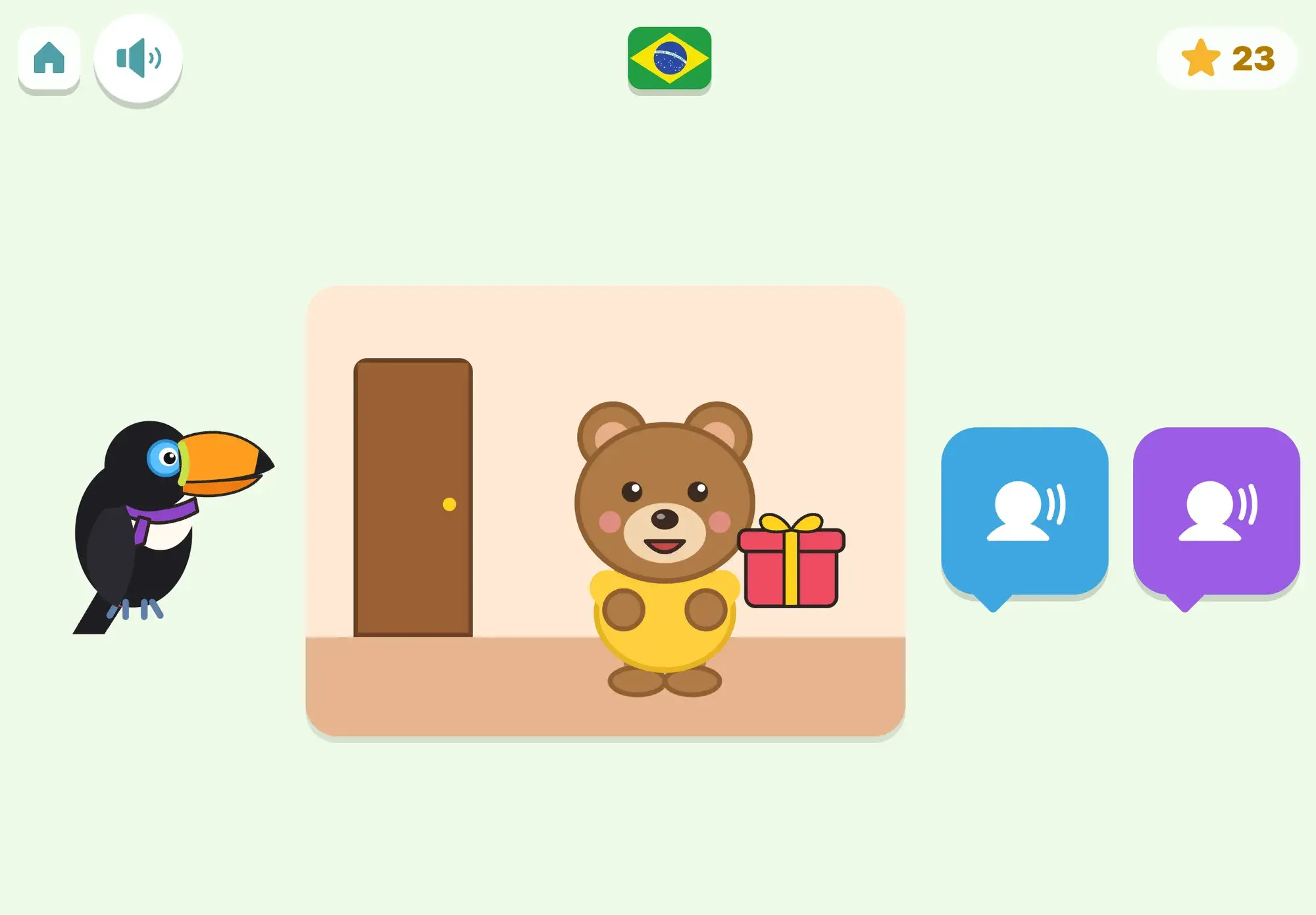
On the very first visit Tuca says hello: “Olá! Meu nome é Tuca.” In the first game Bo the bear arrives or goes home, Tuca says each choice while its bubble lights up, and your child taps olá or tchau. A later step adds the magic words, por favor and obrigado, when Bo brings a present or your child would like a banana.
Your child finds the color Tuca says among splashes of paint, paints a picture part by part, or pops every balloon of one color. With fruits, they find maçã, banana or uva, or feed Tuca the fruit he asks for (“Hum! Que delícia!”). More colors and fruits come back in later steps, a few at a time.
Tuca sits on a branch or rides in a hot-air balloon, and your child taps the arrow for para cima or para baixo, and Tuca flies there. Numbers come as dots in rows of five, or as fruits to put in a basket while Tuca counts each one: um to cinco first, seis to dez later.
Tuca shows a picture and asks “Vermelho?” A thumbs up says “Sim!”, a thumbs down says “Não!”, and then comes the picture’s real word, so a wrong guess still teaches one. Later the same fruit appears big and small, and your child taps grande or pequeno.
Sentences come in moments where they mean something. Your child meets Tuca’s friends, who each say their name, and then says “Meu nome é…” with their own name. At a birthday they put candles on the cake. At the fruit shop Tuca asks for a fruit in a whole sentence, and then it is your child’s turn to ask.
Skills
The thinking
Children this age learn a new language’s words fastest from pictures and things they do, said by a person they connect with. They also understand words well before they say them, so most games ask your child to recognize a word, and saying it comes only when they are ready.
Hearing the words from one character who always speaks that language, and a narrator who never does, keeps the two languages apart, like “one person, one language” in bilingual families. Short sentences come in scenes where they mean something (meeting someone, a birthday, a shop), because that is where children pick them up.
A wrong tap always says what your child tapped, in Portuguese, then asks again, and after two misses the right one glows. Every word comes three ways: said, said slowly to repeat after Tuca, and asked as a question.
Away from the screen
Ideas to carry the game into everyday life, no screen needed.
Pick one Portuguese word a day to use at home: olá at breakfast, tchau at the door, obrigado or obrigada at the table.
Name the fruit in the fruit bowl in Portuguese: banana, maçã, uva, laranja.
Count the stairs or a stack of blocks from um to dez.
Play shop with toy fruit, using the sentence from the game: “Eu quero uma banana, por favor!”
FAQ
Brazilian Portuguese, shown by Brazil’s flag. A tap on the flag says “Portuguese, from Brazil!” It is the only language in the school at the moment.
No. The English narrator explains every game, and Tuca says every word, slowly too. You can say the words after Tuca along with your child.
Yes. The school opens for children of any age. Most games only ask your child to recognize a word by its sound, and the turns to speak are never checked or counted. A child doing well meets the first colors within about three minutes.
In Portuguese the word depends on who is speaking. The words your child says follow the boy or girl setting in their profile, so a girl says “obrigada”. Tuca, a boy toucan, says “obrigado”.
Guides
Teach flags and countries to a 3–6-year-old: start with a few, give each a story, paint and puzzle the flags, and bring old ones back over days.
Read the guide
More to explore
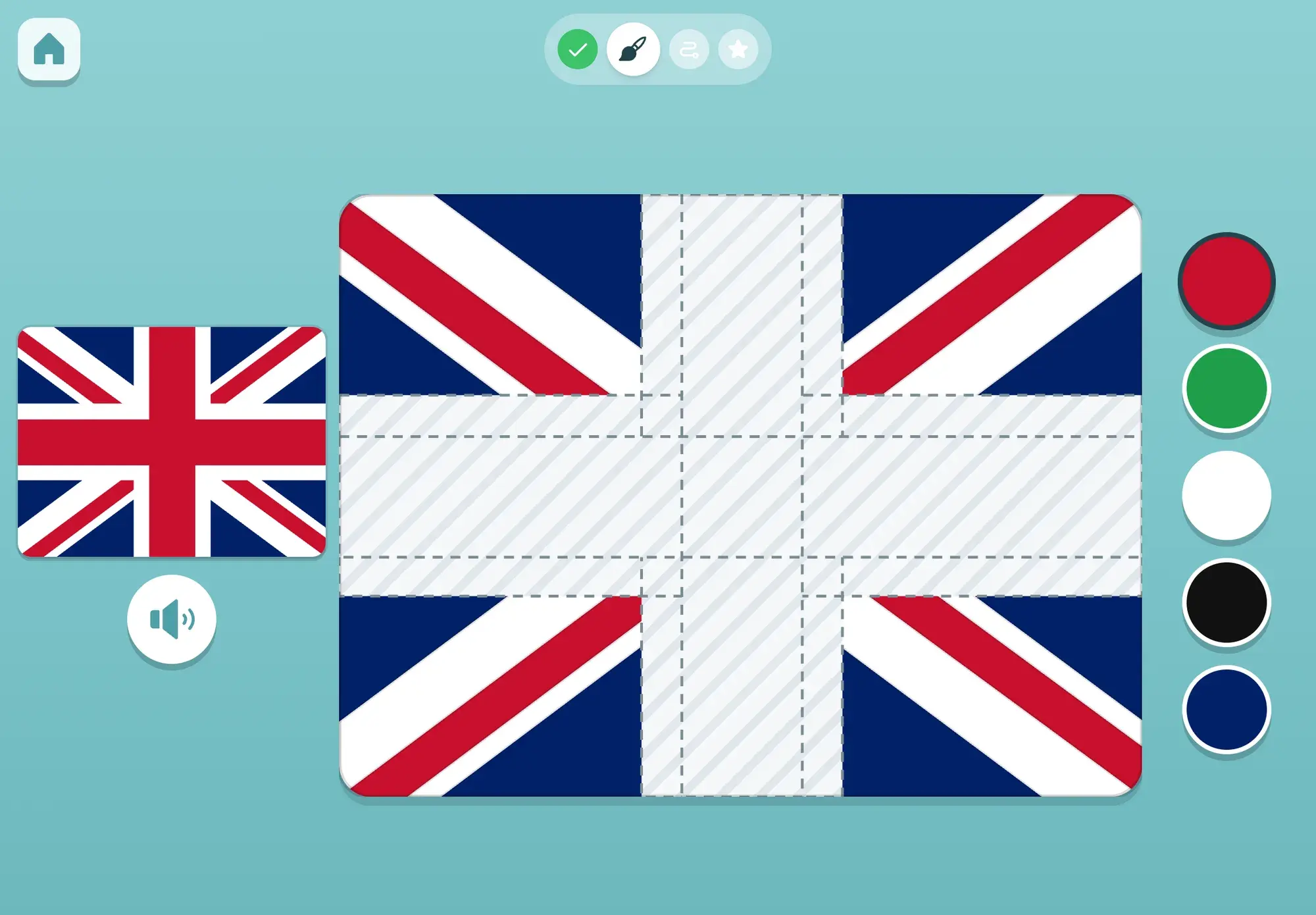
Meet a country, paint its flag, drive there, and earn a passport stamp
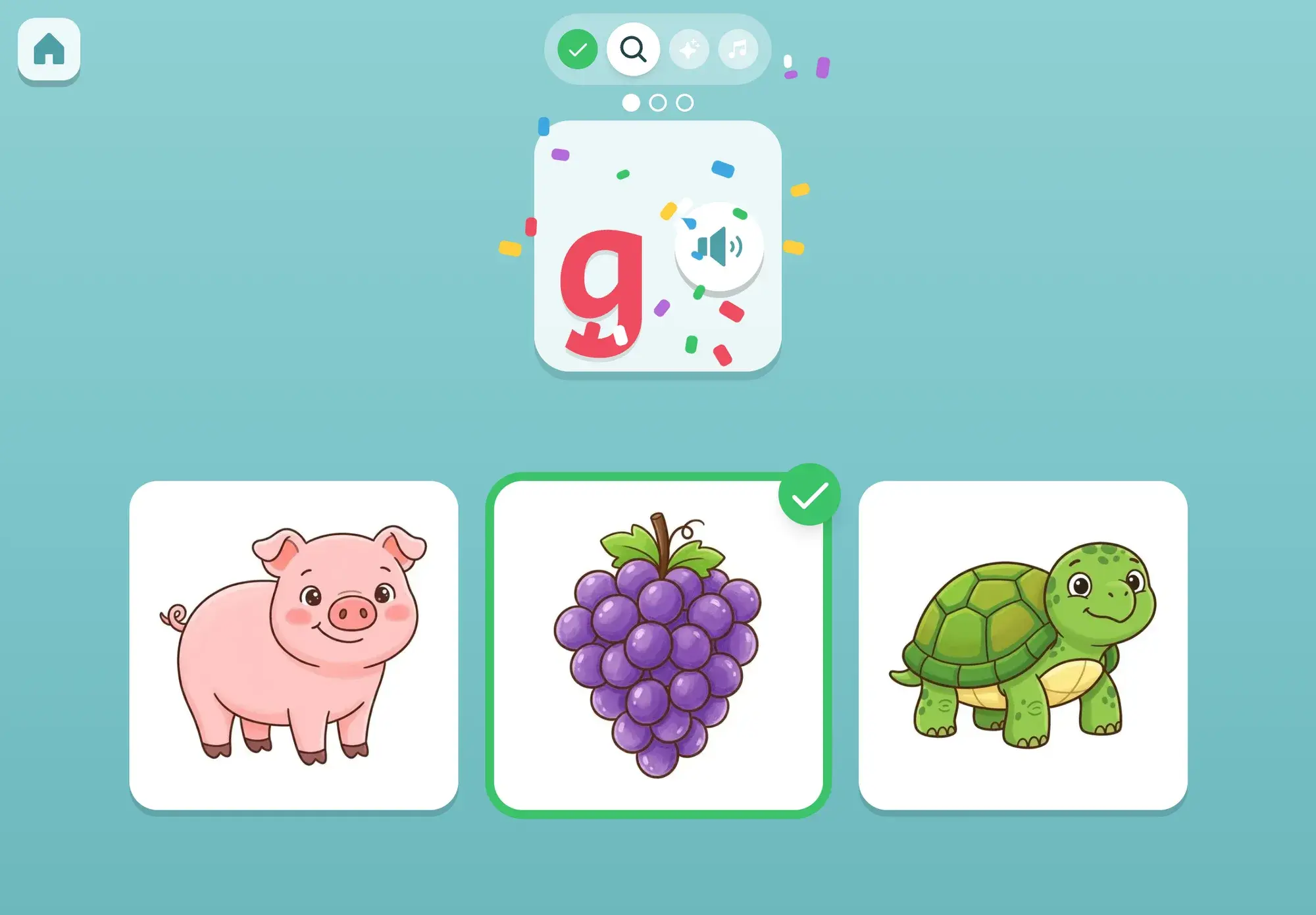
One letter sound at a time, from s, a, t, p to sh and ee, then little books
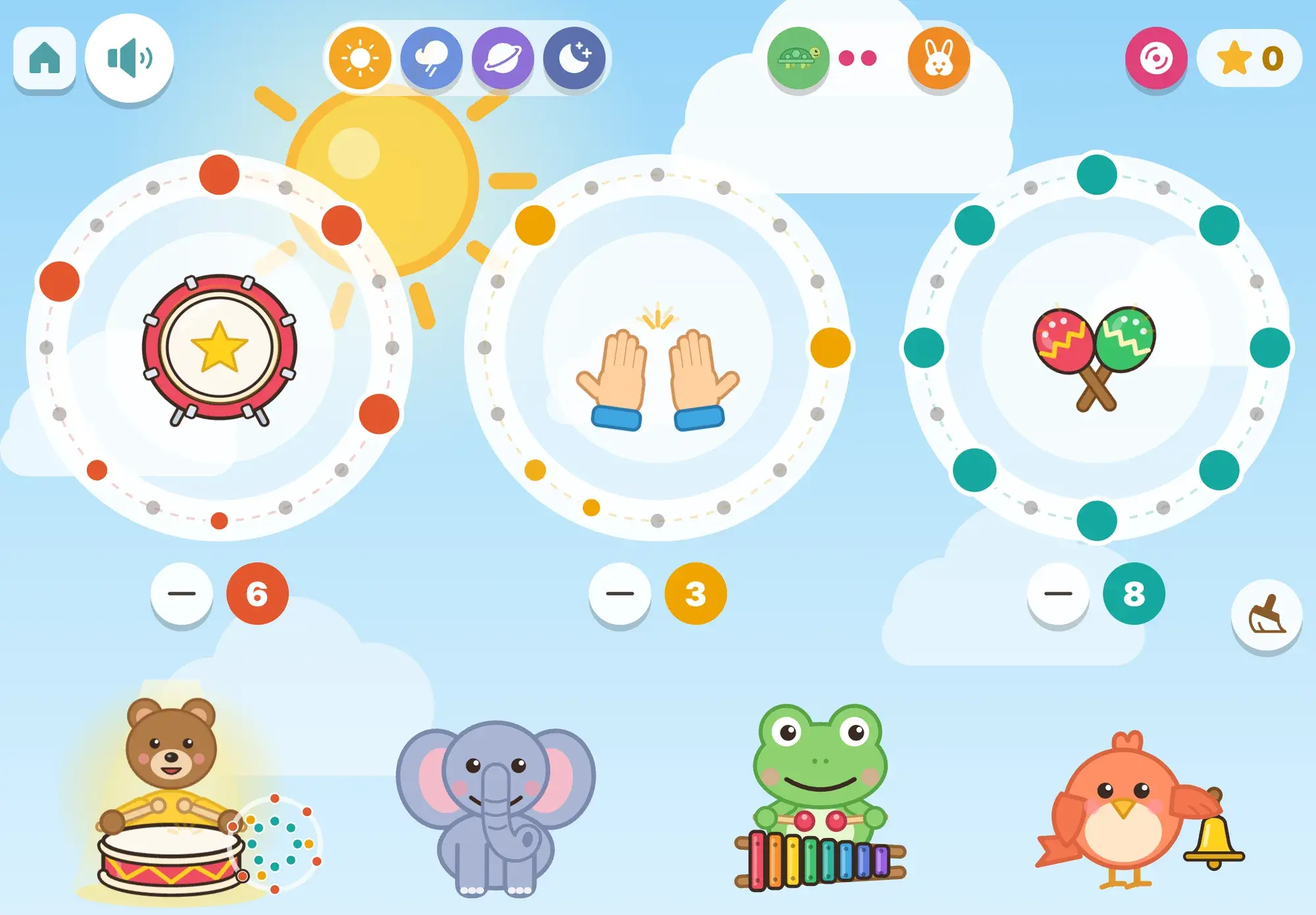
Every note lands in time and in tune, so your child sounds good from the first tap.
Spoken from the first tap, no reading needed, no ads, and progress that stays on your iPad.