Skip to content
Maestri World

The port

Port crane: a 3D number game for preschoolers

Trucks want a number. Your child loads containers until it adds up.

Ages 3–6Math
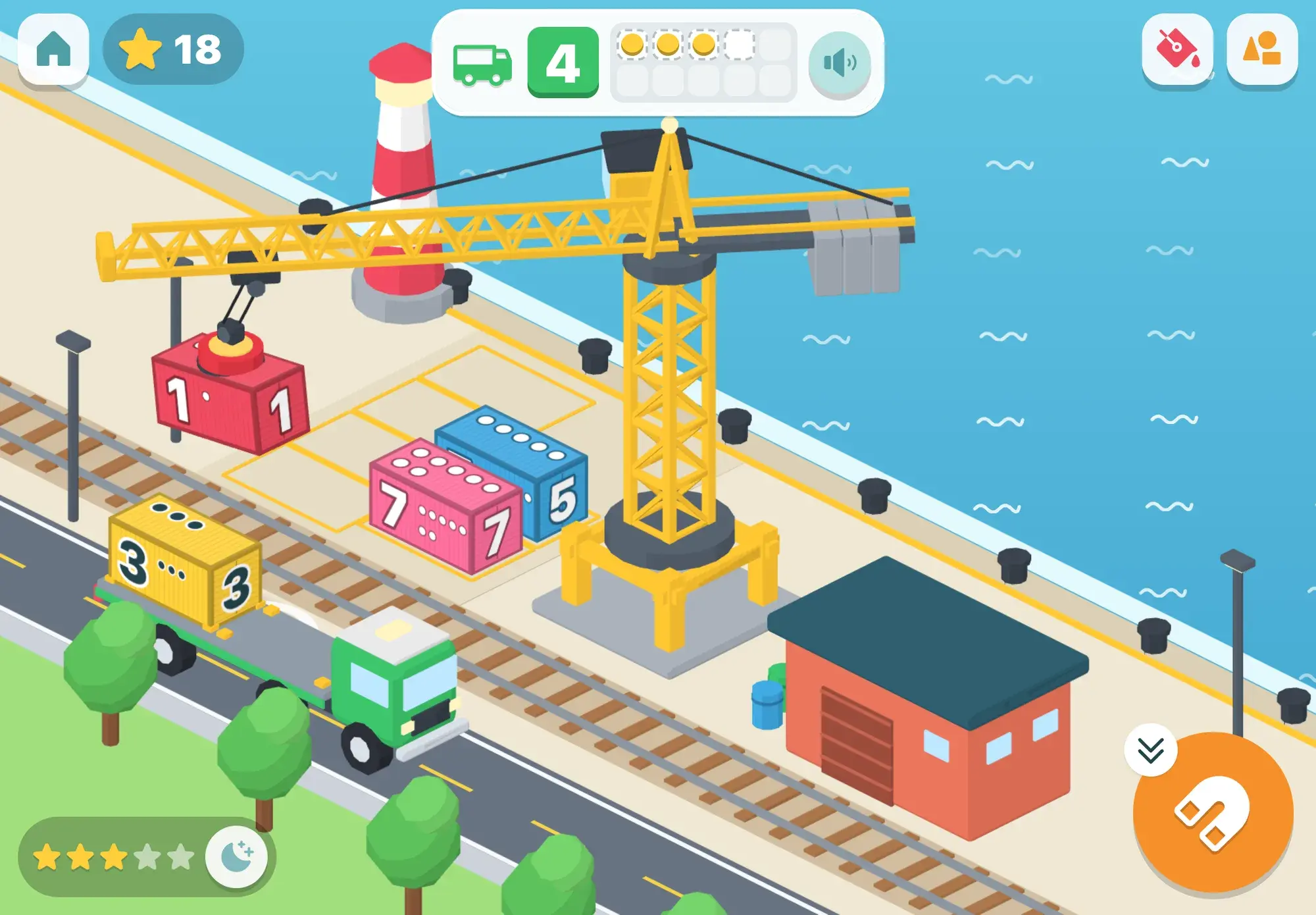
The yellow crane lowers a red container marked 1 onto a green truck already carrying a 3, and the order board asks for 4

What is the port?

The port is a cartoon container harbor in 3D, and your child is the crane driver. They drag a finger and the big yellow crane turns until its hook is there, swinging a little. A big red magnet button picks up the container under the hook or puts it down. There is nothing to fail: any container can always be picked up again.

Every container carries a number and the same number of dots, laid out like a ten-frame (two rows of five, a way many classrooms show numbers up to ten). Each number has its own color. A board at the top shows what the truck, ship or train wants, and its own ten-frame fills with the dots of each container loaded, so “two and three” becomes something your child can see.

When the load is right, the voice says the sum (“Two and three make five!”), a star is earned and the vehicle drives off. Too many shows in red, with “Too many! Take one off.” The first visit is a guided tour with a pointing hand.

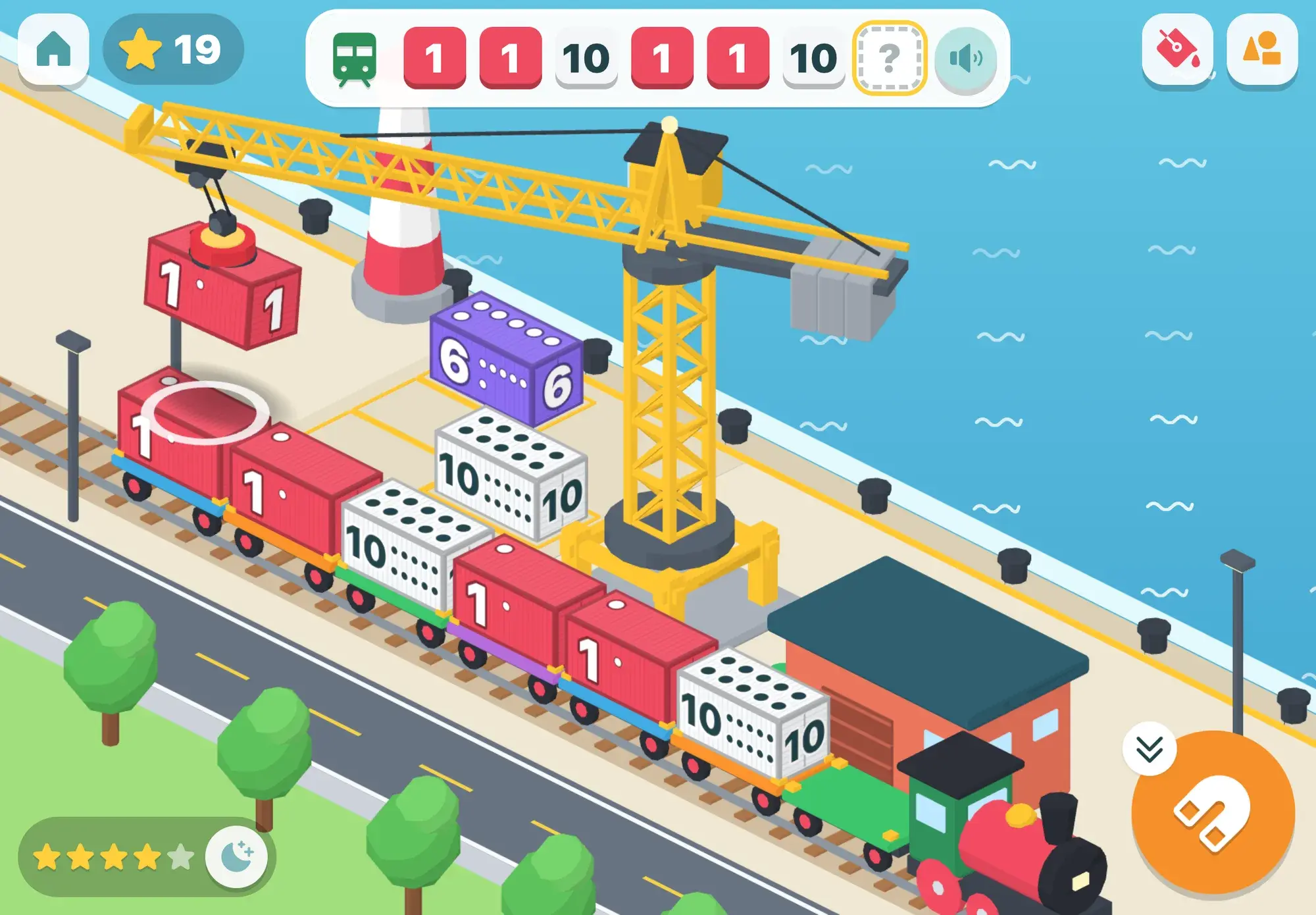
The crane carries a red 1 to the last gap of a train whose wagons read 1, 1, 10, 1, 1, 10 and a question mark
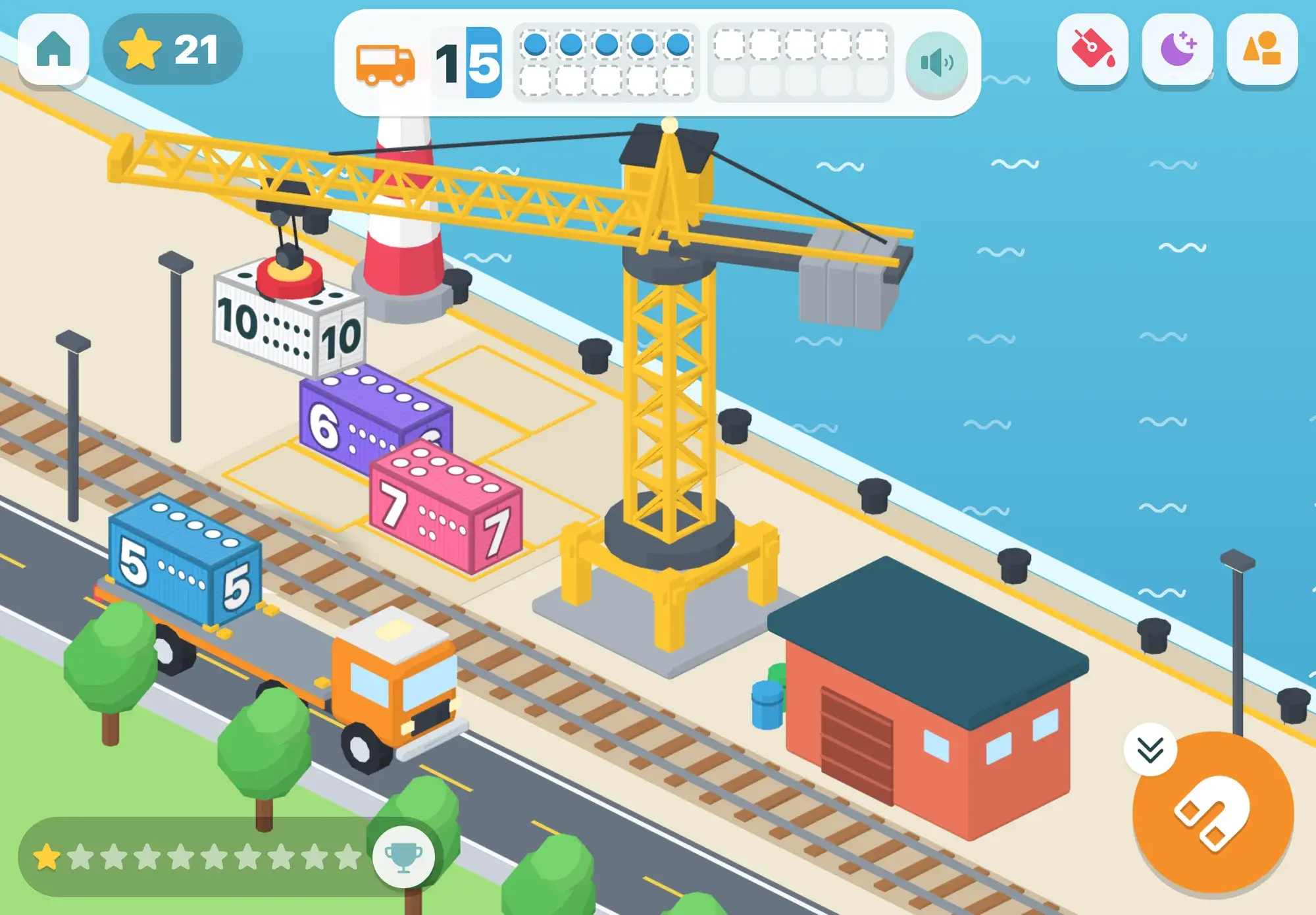
The crane swings a white 10 container toward an orange truck carrying a 5, under a board that asks for 15

How it plays

Step by step through the port

  1. 1

    Find the number

    “Find the number four!” A truck or ship needs one container, first from 1 to 5, then from 1 to 10. Next comes bigger and smaller: a big truck and a little truck arrive together, and the bigger number goes on the big one. Three clean deliveries open the next skill.

  2. 2

    Patterns on the train

    The train’s wagons carry a pattern with a gap: 1, 2, 1, 2, ? The voice reads it out as each wagon hops (“One! Two! One! Two! What comes next?”). Because every number has its own color, a number pattern is a color pattern too. Later trains have seven wagons and patterns like A A B or A B C, then patterns that grow in twos or count down.

  3. 3

    Adding up, and “the same as”

    Two containers make the number, first up to 5, later up to 10, and then three at once. In “the same as” rounds, one truck arrives loaded with three and two, and your child loads the other until both match. The board shows “not equal” and tips toward the heavier side, then a green “=” appears. The voice says it the other way round on purpose: “Five is the same as three and two!”

  4. 4

    How many more, taking away and teens

    A truck comes with three and needs five: “Three and how many make five?” The board shows it as 5 = 3 + ?. Later a ship arrives too full, and your child takes containers off until it carries the right number. The last skill brings a white ten container: “Ten and three make thirteen!”

  5. 5

    Remember the cargo, and free play

    Now and then the order board is covered after a few seconds (“Remember: five!”), and tapping it peeks, with no penalty. Stars unlock ships at 3, new truck colors at 6, the train at 10, painting the crane at 15 and night time at 20. The shapes button switches to free play: load anything, and the truck counts it up.

Skills

What your child learns

  • Recognizing the numerals 1 to 10 and matching each to its number of dots.
  • Comparing two numbers to find the bigger one.
  • Continuing patterns, from A B A B to patterns that grow in twos.
  • Adding two or three numbers up to 10, with the total shown on a ten-frame.
  • Reading “=” as “is the same as”, not as “the answer comes next”.
  • Finding a missing number (“three and how many make five?”) and taking away.
  • Seeing teen numbers as ten and some more.

The thinking

Why it works

Patterns come early on purpose. Pattern skill at four predicts later math beyond counting (Rittle-Johnson and others, 2017). The train always shows two whole repeats before the gap, and the numbers in a pattern come from clearly different color families, so the pattern can be seen as well as counted.

The “same as” trucks tackle a common stumbling block: in the first school years, many children read “=” as “the answer comes next” (McNeil). So the board tips like a balance and the voice puts the total first. Earlier skills come back now and then for review, and a hard round makes the next one easier. As for remembering the cargo, to be honest about it: it practices keeping a few numbers in mind during this game. It is not brain training that makes a child cleverer elsewhere.

Away from the screen

Keep it going at home

Ideas to carry the game into everyday life, no screen needed.

  • Make patterns with colored pegs, pasta or socks (red, blue, red, blue) and ask what comes next.

  • Cut two cups off an egg carton to make a ten-frame, and fill it with buttons to make 5, 7 or 10.

  • Play “the same as” with two plates: put three grapes and two grapes on one, and let your child make the other plate the same.

  • Watch a real harbor, train or delivery truck and count the containers or wagons together.

FAQ

Questions about the port

Is the port a good math game for a 3-year-old?

It opens at every age and starts gently: one container at a time, numbers 1 to 5, and dots on every container to count. Adding, equals and teen numbers come much later on the ladder.

What happens if my child loads the wrong container?

Nothing bad. Too many shows in red and the voice says “Too many! Take one off.” Any container can be picked up and put back, and a hard round makes the next one a little easier.

What is a ten-frame?

A grid of two rows of five. The containers and the order board show their dots this way, so it is easy to see how many there are and how many more would make ten.

Can my child just play with the crane?

Yes. The shapes button in the corner switches to free play: load anything, press the green button, and the truck counts it up.

Guides

Read more

More to explore

Kids who like this also play

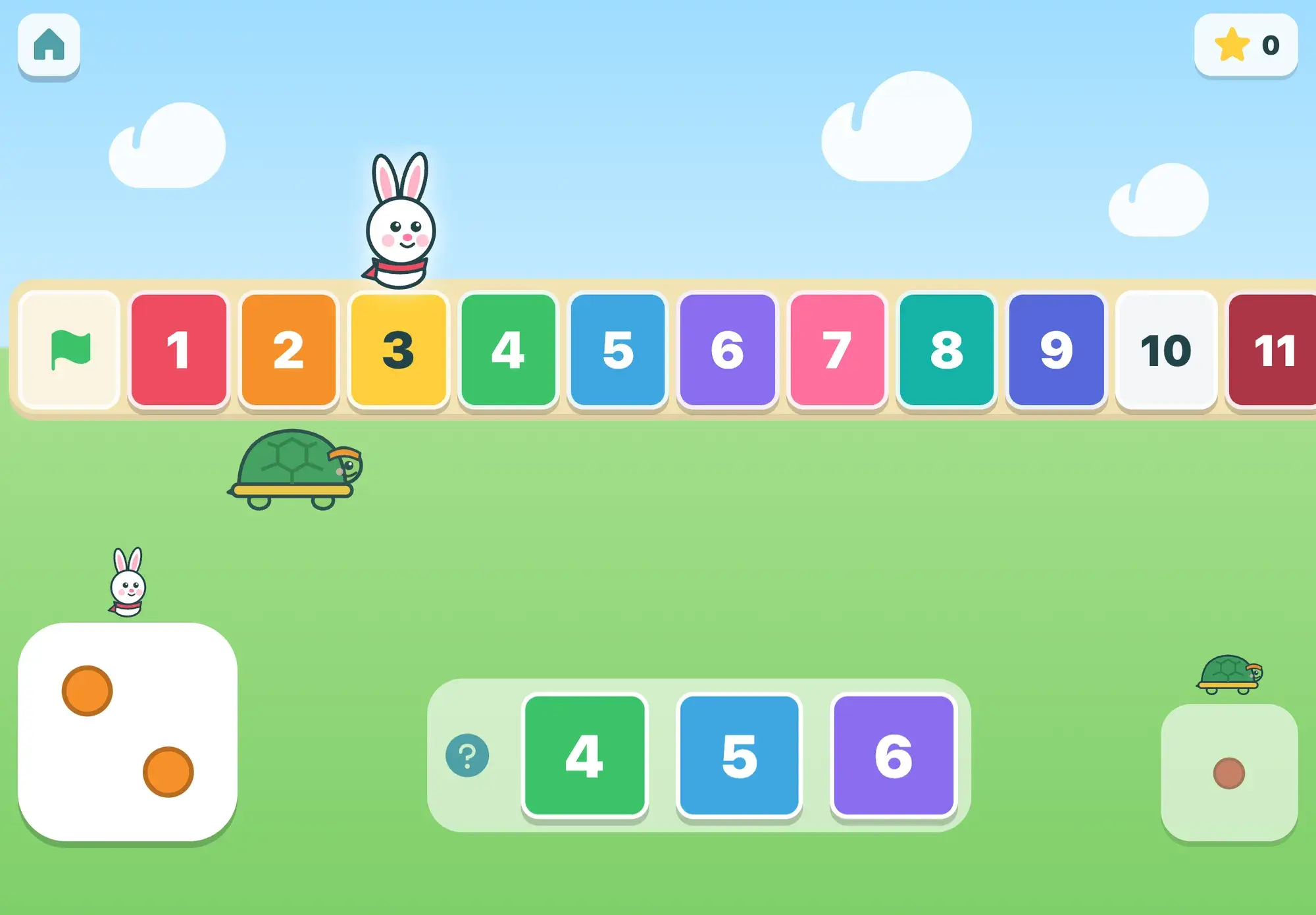
The bunny sits on square 3 of a colourful 1-to-20 number track ahead of the turtle, the dice shows two dots, and the child picks where the bunny lands from 4, 5 or 6

Roll, hop square by square, say each number, and race a friendly turtle

Ages 3–6Math
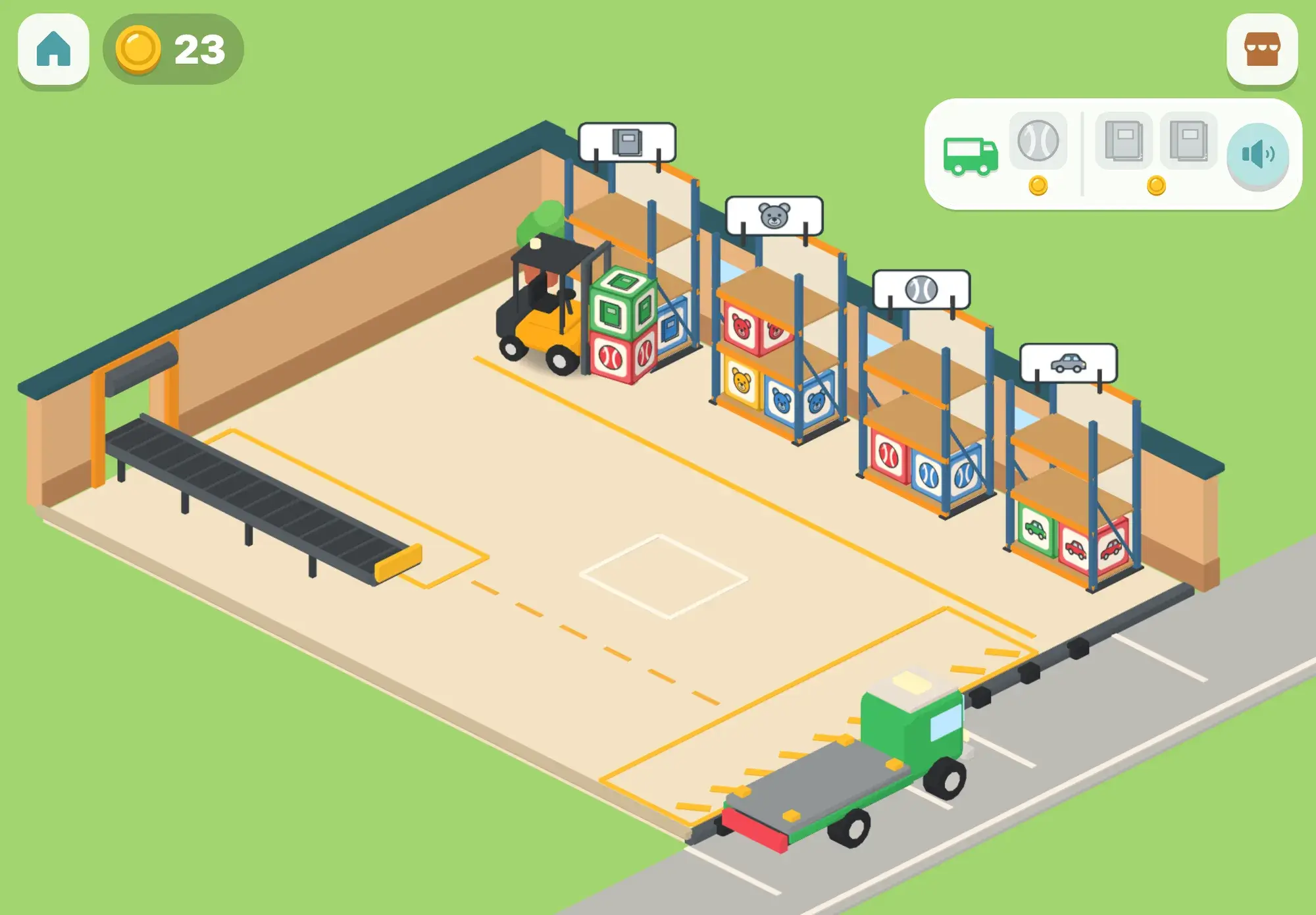
The yellow forklift carries a green book box stacked on a red ball box away from the shelves, while the order board shows the green truck still wants a ball and two books

Sort the boxes, fill the trucks, and save up for a faster forklift

Ages 5–6MathLife skills
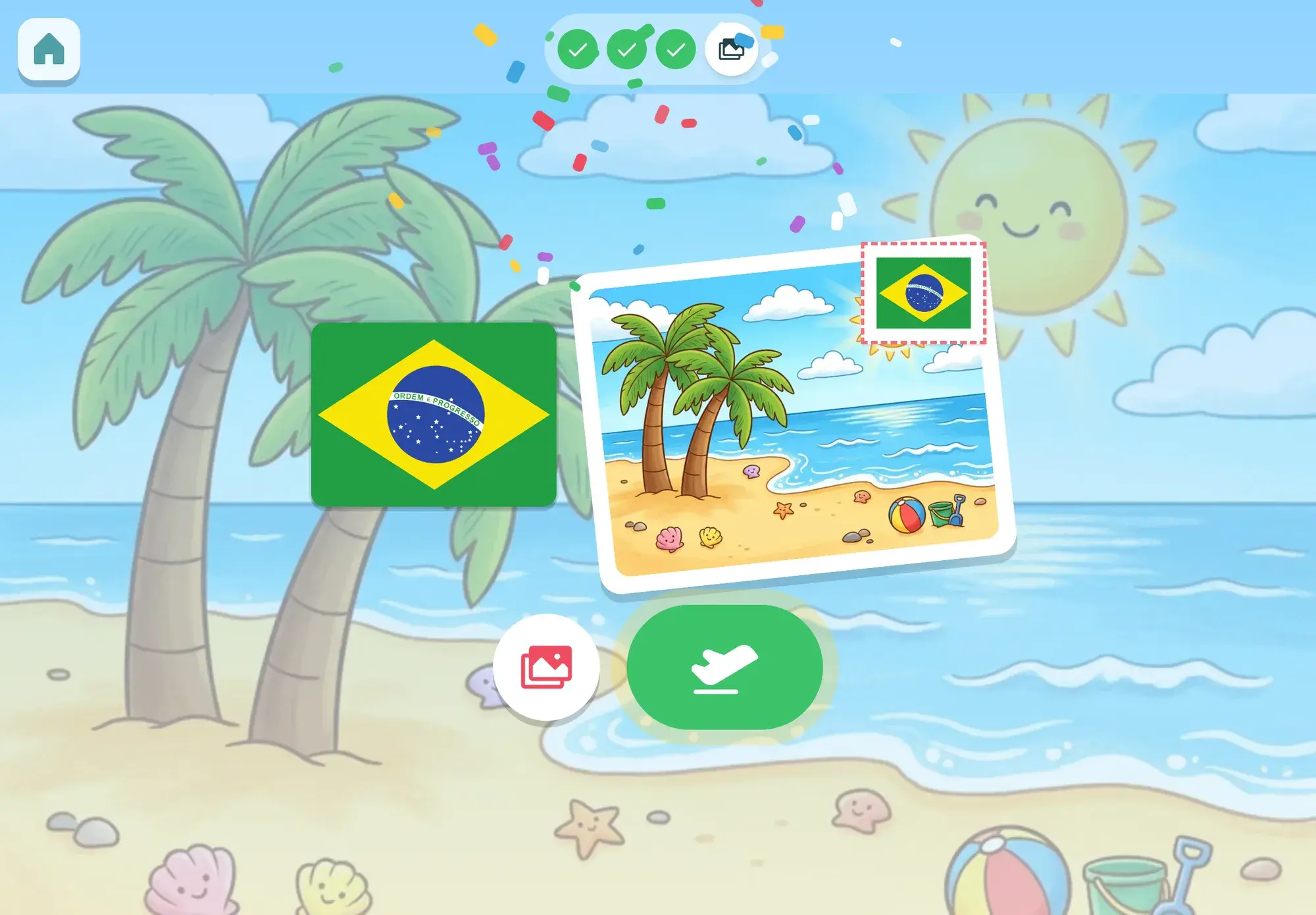
Landing in Brazil: the Brazilian flag and a beach postcard with palm trees and a flag stamp sit on a sunny beach scene, with confetti falling

Ticket, suitcase, flight and postcard: a trip to a country your child knows

Ages 4–6GeographyMath

A whole town of learning, ready when your child is

Spoken from the first tap, no reading needed, no ads, and progress that stays on your iPad.