7 min read
STEM activities for preschoolers: science and engineering through play
Easy STEM activities for 3 to 6 year olds: build bridges, dig and pour, look through a magnifier, grow plants and race cars down ramps.
Read the guide
Moto valley
Deliveries by electric dirt bike, and the science of motion in every hill and jump.
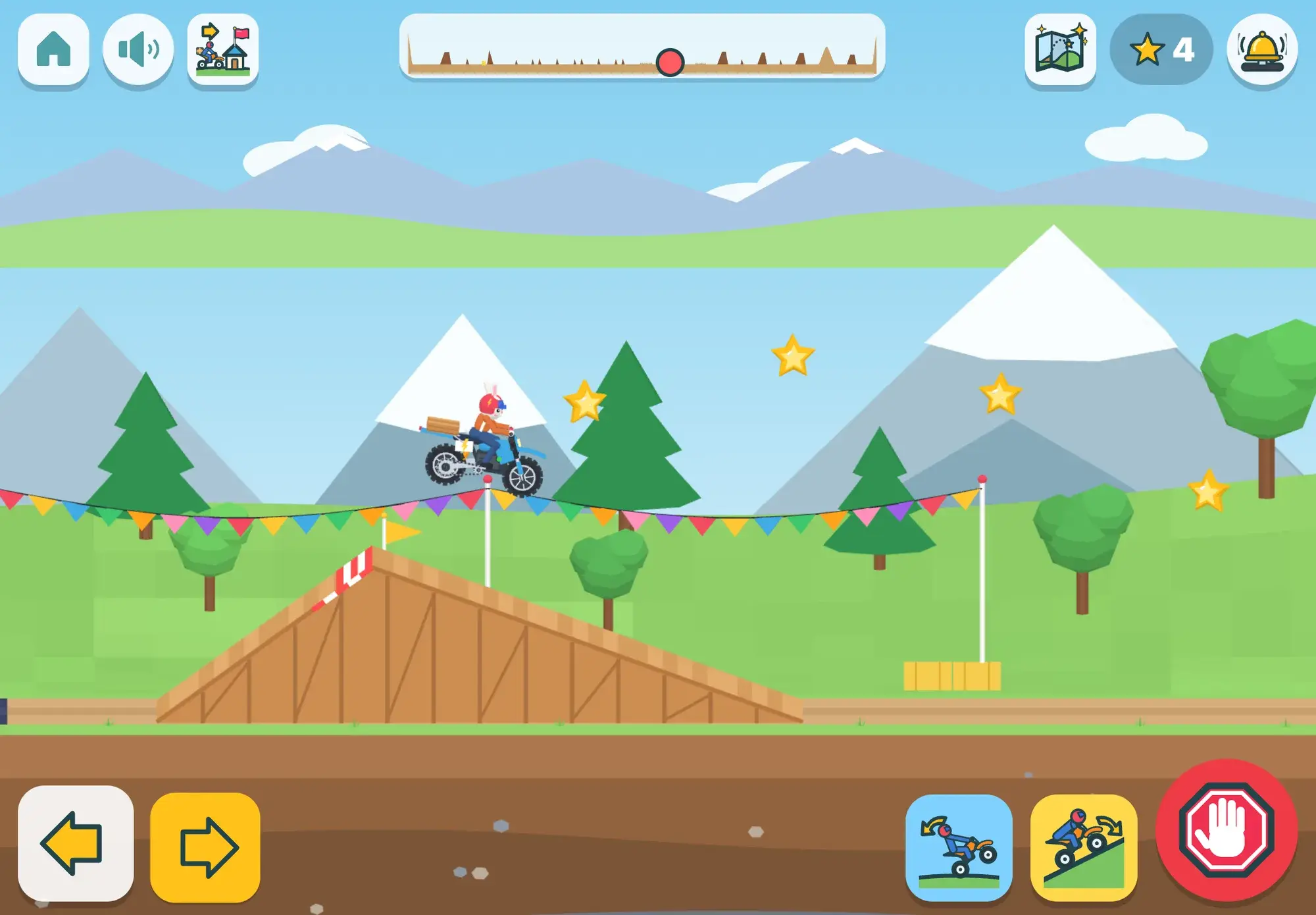
In Moto valley your child’s own animal, the one their profile has, rides a little electric dirt bike along a valley seen from the side, bringing things from one friend to another. The valley runs from a snowy hill past a village, a sheep meadow, a farm, a jump field, a muddy lane and a steep castle hill to the beach and the dunes.
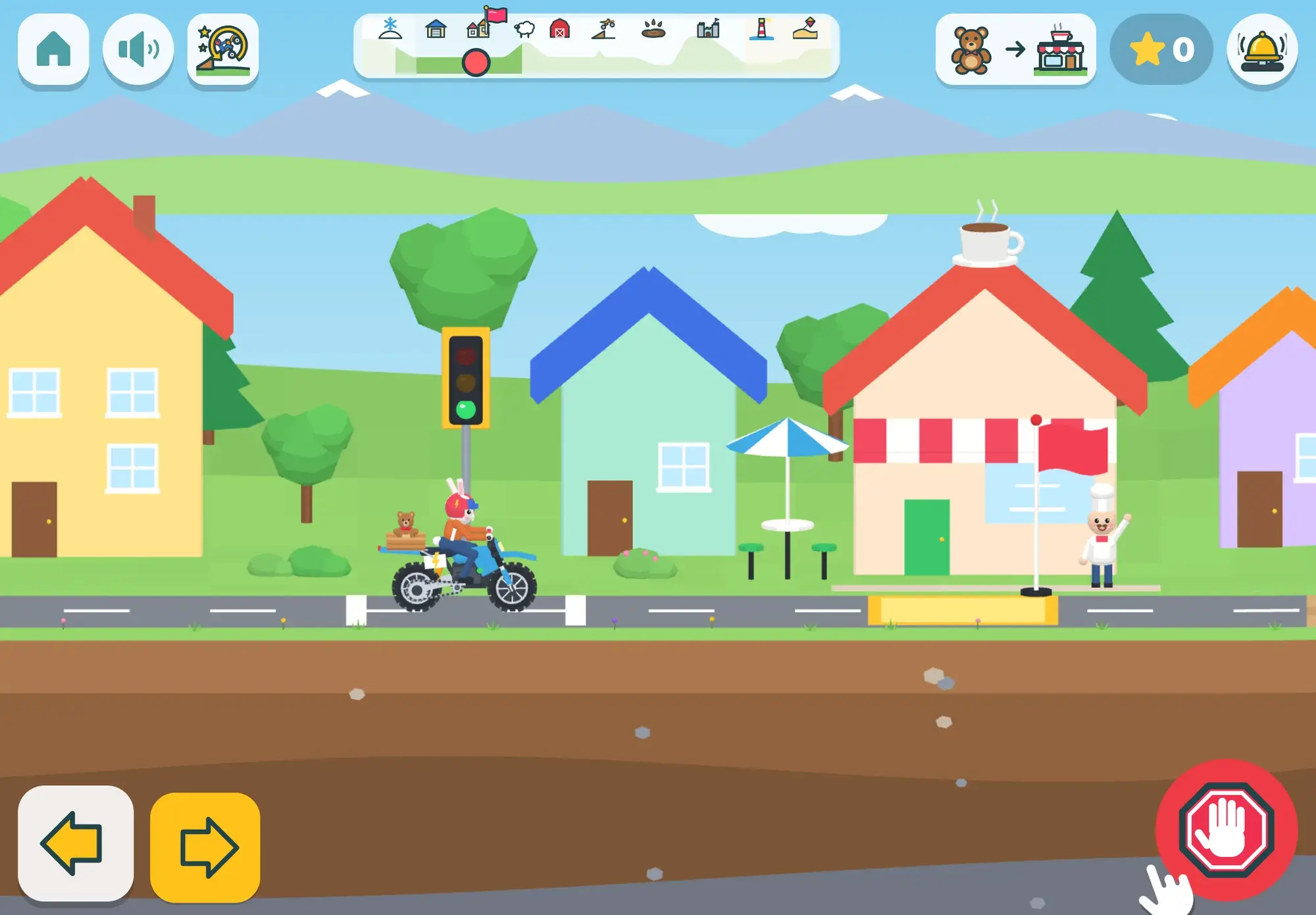
Every visit starts with one tap to put the helmet on, before the pedals wake up. Then each round is a job: “Here’s some fresh bread. Ride to the farm!” Your child holds an arrow pedal to ride and the big red button to brake, and a job ends when they stop in the yellow box painted on the road at the friend’s place.
Each step of the game puts one idea about motion on the way. Some steps ask your child to guess first with picture buttons, and the ride shows the answer. There is also free riding in a stunt park, with no jobs and no mistakes.
How it plays
First, stopping in the yellow box. Then the meadow hill: uphill needs the arrow held (“Uphill needs power!”), downhill the bike speeds up by itself, and sheep start crossing at the bottom, so your child has to brake on the way down. Nothing is ever hit: if the bike can’t stop in time, the game stops it just short.
At the jump field your child picks slow, medium or fast, the bike rides the run-up and flies, and a star shows where the right speed lands: “A bit short! Try a faster speed.” In the village, the light mostly turns amber, then red, as the bike comes. Sometimes it stays green, so your child has to look rather than always stop.
On the muddy lane the brakes hardly work, so your child has to slow down before the mud: “Mud ahead! Slow down now.” Then a pumpkin or a bunch of balloons to carry over the hill. First the guess: fast like a hare, or slow like a snail? At the top the voice explains: “It’s heavy, so the bike goes slowly up the hill.”
The castle hill is so steep that the front wheel lifts, and holding the lean button keeps it down; a bike that tips over just rolls the rider softly onto the grass. On a longer ride your child compares the battery’s bars with the lightning bolts on the way: enough, or charge first? At the ice and the dunes they pick road, spiky or fat tires.
The bike won’t go. Your child presses the arrow, then looks and listens: a flat back tire that sags, a chain hanging off while the motor whirs, or an empty battery and silence. They pick the pump, the wrench or the charger, and after two wrong tools the voice says where to look and the right one glows.
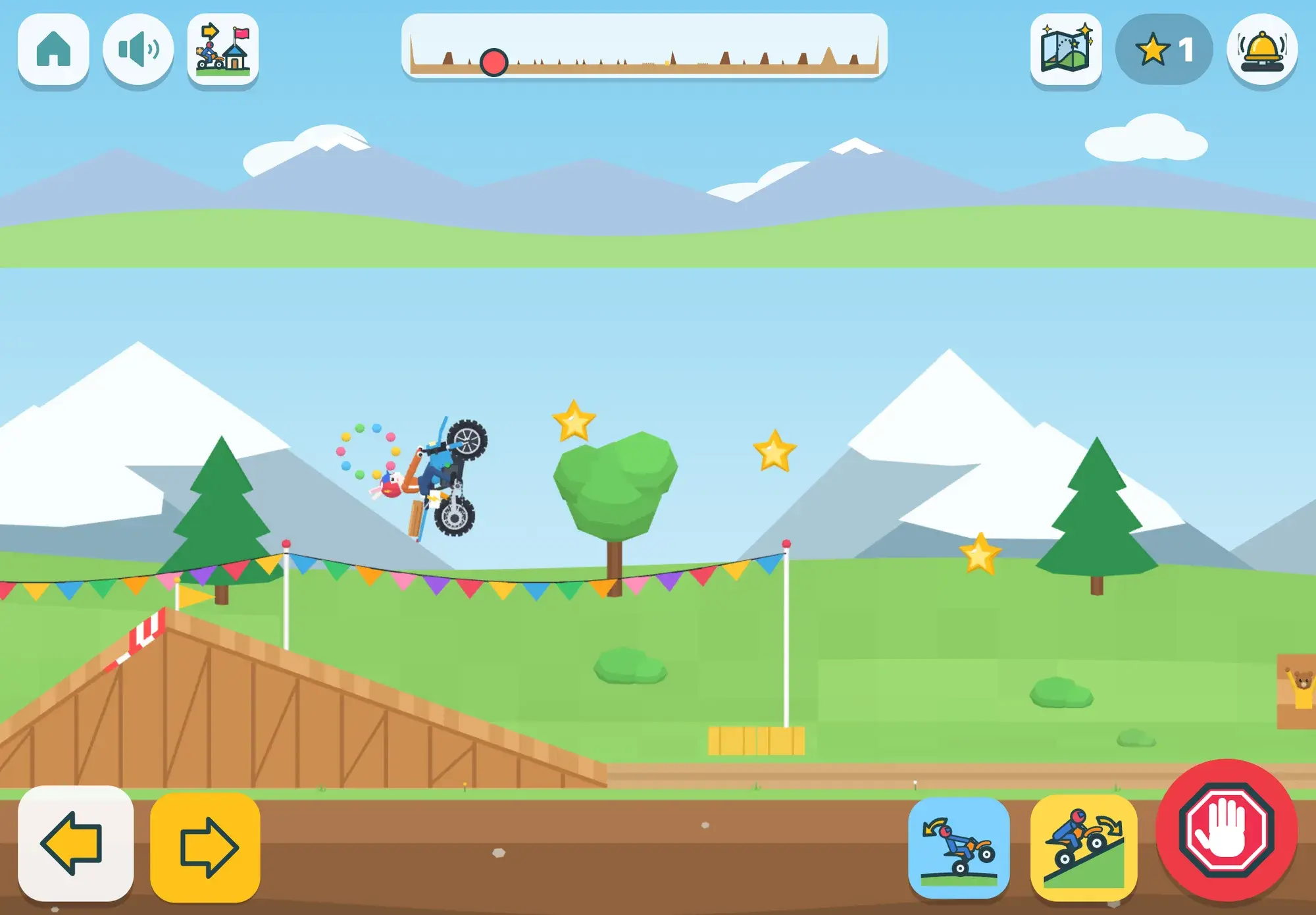
Instead of deliveries, your child can choose free riding: a stunt park made new each time, with ramps, double jumps and stars floating along each jump’s arc. Leaning in the air spins the bike into a flip, and letting go in time lands it on the wheels. A flip that didn’t come round is a soft crash, and the ride carries on.
Skills
The thinking
Young children already have ideas about how things move, some right and some not yet. Guessing first and then seeing what happens is a well-tried way to test them, the predict, observe, explain method (White & Gunstone 1992). So each idea is something your child does with the bike, and four steps ask them to guess or choose first.
Stopping on a mark means noticing and braking ahead of time. The traffic light is a go/no-go task, where the hard part is holding back: stop on red, go on green, and sometimes it stays green. Comparing the battery’s bars with the bolts on the way is counting and “more or fewer” with small numbers.
The helmet goes on every visit, because a routine done the same way every time becomes a habit.
Away from the screen
Ideas to carry the game into everyday life, no screen needed.
Make a ramp from a book, roll a toy car down it, then make the ramp higher and see how far the car goes.
Race two toy trucks up a slope, one empty and one loaded with blocks: which one is slower?
Push a toy car across a rug, a wooden floor and a tray of sand: where does it roll farthest?
Make the helmet the first step of every bike or scooter ride, the same way every time.
FAQ
The bike is a little electric dirt bike in a cartoon valley, and the game is about how things move. The helmet goes on at the start of every visit, and the parent area says that a real four-year-old should ride a balance bike or a bicycle, with a helmet, not a motorbike.
Nothing is ever hit: at the sheep and the red light, the game stops the bike in time. A bike that tips over on the steep hill rolls the rider softly onto the grass, with a boing and stars, and is put back at the bottom. Riding about is never counted as a mistake.
No. Free riding has no levels, mistakes or jobs, and none of it counts toward the steps. The parent area shows what your child did there, such as flips, big airs and wheelies.
Guides
Easy STEM activities for 3 to 6 year olds: build bridges, dig and pour, look through a magnifier, grow plants and race cars down ramps.
Read the guide
More to explore
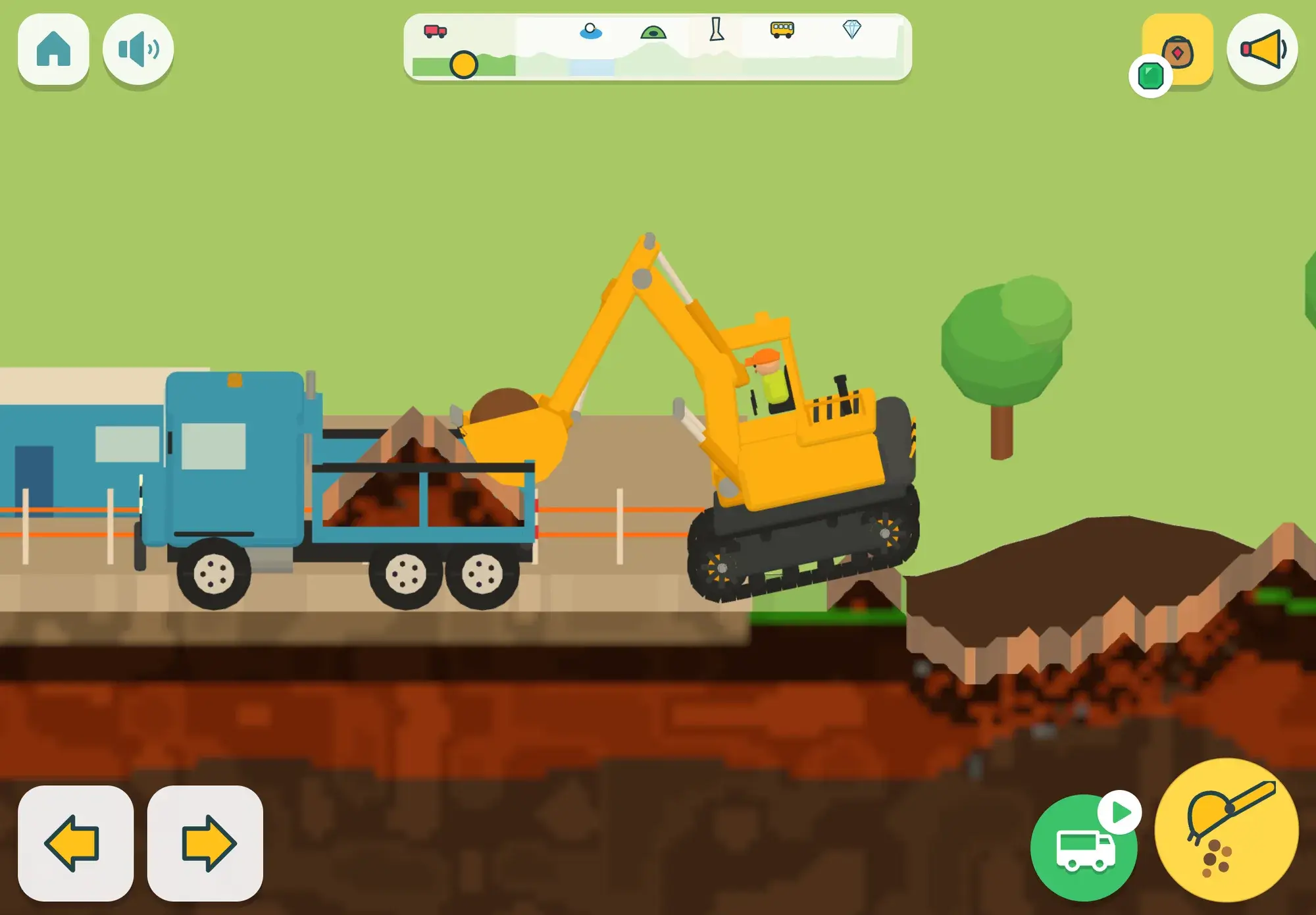
A digger to drive yourself, a world to explore, and no levels at all.
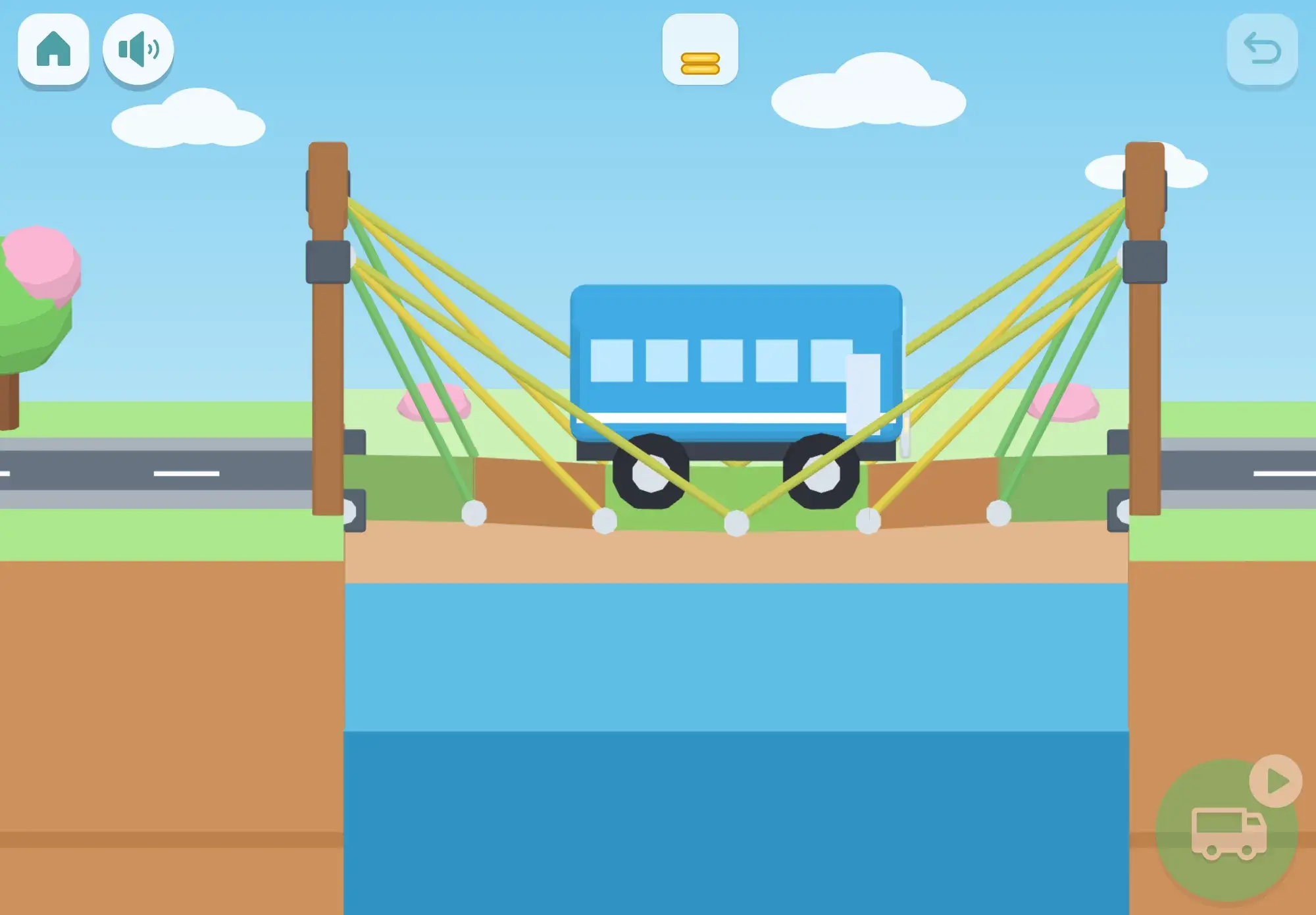
Join the dots, send the truck across, and see what happens
Spoken from the first tap, no reading needed, no ads, and progress that stays on your iPad.