7 min read
Coding for kids who can’t read yet: screen-free and app ideas
How 3–6-year-olds can learn sequencing, debugging, loops and functions before they read, with floor games, arrow cards, robot play and picture-based apps.
Read the guide
Around the world
Meet a country, paint its flag, drive there, and earn a passport stamp
Around the world is a trail of stops, and a little plane moves along it as your child plays. At each new stop they meet a country. Photos show something from there while the voice explains: “This is Japan! Sushi comes from Japan.” Then your child paints the flag, solves a short arrow puzzle to carry a picture to the right country, and answers a quick spoken quiz by tapping flags. Passing it puts a stamp in their passport and flies the plane on.
The trail starts with Japan, Italy and Brazil. The first five levels bring in 15 hand-picked countries, and then the trail keeps going, three new countries per level, until it has covered all 193 UN member states. Along the way new kinds of facts open up: hello words, capitals, continents, languages and the world map. Each one applies to every country your child already knows, so Japan comes back with “Konnichiwa!”, then its capital, then Asia.
Nothing needs reading. Every question is spoken, every answer is a picture, and a wrong flag simply says which country it belongs to before the right one wiggles.
How it plays
Each new country opens with photos of real places, animals and food from there, such as snow monkeys and Mount Fuji for Japan. The voice names the country and asks your child to say it out loud. Once facts are unlocked, the meeting also covers the hello word, the capital, the continent, the language and where the country is on the world map.
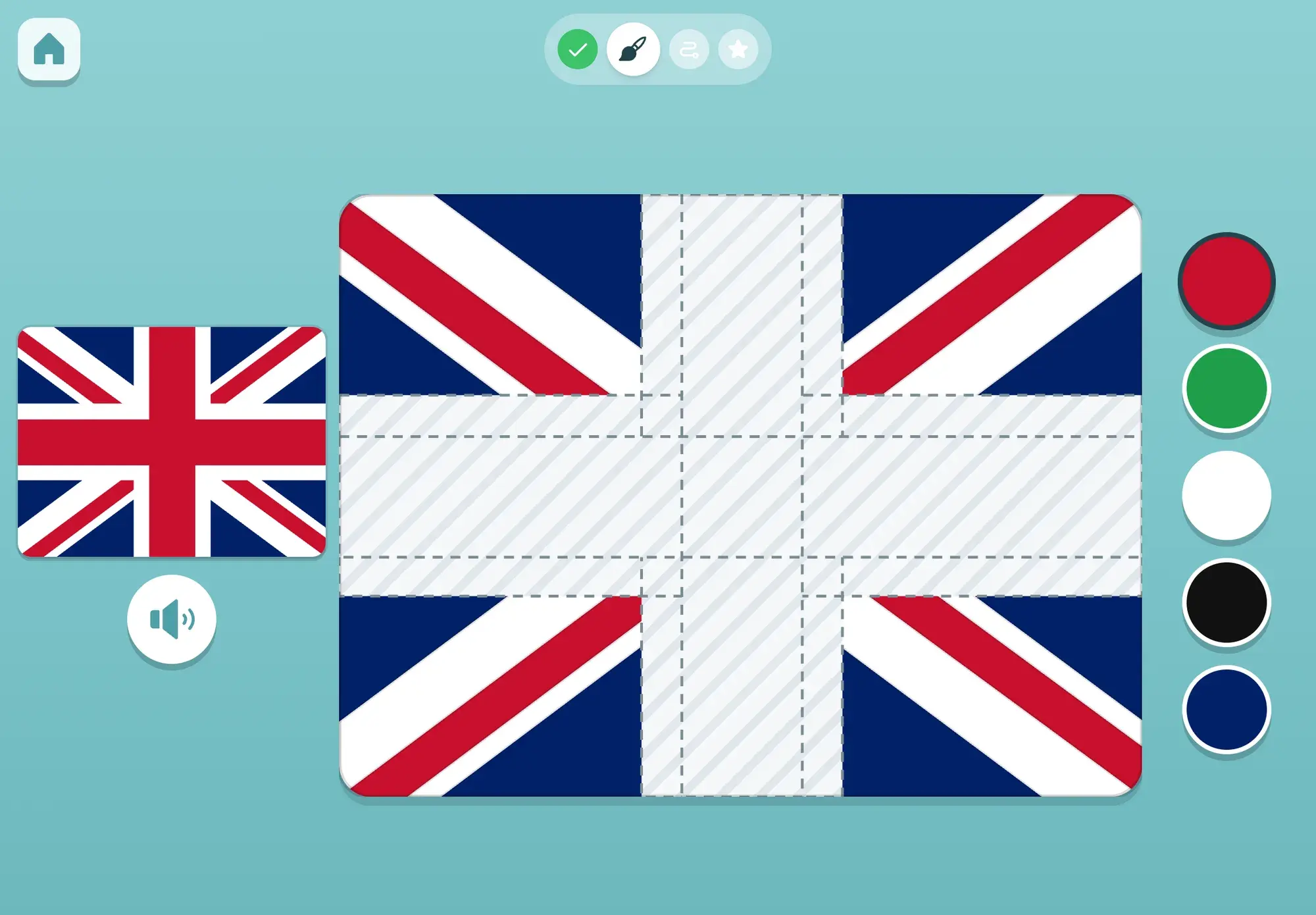
Your child taps a color, then taps part of the flag to paint it. A wrong color gets “Hmm, not that color. Look again!” From Level 3 a flag jigsaw takes turns with painting: four pieces with a faint picture in the frame at first, six from Level 5, and from Level 7 two pieces start turned. After two tries, the right place wiggles.
From Level 2, the country’s name is split into syllables on spinning wheels, like CA, NA, DA. Every piece says its sound, and the play button reads your child’s order aloud. There is no wrong answer: an odd order just sounds odd. Early on the written name shows faintly underneath to copy, and from Level 4 it is solved by sound alone.
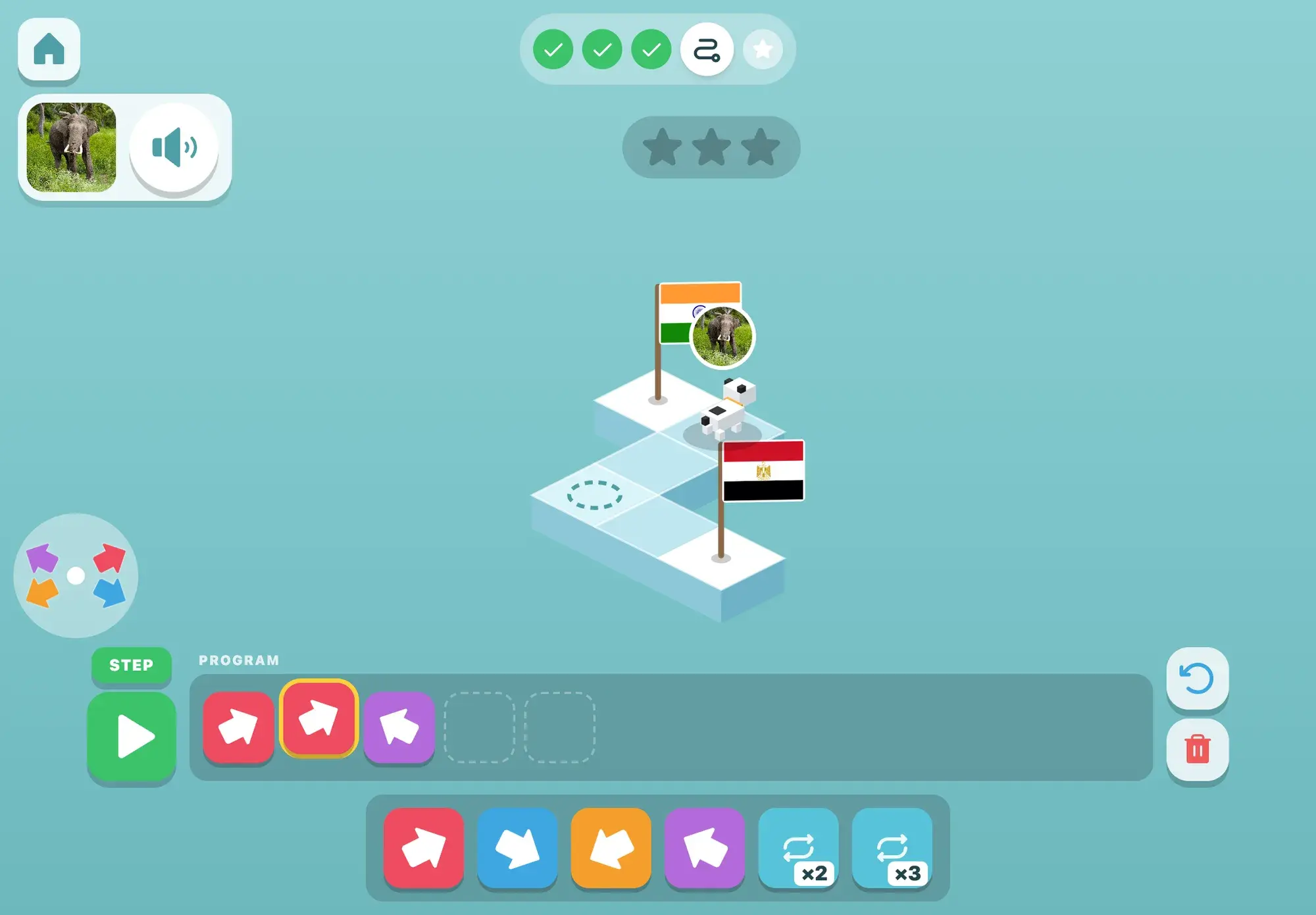
A small board shows two flags and a puppy. The voice gives the job (“Take the sushi home!”), your child taps arrow blocks to plan the path, then presses play to watch the puppy walk it. A wrong way gets “Oops! No road there.” Repeat blocks join at Level 3. From Level 6, every other trip uses forward, turn left and turn right, seen from the puppy’s side.
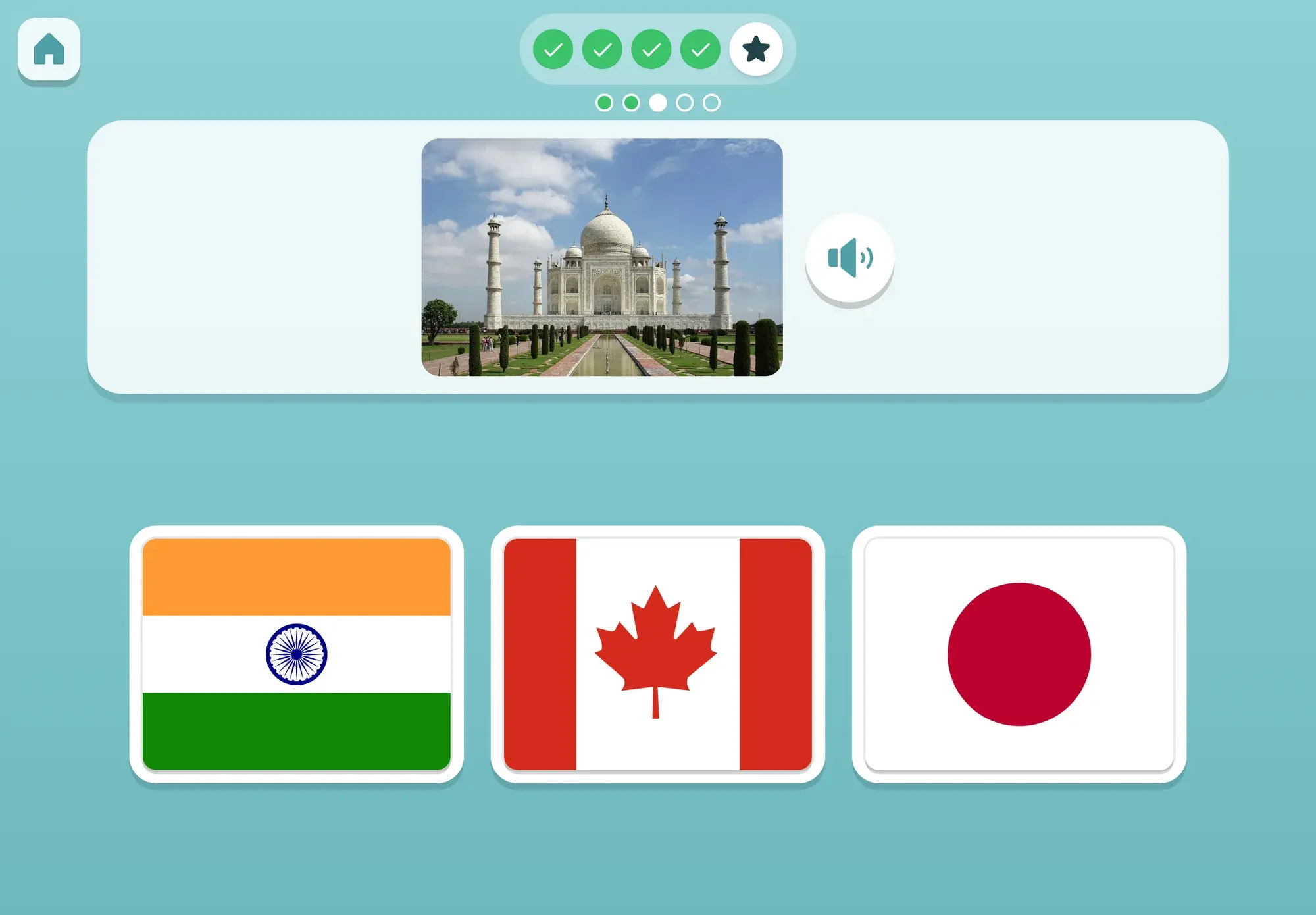
The quiz asks things like “Where is the flag of Japan?” or “Where does sushi come from?”, with two answers at Level 1 and up to four later. If it doesn’t go well, the voice says “Let’s practice a little more” and replays the country before asking again. Each level ends with a big trip that mixes every country so far, and learned countries come back for review after 1, 2, 4, 7 and 14 days.
Skills
The thinking
The puzzles are there for more than variety. Spatial skill predicts later success in math and science, and it improves with practice, with gains that last and carry over to untrained tasks (Uttal et al. 2013, a meta-analysis of 217 studies). Puzzle play at 2 to 4 years predicts how well children can mentally move and turn shapes later (Levine et al. 2012). Turning left and right as the puppy sees it is a real step up, so it gets its own introduction stop.
The content is kept deliberately neutral. Countries are the 193 UN member states with their common English names. Where a capital is disputed or split between cities, as in Bolivia or South Africa, it is left out rather than picking a side. Photos show landmarks, nature, animals, food and everyday life, never politics, military, religious ceremonies, brands or costume stereotypes.
Away from the screen
Ideas to carry the game into everyday life, no screen needed.
Go flag spotting on food packaging, flagpoles and in picture books, and ask your child which country each flag belongs to.
Color a flag from memory with crayons, then check it against a real one together.
Clap out country names at the table, one clap per beat: Ca-na-da, Ja-pan.
Hide a toy and guide your child to it with “forward, turn left, turn right”, then swap roles.
FAQ
Yes, it opens at every age. Level 1 has just three countries, and each question offers only two answers. The harder parts come later: capitals at Level 3, continents and languages in Levels 4 and 5, and left-and-right road trips from Level 6.
No. Every question and instruction is spoken, and every answer is a flag or a picture. The name puzzle shows the written name faintly in the early levels, but it is solved by listening.
The voice says which country that flag belongs to (“This is Italy!”), adds “Oops! Try again.” and the right flag wiggles, so a wrong answer still teaches a country. There is never a “you failed” screen.
No. In the parent area you can mark the flags your child already knows. Those stops become a short hello and a quiz, so the trail moves quickly on to new countries.
Guides
How 3–6-year-olds can learn sequencing, debugging, loops and functions before they read, with floor games, arrow cards, robot play and picture-based apps.
Read the guide
Teach flags and countries to a 3–6-year-old: start with a few, give each a story, paint and puzzle the flags, and bring old ones back over days.
Read the guide
More to explore
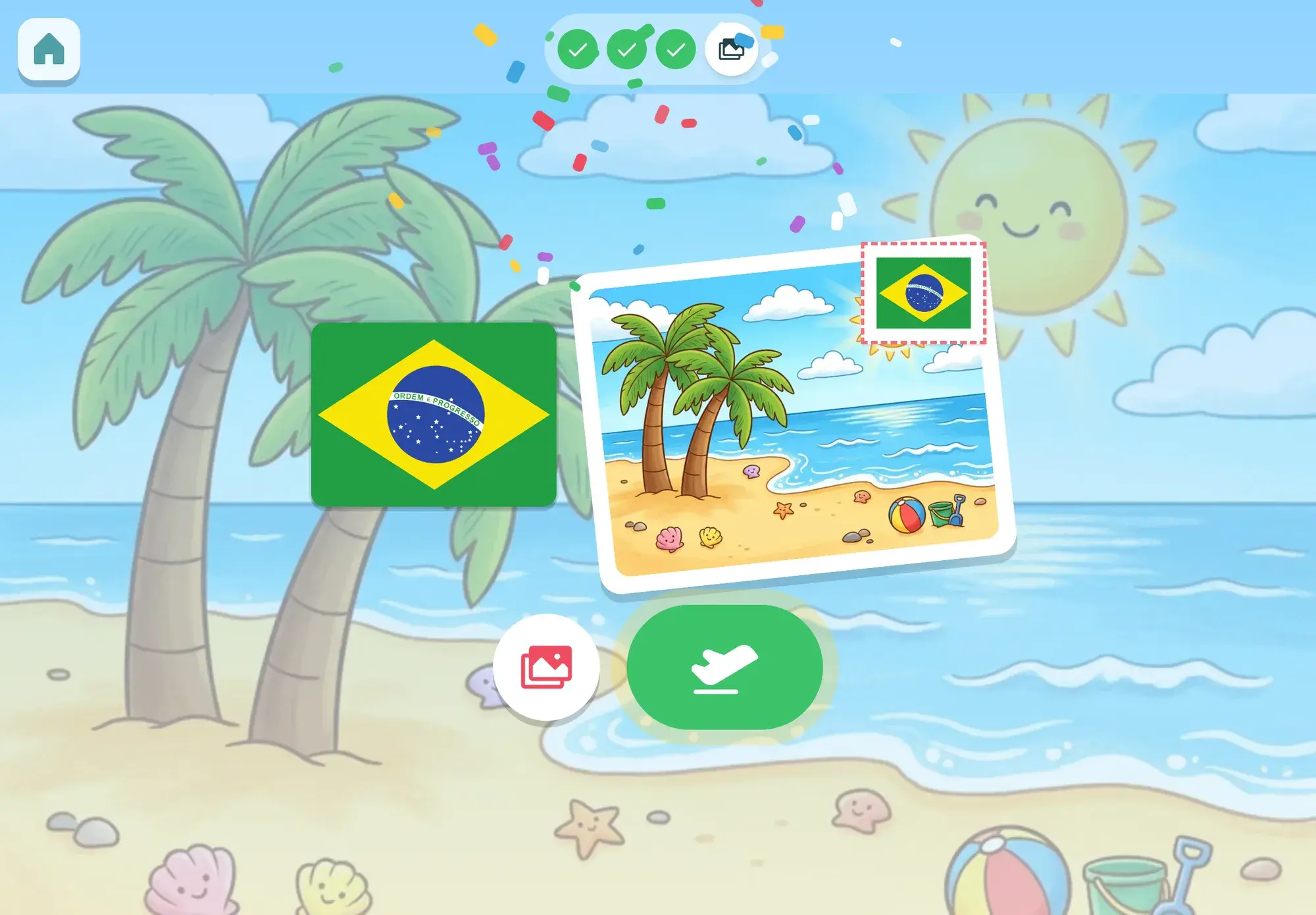
Ticket, suitcase, flight and postcard: a trip to a country your child knows
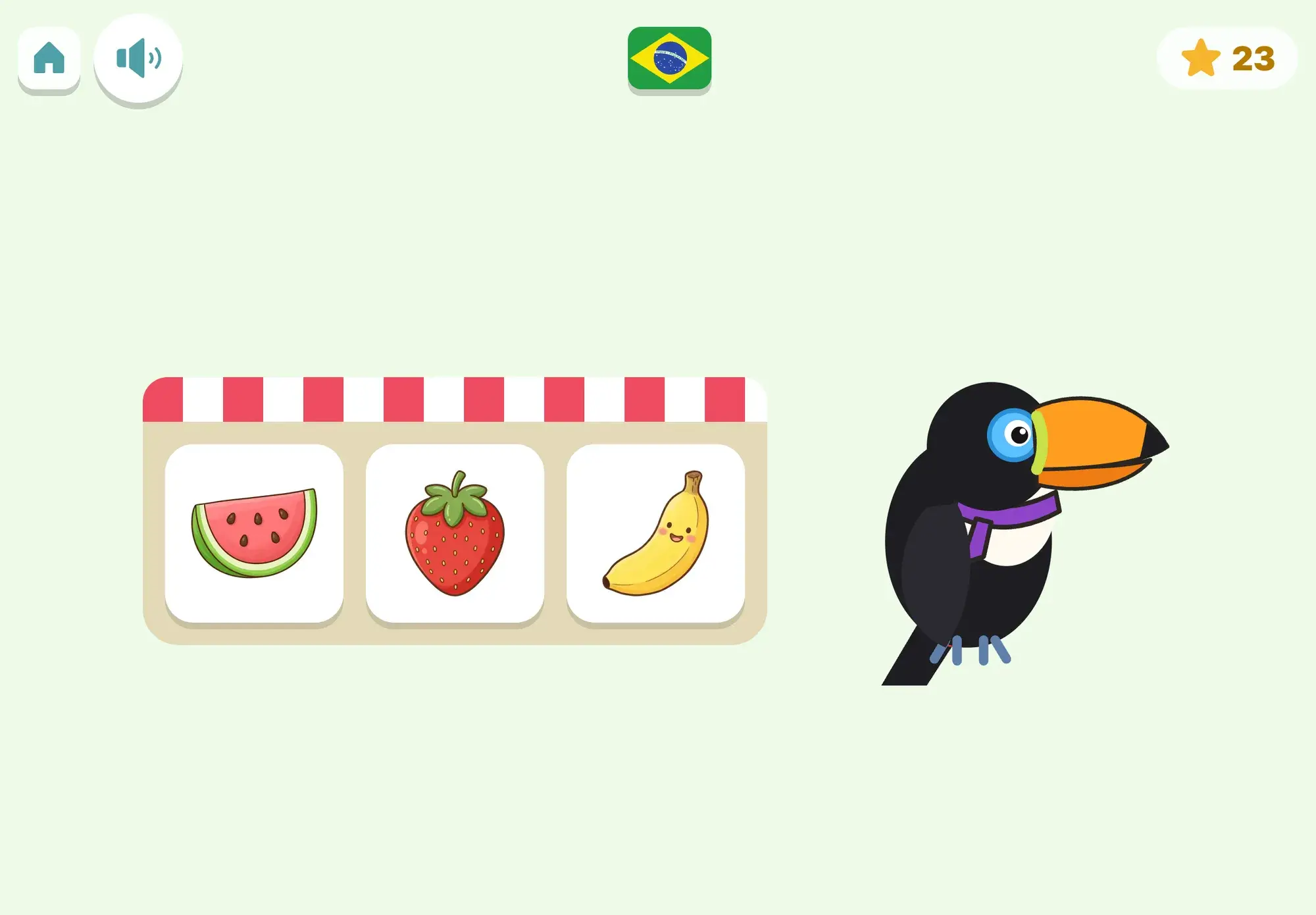
Hello, colors, fruits and numbers in Portuguese, from a toucan who speaks nothing else.
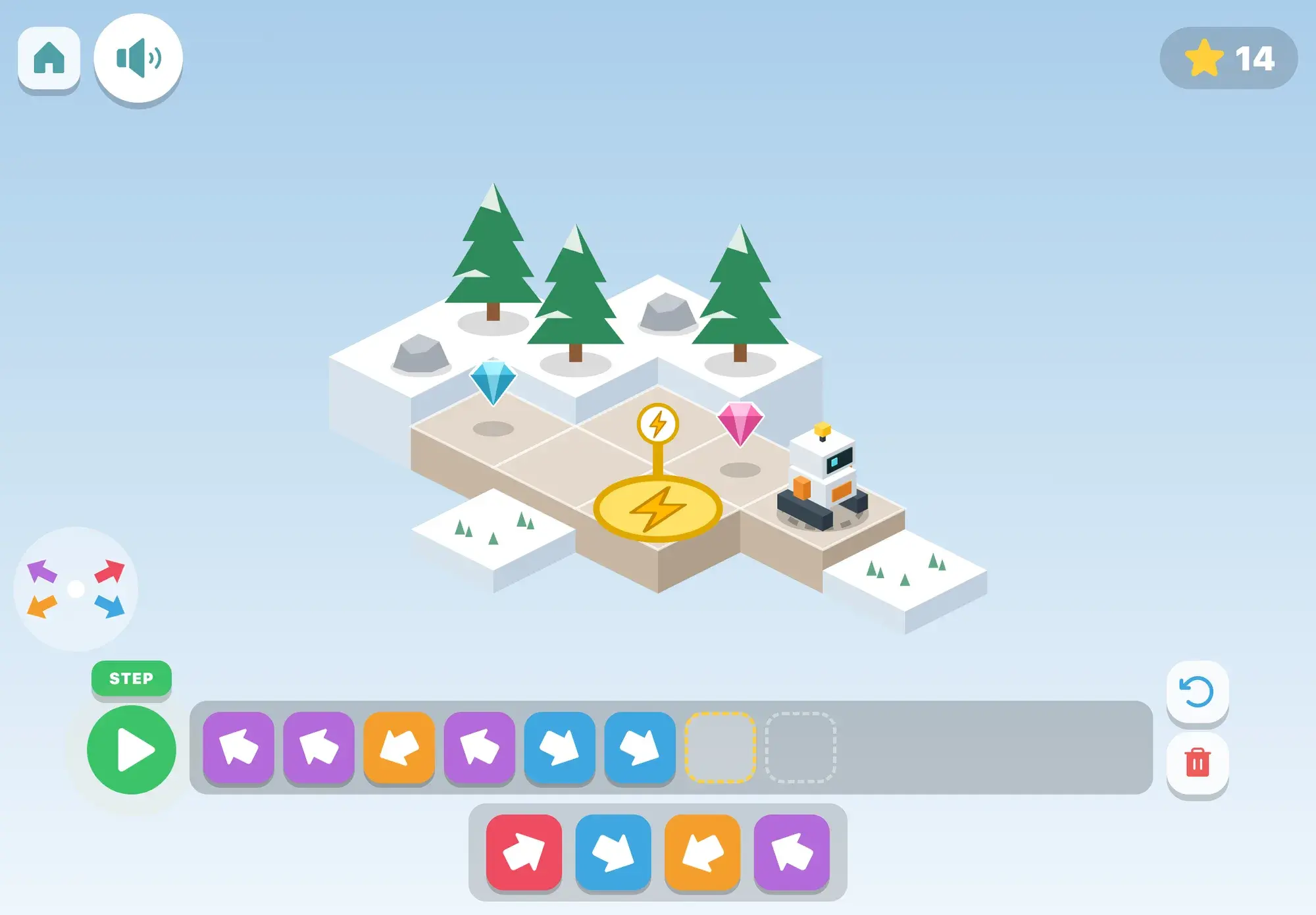
Spoken from the first tap, no reading needed, no ads, and progress that stays on your iPad.