Skip to content
Maestri World

The airport

Airport game for preschoolers: pack for the weather and fly by numbers

Ticket, suitcase, flight and postcard: a trip to a country your child knows

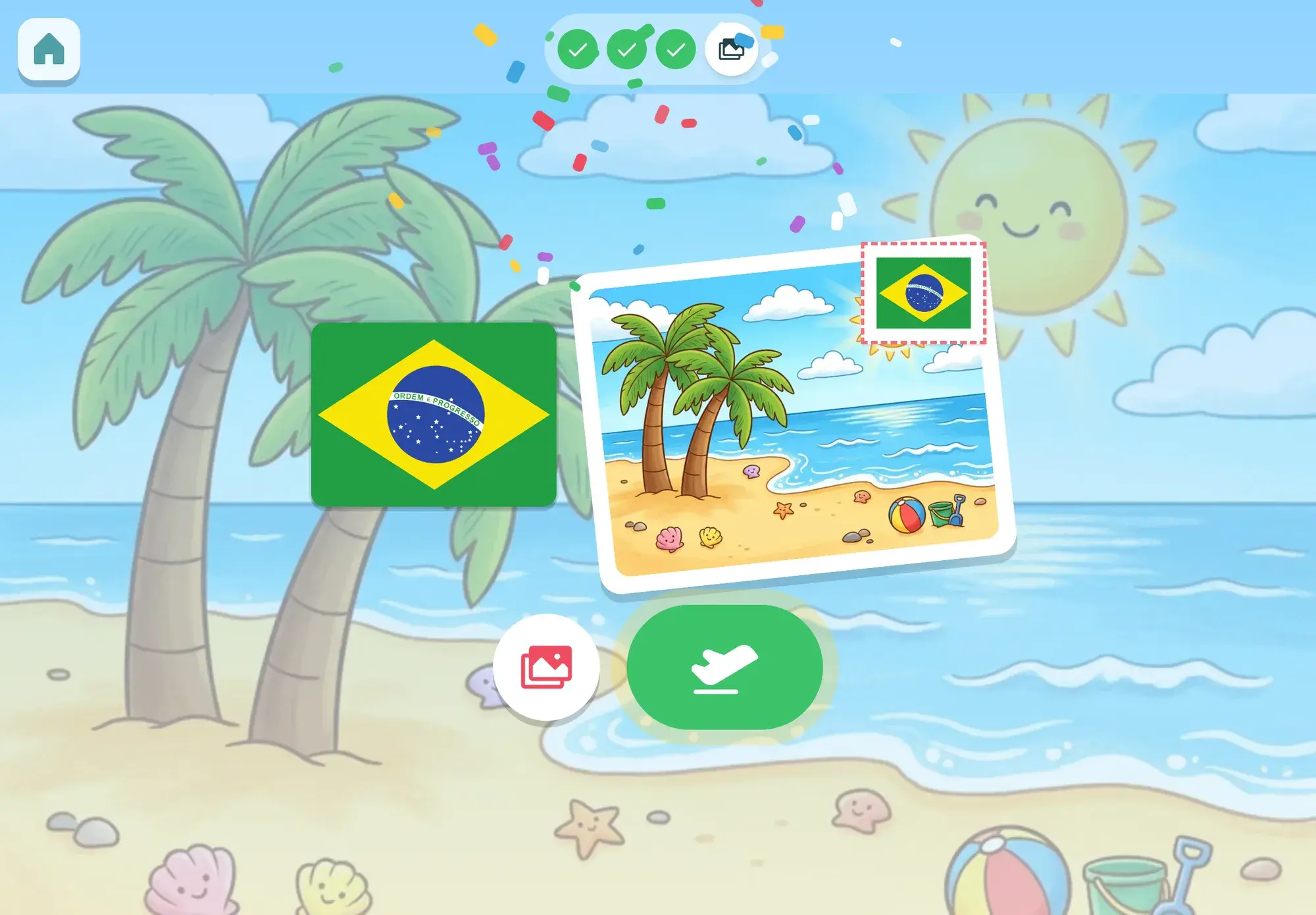
Landing in Brazil: the Brazilian flag and a beach postcard with palm trees and a flag stamp sit on a sunny beach scene, with confetti falling

What is the airport?

The airport is a trip in four short steps, shown as pictures along the top of the screen: find the ticket, pack the suitcase, fly the plane and collect a postcard. Trips only go to countries your child has already learned on the Around the world trail, so the flags and names are ones they have met before. With no countries learned yet, the airport points them to the trail first.

Packing is about the weather where you’re going. A postcard says where and what it will be like (“We’re going to the snowy mountains! It will be snowy and cold.”), and one thing at a time goes into the suitcase or stays at home. Flying is a number line standing on end: the plane’s height is a number on a ladder at the side, with 0 for the runway.

Every trip ends with a postcard of the place, with the country’s flag as its stamp, for the album. Empty frames show which postcards are still to collect, so new trips aim at those first.

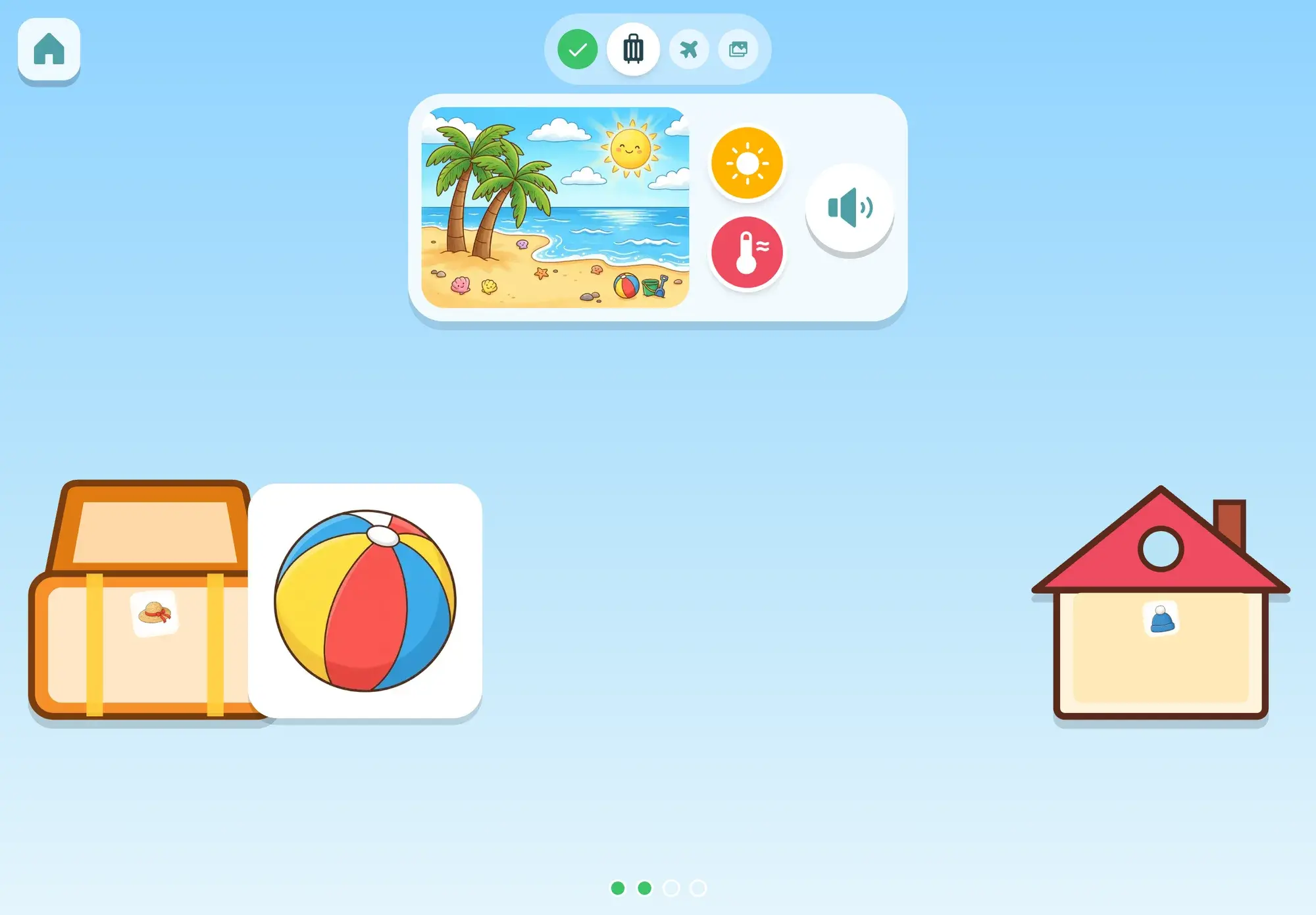
Packing for a hot, sunny beach trip: a beach ball goes into the open suitcase next to a sun hat, while the woolly hat stays at home

How it plays

Step by step through the airport

  1. 1

    Find the ticket

    “Fly to Brazil! Where is the flag of Brazil?” Your child taps the boarding pass with that flag, out of up to three, all from countries they have learned. A wrong one says the name of its country, so even a miss is a little review of the world trail.

  2. 2

    Pack for the weather

    Each thing is dragged (or tapped) to the suitcase or to the house. A wrong side explains why, and the right side wiggles: “Hmm, do we need that? Mittens keep your hands warm in the snow. Let’s leave it at home.” Only things that are clearly needed or clearly not needed at a place are ever shown, so nothing is a matter of opinion.

  3. 3

    Every-trip things and T-shirts

    Later trips add things that come every time (toothbrush, pajamas, teddy), then one T-shirt for each day away. Squares at the top show the days, from 2 to 5 at first and later up to 7. Each tap on the pile packs one T-shirt, counted aloud. Closing the suitcase too early gets “We need more”, and an extra T-shirt bounces back.

  4. 4

    Fly through the rings

    A ring waits in the sky at a height, and the plane flies through once it is level. First your child taps up and down one step at a time, and each step says its number; going the wrong way gets “Too high! Go down.” Heights go up to 5, then to 10. The last ring is the runway, so every flight ends by counting down to land.

  5. 5

    How many steps?

    Later your child decides how many steps first: “We’re at six. The ring is at eight. How many up?” Dots mark the gap on the ladder, the plane counts its way there (“seven, eight!”), and a right answer is said as a sum: “Six and two make eight!” Landing asks “How many down?” Then: “This is Brazil!”, and the postcard goes into the album.

Skills

What your child learns

  • Recognizing the flags of countries learned on the world trail.
  • Matching clothes and things to the weather: what helps in snow, rain or sunshine.
  • Remembering the things that come on every trip, like a toothbrush and pajamas.
  • Counting out one T-shirt for each day of a trip.
  • Moving up and down a number line from 0 to 10.
  • Counting on and counting back from one number to another.

The thinking

Why it works

Choosing what a future situation will need is called “episodic foresight”. In a study where three- to five-year-olds imagined going to different places and chose what to take, four- and five-year-olds did clearly better than three-year-olds (Atance & Meltzoff 2005). Packing for the snowy mountains or the beach asks for exactly that kind of thinking, and every wrong choice comes with the reason, not just a no.

The flight borrows an idea from the research behind the number race: Siegler & Ramani (2008, 2009) found that preschoolers who played a board game with the numbers 1 to 10 in a straight line, saying each number as they moved, got better at placing numbers on a number line. The airport’s ladder is that kind of line, standing up. It practices the same idea; it is not a copy of the study. Packing and flying move up their ladders separately, so being new to one never holds back the other.

Away from the screen

Keep it going at home

Ideas to carry the game into everyday life, no screen needed.

  • Before an outing, check the weather together and let your child pack a small bag, asking “Do we need that?” for each thing.

  • For a trip or a sleepover, count out one T-shirt for each day together.

  • On the stairs, play the flight: “We’re on step three. How many up to step five?”

  • Make a postcard for a country your child has learned, with its flag drawn as the stamp.

FAQ

Questions about the airport

What age is the airport game for?

It opens from age 4, worked out from your child’s birth month, and a parent can show it earlier or hide it. The first trips are small: four things to sort and heights up to 5.

Does my child need to play Around the world first?

Yes. Trips only go to countries learned on the world trail, so at least one is needed, and until then the airport points your child to the trail. Each new country learned there becomes a new trip and a new postcard to collect.

What happens if my child packs the wrong thing?

The voice explains why it doesn’t fit this trip and the right side wiggles. Three clean trips open the next packing skill, and a trip with three or more mistakes makes the next one easier.

How does flying a plane teach math?

The plane’s height is a number from 0 to 10, so every step up or down is counting. Later your child chooses how many steps to go before the plane moves, which is counting on and counting back, and the answer is said as a sum.

Guides

Read more

More to explore

Kids who like this also play

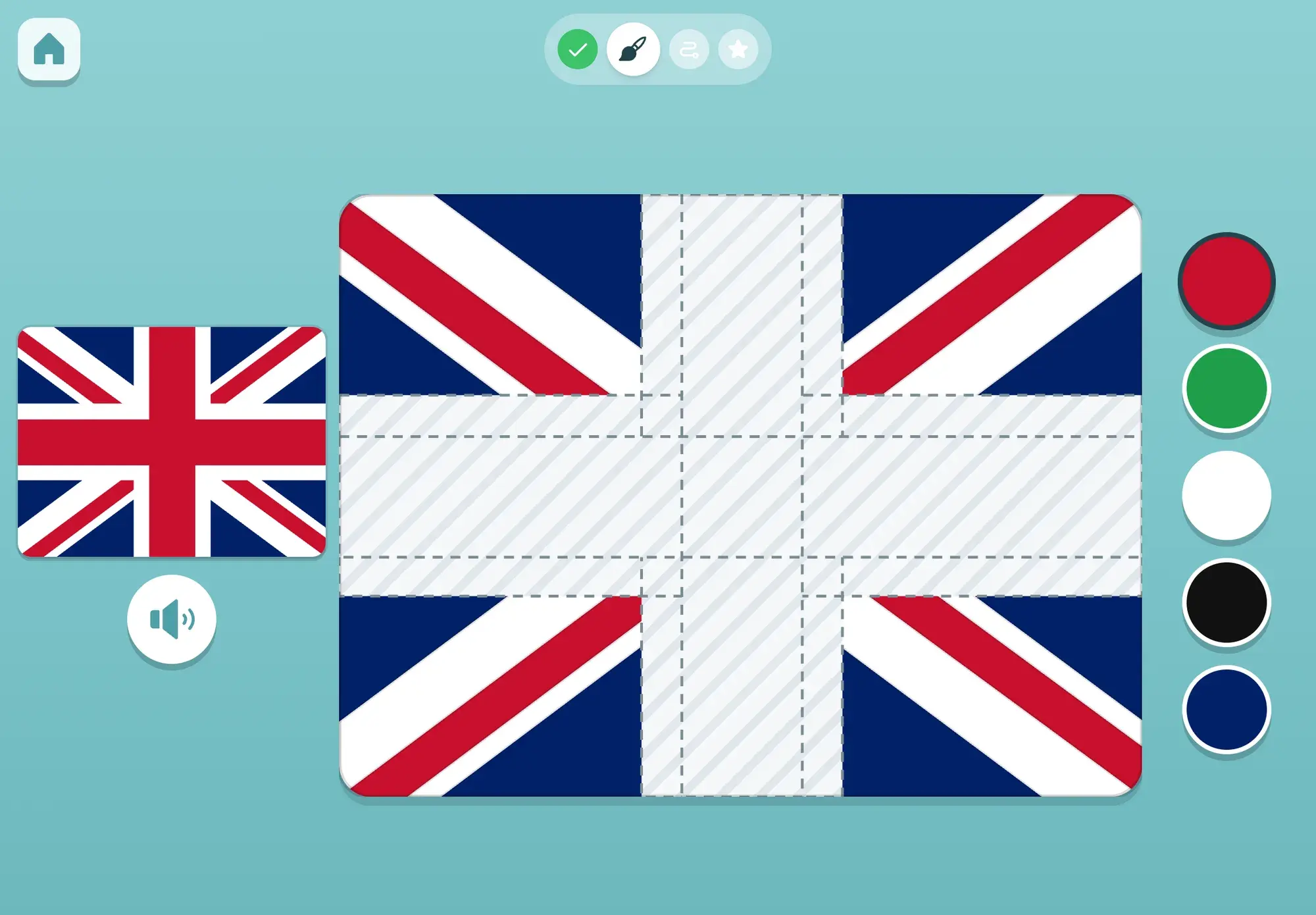
A half-painted Union Jack: the blue and the diagonal stripes are done, the red and white cross is still to fill, with the real flag and five paint pots beside it

Meet a country, paint its flag, drive there, and earn a passport stamp

Ages 3–6GeographyCoding
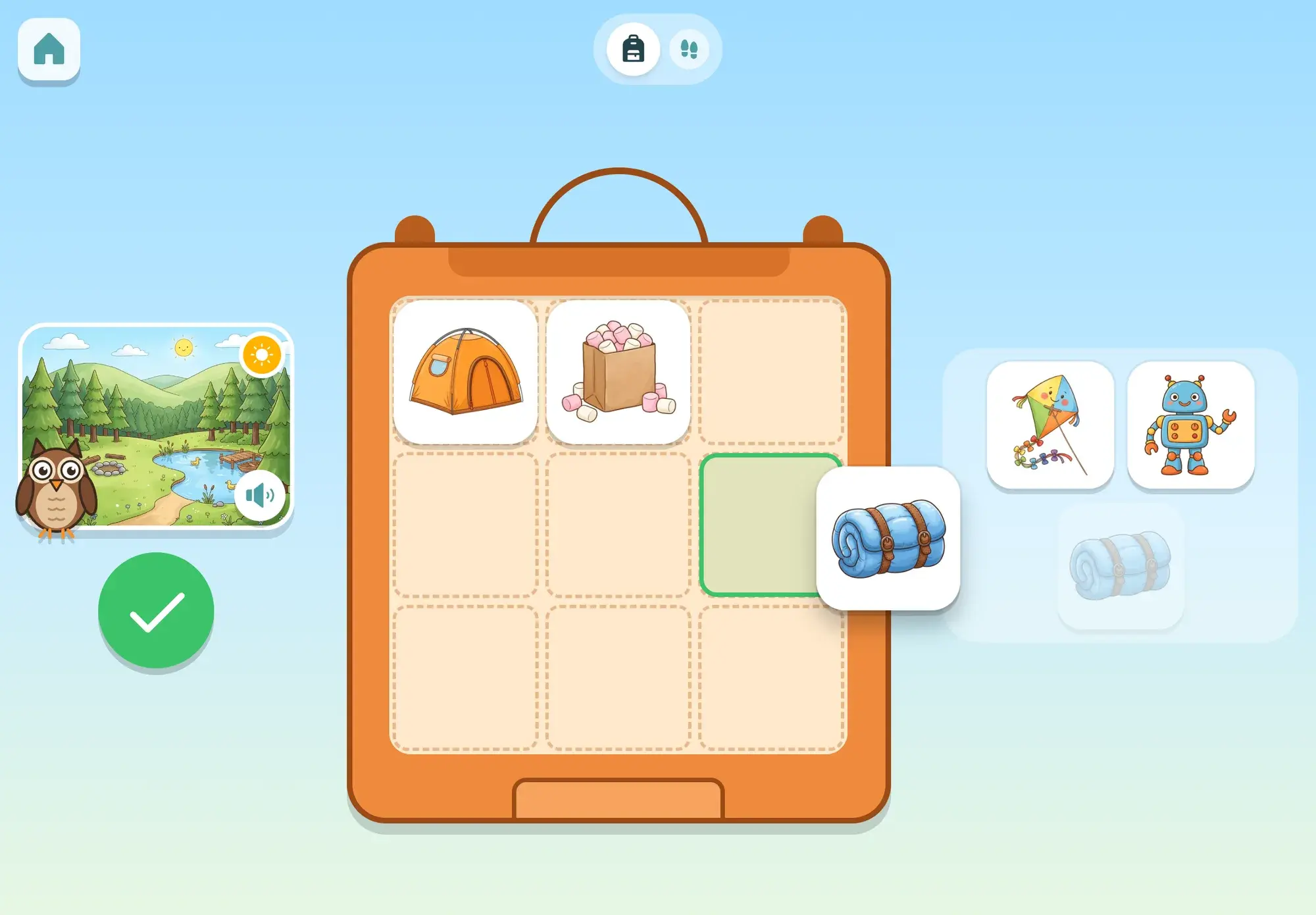
Packing for a camping trip: the tent and the marshmallows are in the backpack and the sleeping bag is being dragged in, while a kite and a toy robot wait on the shelf

Pack what the trip needs, make room for a toy, and count coins at the shop.

Ages 5–6Life skillsShapes & spatial
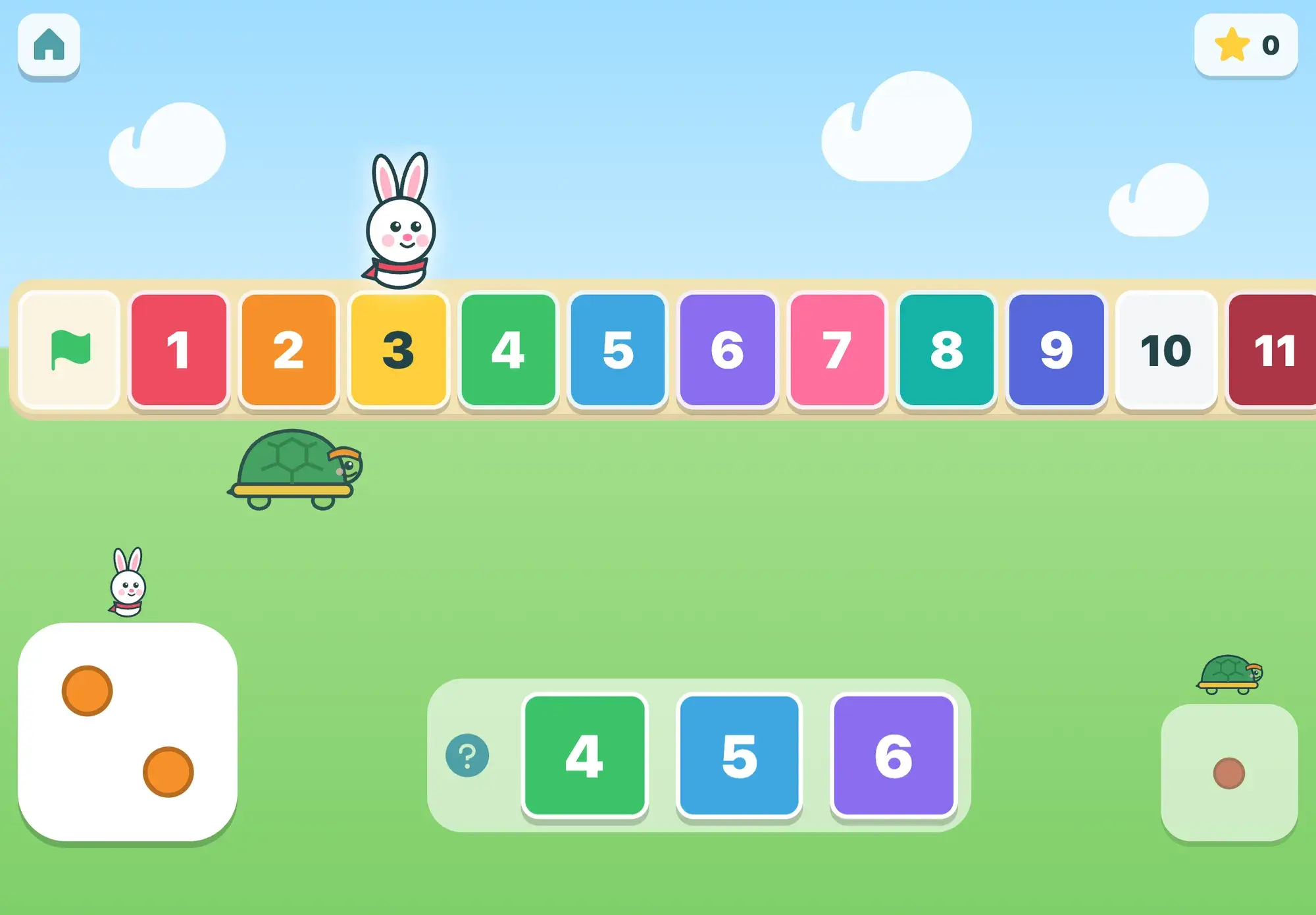
The bunny sits on square 3 of a colourful 1-to-20 number track ahead of the turtle, the dice shows two dots, and the child picks where the bunny lands from 4, 5 or 6

Roll, hop square by square, say each number, and race a friendly turtle

Ages 3–6Math

A whole town of learning, ready when your child is

Spoken from the first tap, no reading needed, no ads, and progress that stays on your iPad.