To teach a preschooler flags and countries, start with three to five countries, give each one a story your child can hold on to (a food, an animal, a hello word), let them paint or puzzle the flag with their own hands, and bring old flags back a day or a few days later. Flags are bright, simple pictures, so they are one of the easiest ways into geography for a child who can’t read yet. The map, capitals and continents can come later, hung on countries your child already knows.
Why flags are a good way in
A flag is a picture, not a word. A three-year-old can’t read “Japan”, but they can see a red circle on white. Telling flags apart uses things preschoolers practice all day anyway: colors, shapes, and stripes that stand up or lie down.
A flag is also a handle. Once your child knows the flag, the country can carry other things: a dish you cook together, an animal, a way to say hello, later a spot on the globe. Without that handle, “Brazil” is just a sound.
Be relaxed about what your child understands. To a four-year-old, a country may simply be “a faraway place where people say olá”. Borders, nations and continents are big ideas that take years to settle. What you are building now is familiarity and curiosity, and that is plenty.
What to expect at each age
Every child is different, so read this as a rough guide, not a checklist.
| Age | What often works |
|---|---|
| 3 | Naming the colors on a flag, recognizing a few flags that matter to your family, spotting flags when you’re out |
| 4 | Recognizing a growing set of flags, linking each one to a story (“Japan has sushi”), saying a hello word |
| 5 | Telling look-alike flags apart, flag jigsaws, a capital or a continent for each country, finding a few countries on a globe |
| 6 | Using a map: which countries are neighbors, which are far away, which continent a country is on |
Pick your first countries
Choose countries your child has a reason to care about: where grandparents live, where a favorite food comes from, a country in a bedtime book, a place someone in the family has visited.
For the first few, pick flags that look nothing alike. Japan (a red circle), Brazil (green with a yellow diamond and a blue globe), Canada (a red maple leaf) and the United Kingdom (red and white crosses on blue) are hard to mix up. Leave the near-twins for later. France and the Netherlands use the same three colors, one with stripes standing up and one with stripes lying down. Italy and Ireland differ only in the last stripe, red or orange.
Add a new country only when the earlier ones still come back easily a few days later. A slow trickle beats a flood.
Give each country a story
A flag remembered only as a shape tends to fade. A flag that goes with pizza, kangaroos or “konnichiwa” has something to hang on. Give each country one or two anchors:
- A food you can eat together: pasta for Italy, rice and beans for Brazil.
- An animal: a kangaroo for Australia, a panda for China.
- A place: a mountain, a famous building or a beach, shown in a photo.
- A hello word: hola, bonjour, olá, konnichiwa. Greet each other with it for the whole day.
Keep the facts plain and true. Landmarks, nature, animals, food and everyday life work well. Costumes and caricatures are easy to get wrong, so leave them out.
Then turn it into a trip. “Today we’re flying to Japan!” Line up two chairs as a plane, show a photo of where you land, and eat something from there for lunch.
Hands-on flag activities
Children remember what they do with their hands. These need little more than paper:
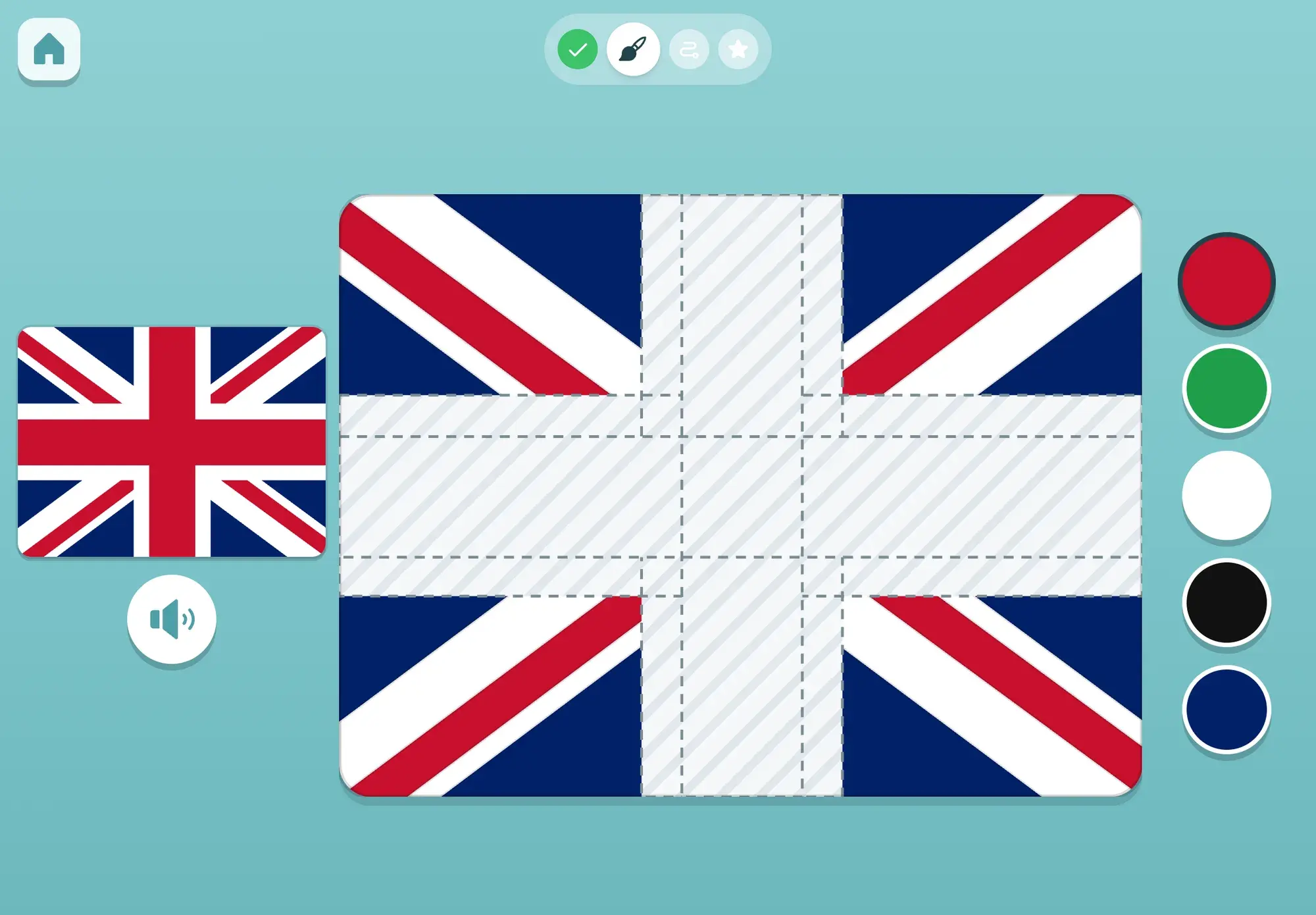
- Paint or color the flag. Draw the outline and let your child fill it in, naming each color. Talk about the shapes: “a red circle right in the middle”.
- Make a flag jigsaw. Print a flag, glue it to card and cut it into four pieces, later six. Striped flags have pieces that look exactly alike, which leads to a good question: does it matter which one goes where?
- Go on a flag hunt. Look for flags on food packages, at the airport, on boats, during sports on TV. Each one found is a small celebration.
- Play memory pairs. Make two cards of each flag you’ve learned and lay them face down. Say the country’s name whenever one is turned over.
- Spot the difference. Once a few flags are solid, put the look-alikes side by side: France and the Netherlands, Italy and Ireland. What’s the same? What’s different?
- Pack a pretend suitcase. “We’re going to snowy Canada. Mittens or a sun hat?” It links a country to its weather and adds a bit of planning.
Bring old countries back
The part that makes flags stick is coming back to them. Ask about yesterday’s flag today, again in a few days, and again next week. If your child has forgotten one, no problem: it just comes back sooner next time. Teachers call this spaced review: little and often, with gaps that grow as the answer gets easier.
Ask rather than tell. “Which one is Japan?” with two or three flags on the table gives your child the chance to remember it themselves, and that remembering is the practice. Mix old flags in with the new one, so the round isn’t five Japans in a row.
Keep it short. Three or four questions while dinner cooks is enough. Stop while it’s still fun, and the next round will be welcome.
When to bring in the map
Once your child knows a handful of countries well, give them a place on the globe. A globe is a friendly first map, because it’s a ball you can turn, like the Earth itself. Find “your” countries together and put a small flag sticker on each one, so the globe slowly fills with places your child knows.
Keep the ideas big and simple: this is sea, this is land, we live here, Japan is far away across the sea. Continents can start as “big pieces of land with lots of countries on them”. Capitals fit in around the same time: “Tokyo is Japan’s biggest city, where the government is” is plenty.
Common mistakes
- Too many at once. All of Europe in a week ends in a blur. Three to five countries, then one at a time.
- Starting with the map. A world map is an abstract picture of something nobody can see. Flags and stories first, then put the countries you know on the globe.
- Flags without stories. Shapes on their own are hard to hold. Give every flag a food, an animal or a hello word.
- Correcting like a test. If your child points at Italy when you asked for Japan, name what they chose: “That’s Italy! Japan is the one with the red circle.” No buzzers, no score.
- Expecting too much understanding. It’s fine if “country” stays a little fuzzy for a while. Knowing that Brazil has a green flag and people there say olá is a real start.
How Maestri World approaches it
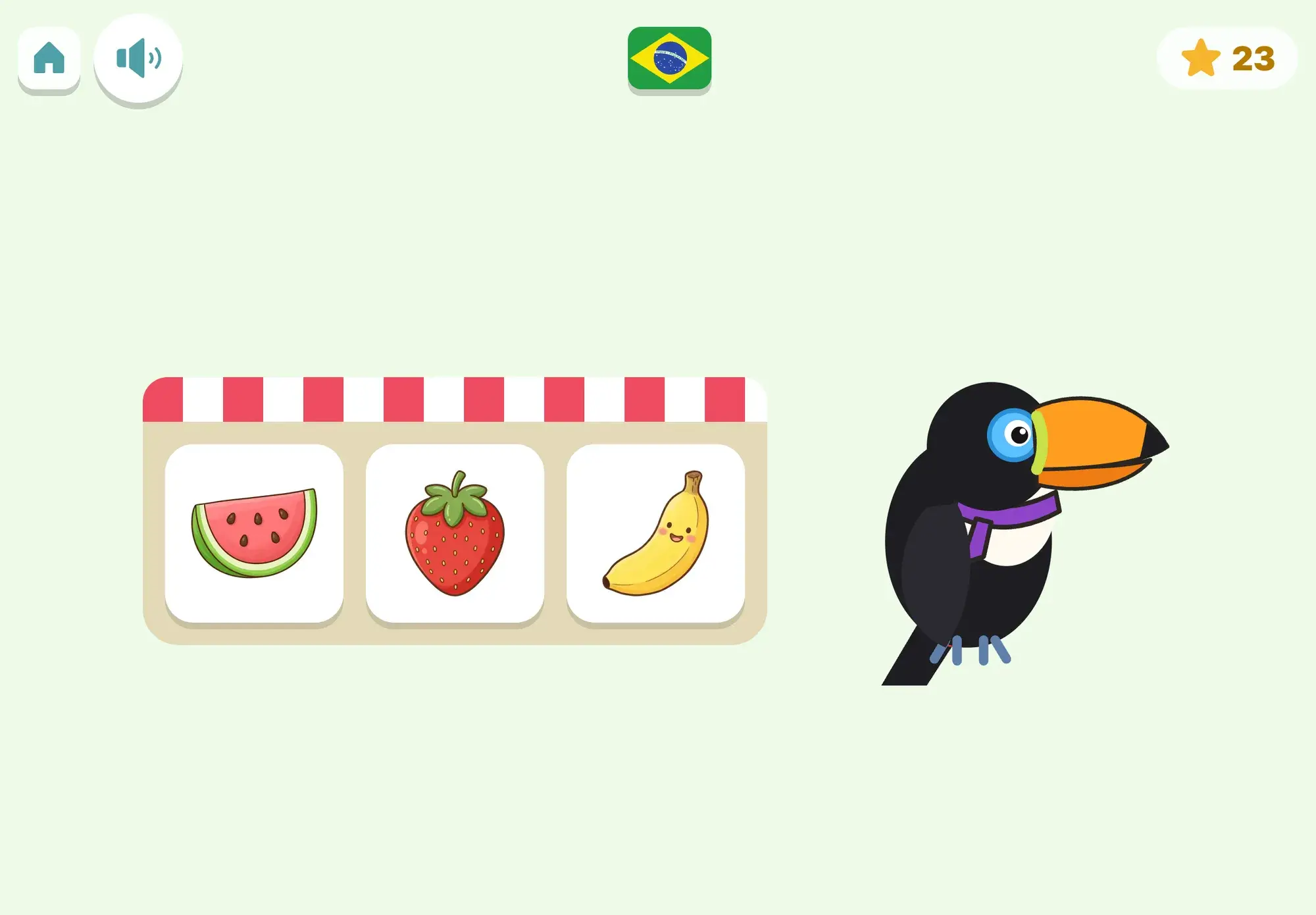
In Maestri World, flags and countries live in Around the world, a trail of stops that a little plane flies along. Each new country is introduced with photos and narration, then your child paints its flag, drives a puppy there in a small coding puzzle, and answers a short spoken quiz. Passing the quiz moves the plane on. New kinds of facts open along the way (hello words, capitals, continents, languages, the world map), and each new kind applies to every country already learned. Later stops add a name puzzle, where your child puts spoken syllables in order (CA · NA · DA), and a flag jigsaw that takes turns with painting, where look-alike stripes count as right wherever they go.
Every learned country goes into a review box. It comes back the next day, then after 2, 4, 7 and 14 days. A right first answer moves it up a box and a miss sends it back to the start, never with a red mark. Today’s trip, a short daily mix, brings the due countries back alongside letters and numbers.
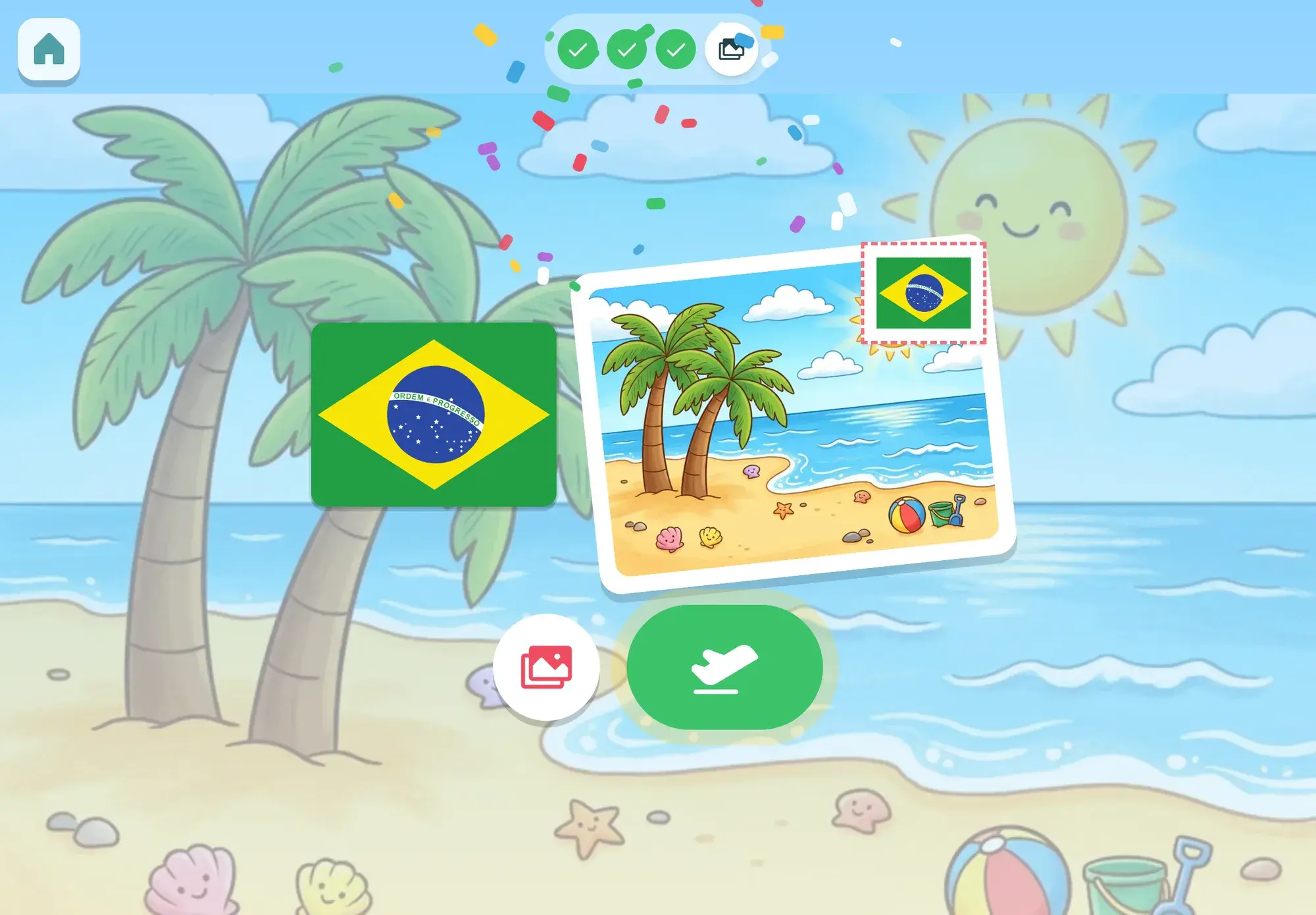
Countries then turn up in other games. The airport only flies to countries your child has already learned: find the boarding pass with the right flag, pack for the weather there, fly, and collect a postcard with the flag as its stamp. The language school shows Portuguese by Brazil’s flag. On the band stage, knowing a country such as Japan, Brazil or Kenya opens its own band, with drums and instruments from there.
The content rules are deliberately plain: the 193 UN member states with their common English names, disputed or split capitals left out rather than picking a side, and photos of landmarks, nature, animals, food and everyday life only. For more games built around maps and countries, see geography games for kids, and if the road trip puzzle caught your eye, there’s a whole guide to coding for kids who can’t read.