Preschoolers learn healthy habits the way they learn most things: by doing them every day, in the same order, with the same words, next to a grown-up. Play helps when it rehearses the real routine, like sorting foods, scrubbing pretend germs off a hand or putting a teddy to bed, and then sends your child back to the real table, sink and bed. Lectures about health help much less at this age than a routine they can see and repeat.
This guide covers the three big ones (food, handwashing and sleep), what the main guidelines say about each, and play ideas you can use tonight. It isn’t medical advice: if your child has allergies, a medical diet or sleep problems, follow your pediatrician.
Why habits beat explanations at 3 to 6
For a 4-year-old, knowing that hands are washed before eating is easy. Doing it, every time, without being reminded, is the hard part. A few things make that gap smaller:
- Same steps, same order. A routine that never changes is easier to remember than a rule.
- Short catchphrases. “Soap, scrub, rinse, dry” or “Fork, not fingers!” can be said in the moment without a speech.
- Pictures, not words. A child who can’t read can still follow a row of pictures by the sink or the bed.
- You go first. Children copy what grown-ups do far more than what they say.
- Praise the doing. “You washed between your fingers!” tells them exactly what to repeat.
Food: color, water and “sometimes” foods
Food advice changes and families differ, so stick to the basics most guidelines share. The Dietary Guidelines for Americans 2025–2030, published in January 2026, and the WHO’s healthy diet fact sheet cover the basics between them:
- Plenty of vegetables and fruits. The US guidelines say eat a variety of colorful ones, and the WHO suggests at least 250 grams a day for children aged 2 to 5.
- Water as the everyday drink. The US guidelines say choose water and unsweetened drinks, avoid sugary drinks like soda and fruit drinks, and keep 100% juice to small portions or dilute it.
- Little added sugar. The WHO says free sugars should be limited throughout life. The US guidelines go further and advise avoiding added sugars in early childhood.
- Protein foods at every meal, in the US guidelines, from eggs, fish, poultry and meat to beans, lentils and nuts.
- Baked, grilled or roasted rather than deep-fried, also from the US guidelines.
On picky eating, the US guidelines say it may take 8 to 10 tries before a young child is willing to eat a new food, and that modeling healthy eating helps. So a refused carrot isn’t a failure. It’s try number three.
Play ideas for the kitchen and table
- Count the colors. At dinner, count how many colors are on each plate. Can you find a fourth?
- Sort the shopping. Unpack the groceries into piles: fruit, vegetables, protein, and “sometimes” foods.
- Give them a job. Washing vegetables, tearing lettuce or stirring a bowl makes a new food less strange.
- Squeeze an orange. Count how many oranges it takes to fill one small glass of juice. It makes “juice has lots of sugar” something a child can see.
- Practice manners in pretend play. A teddy who eats with its fingers gives your child the chance to be the one who knows better.
A common mistake is calling foods “bad” or children “good” for eating them. Talking about “everyday” and “sometimes” foods keeps the focus on the food, not on your child.
Handwashing and germs
The CDC’s handwashing guidance gives the key times and steps. For a preschooler, the times that come up most are before and after eating, after using the toilet, after blowing their nose, and after touching an animal. Germs spread when unwashed hands touch the eyes, nose and mouth, which is exactly what small children do all day.
The steps, in the CDC’s order:
- Wet your hands with clean running water and add soap.
- Lather, including the backs of the hands, between the fingers and under the nails.
- Scrub for at least 20 seconds. The CDC’s tip: hum “Happy Birthday” twice.
- Rinse well under running water.
- Dry with a clean towel or an air dryer.
Making germs real for a preschooler
The trouble with germs is that you can’t see them. Some ideas that help:
- Draw “germs” on the backs of their hands with a washable marker and see whether they’re gone after washing.
- Put a picture of the five steps at child height by the sink.
- Let them pump the soap themselves and count the scrubbing out loud.
- Make a nose routine: tissue, blow, bin, wash hands. Say it the same way every time.
Teeth belong in the same routine. The CDC’s oral health tips say to brush twice a day with fluoride toothpaste, use a pea-sized amount and spit it out, and watch children younger than 6 while they brush.
What to expect: around 3, most children need hands-on help and reminders. By 4, many can follow the steps with a picture. At 5 and 6 they can usually wash alone, but thumbs and the backs of hands still get missed.
Sleep: enough hours and a steady routine
The American Academy of Sleep Medicine’s consensus statement (2016, endorsed by the American Academy of Pediatrics) recommends 10 to 13 hours of sleep in 24 hours for children aged 3 to 5, naps included, and 9 to 12 hours from age 6.
The AAP’s parent advice on healthy sleep habits adds three practical rules: keep a regular bedtime routine, turn off all screens at least an hour before bed, and keep screens out of children’s bedrooms, especially at night. Its simple routine for young children is “Brush, Book, Bed”: brush teeth, read a book or two, and go to bed at a regular time.
Play ideas for bedtime
- Make a picture chart of your night routine and let your child move a clip along it.
- Put a teddy to bed first. Pajamas, teeth, story, lights off. Your child gets to be the grown-up for a minute.
- Sort day things and night things. Sunglasses, a kite and a sun hat in one pile, pajamas, a moon and a flashlight in the other.
- Play “quiet or loud”. Whisper, then shout, then whisper. Which one is for bedtime?
The most common mistake is a routine that changes every night. The same steps in the same order, weekends too, do more than any single trick.
How Maestri World approaches healthy habits
Maestri World treats its healthy-habits games as rehearsal: the same routine and the same words, so you can say “like in the game” at the real sink or table. Nothing shows that playing changes what a child eats or does. That comes from the family doing it together, every day.
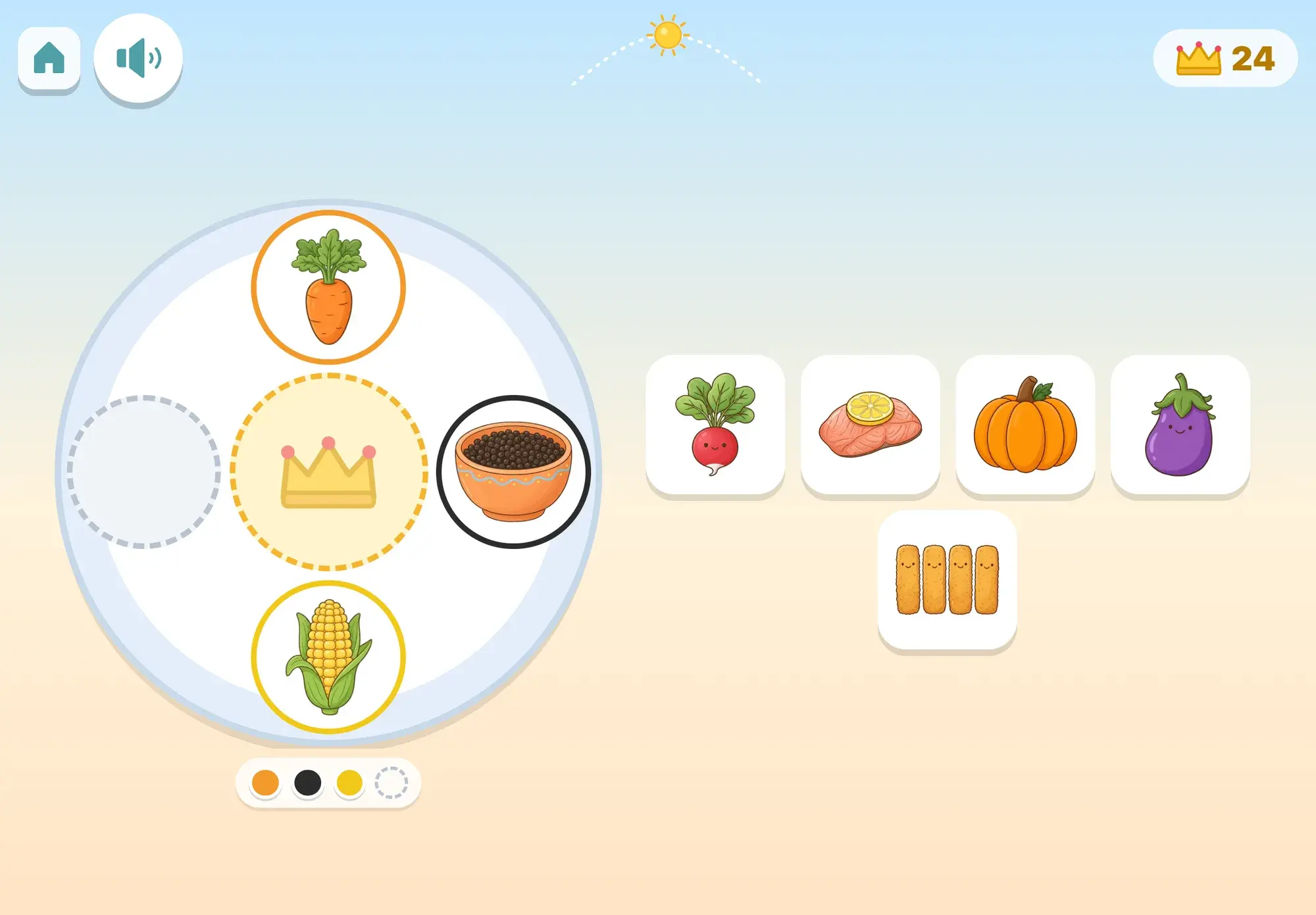
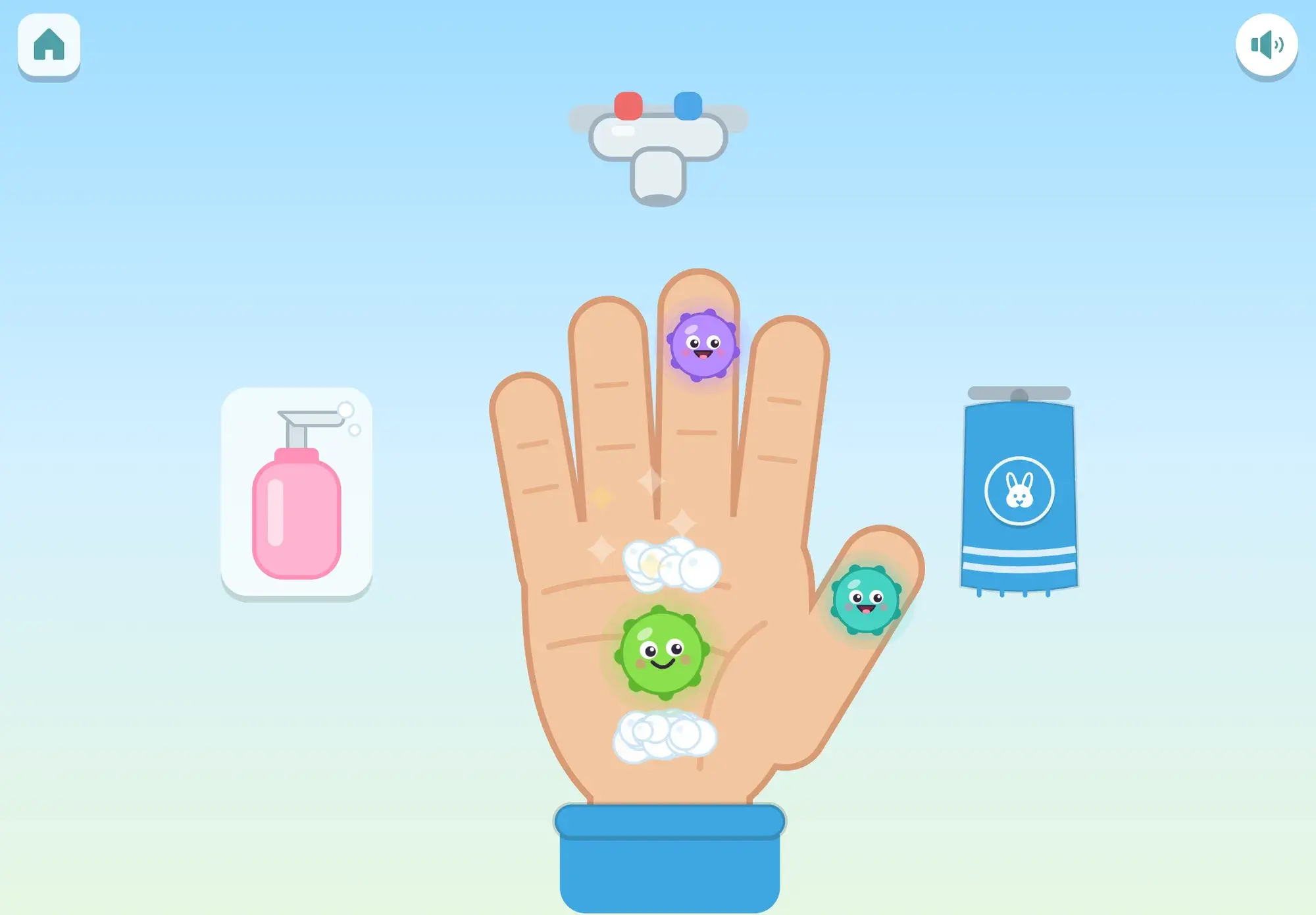
Our house has four rooms. In the kitchen, foods go into healthy, “just a little” and unhealthy baskets with a reason (“Fries are fried in oil. Unhealthy!”), and the sugar in a soda is counted out in sugar cubes. The food rules are simple and firm, so play a round yourself to check they match your family’s. In the bathroom, your child rubs cartoon germs off a hand while a washing chant plays and puts the runny-nose steps in order. The bedroom plays your family’s own night and morning routines, in the order you set.
Meal time brings Bo the bear to the table. Bo makes the mistakes, never your child, and your child fixes them (“Fork, not fingers!”), builds a lunch plate with at least four colors, and squeezes four oranges into one glass of juice.
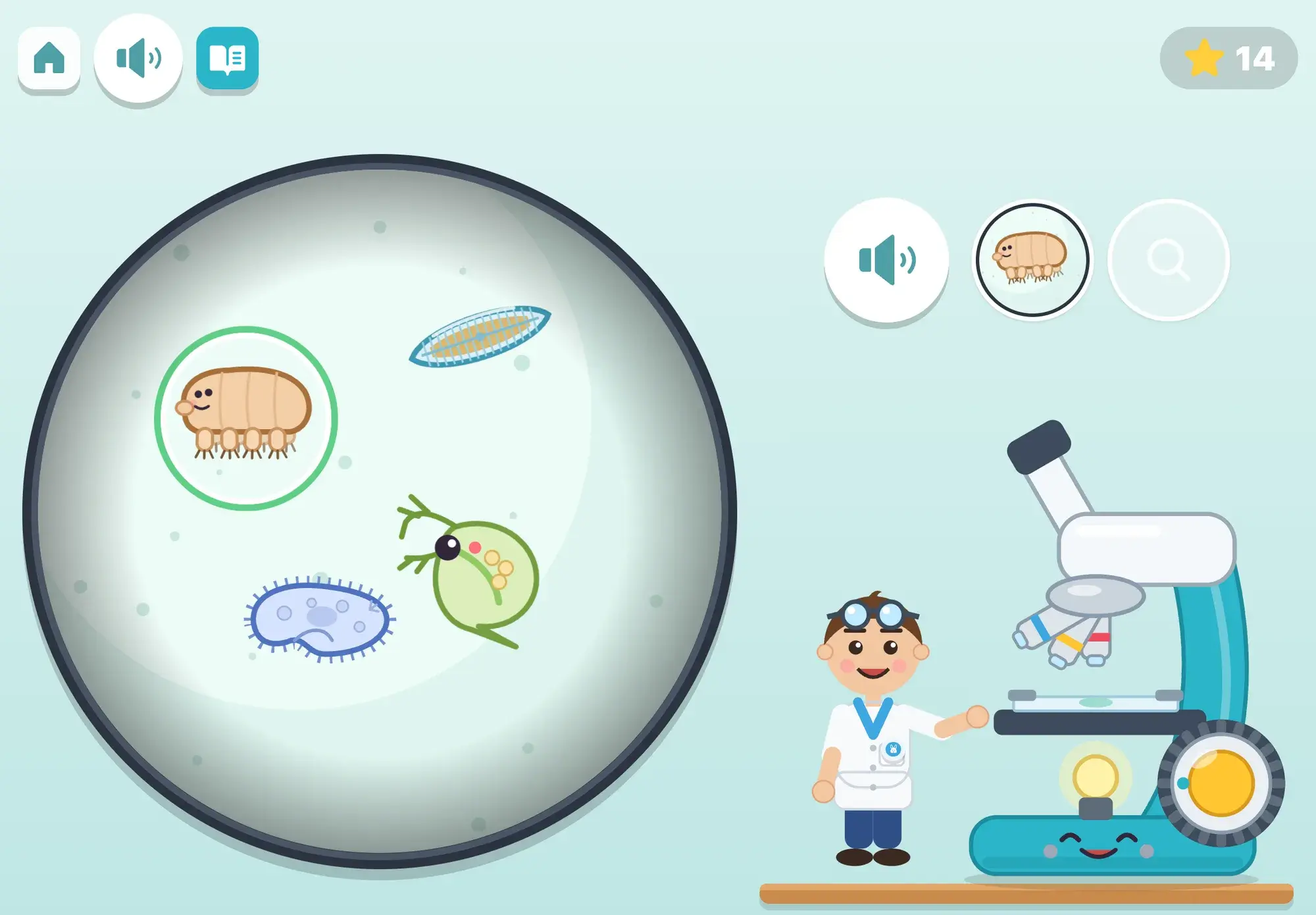
The microscope lab makes germs visible: guess which plate will grow more germs, a washed hand’s or an unwashed one’s, then fast-forward two days and look.
Bo’s cabin shows sleep as a battery. Your child makes Bo’s room dark, quiet and cool and sees that a later bedtime means fewer stars and a yawny morning. It’s always Bo who is tired, never your child.
After a session, the break screen can send the habit home: count the colors on your plate at the next meal, or put a teddy to bed like Bo. All of these games are on our healthy habits games page, and our screen time guide covers how sessions end.
The short version
- Teach habits as routines: same steps, same order, same words, with you going first.
- Food: colorful vegetables and fruit, water to drink, protein at meals, little added sugar, and many patient tries of new foods.
- Hands: before eating, after the toilet, after blowing noses and touching animals. Twenty seconds, backs and between the fingers.
- Sleep: 10 to 13 hours for ages 3 to 5, a steady routine, and screens off an hour before bed.