7 min read
Healthy habits for kids aged 3 to 6: food, handwashing and sleep through play
How to teach preschoolers healthy eating, handwashing and good sleep through everyday play, with what the main health guidelines say.
Read the guide
Bo’s cabin
Sleep charges you up, like a battery: a gentle game about bedtime.
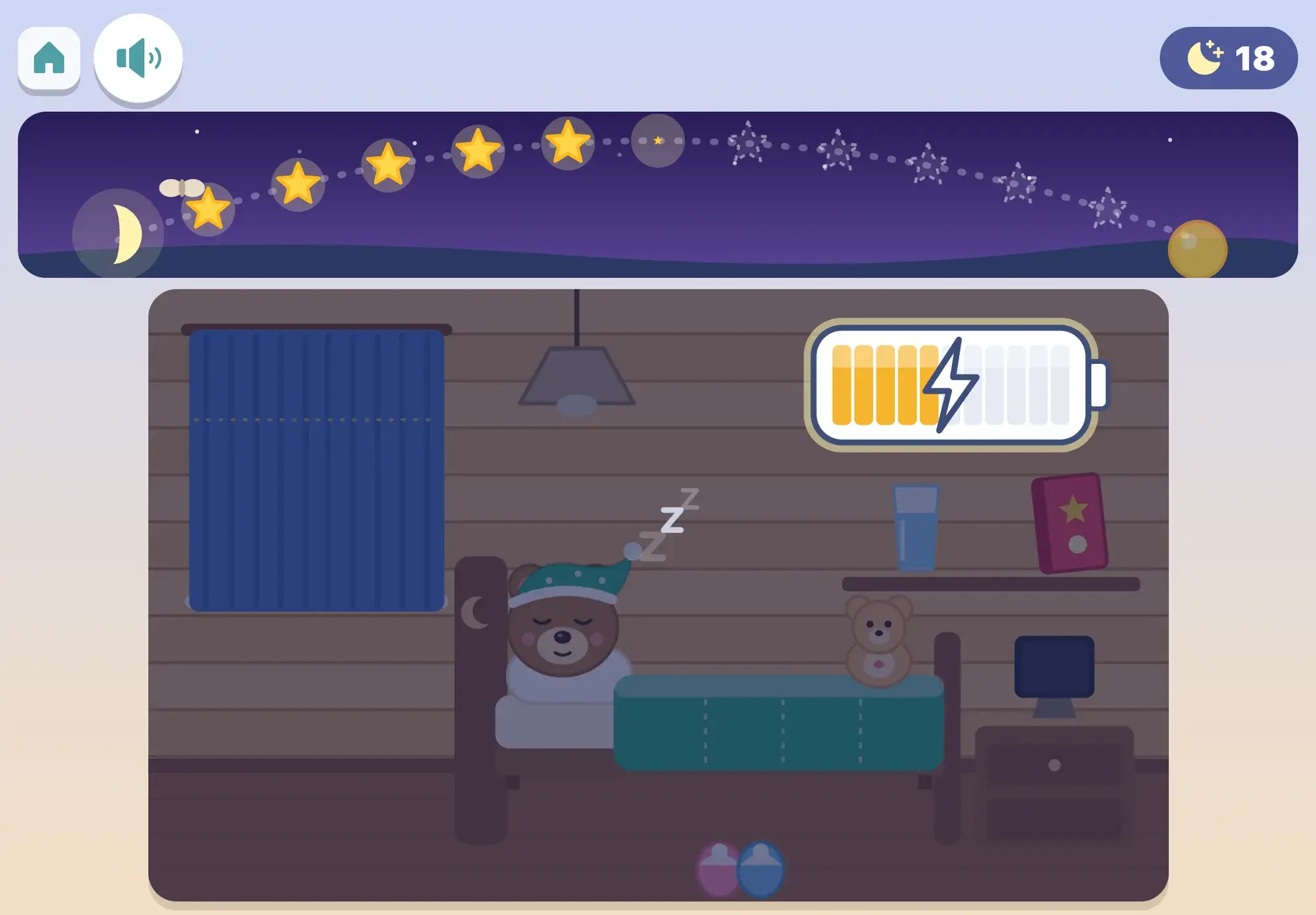
Bo is a little brown bear who lives in a log cabin in the town. His energy is a big battery, like the iPad’s: the day uses it up and sleep charges it. Your child gets Bo’s bedroom ready for the night (dark, quiet and cool) and taps the moon. The night goes by in a few seconds, a star appears for each hour, the battery fills, and in the morning Bo goes to kindergarten.
On a full battery Bo is bouncy: he builds a tall tower or kicks the ball into the goal. On a battery that isn’t full he yawns, the tower wobbles, and the voice says “Let’s help Bo get a good sleep tonight!” It is always Bo who is tired, never your child, and it never ends badly.
There are no clocks. A path runs across the sky: by day the sun moves along it to the moon, which is bedtime, and by night it runs from the moon to a sunrise that never moves. Bo needs about eleven stars, so going to bed later simply leaves star places empty.
How it plays
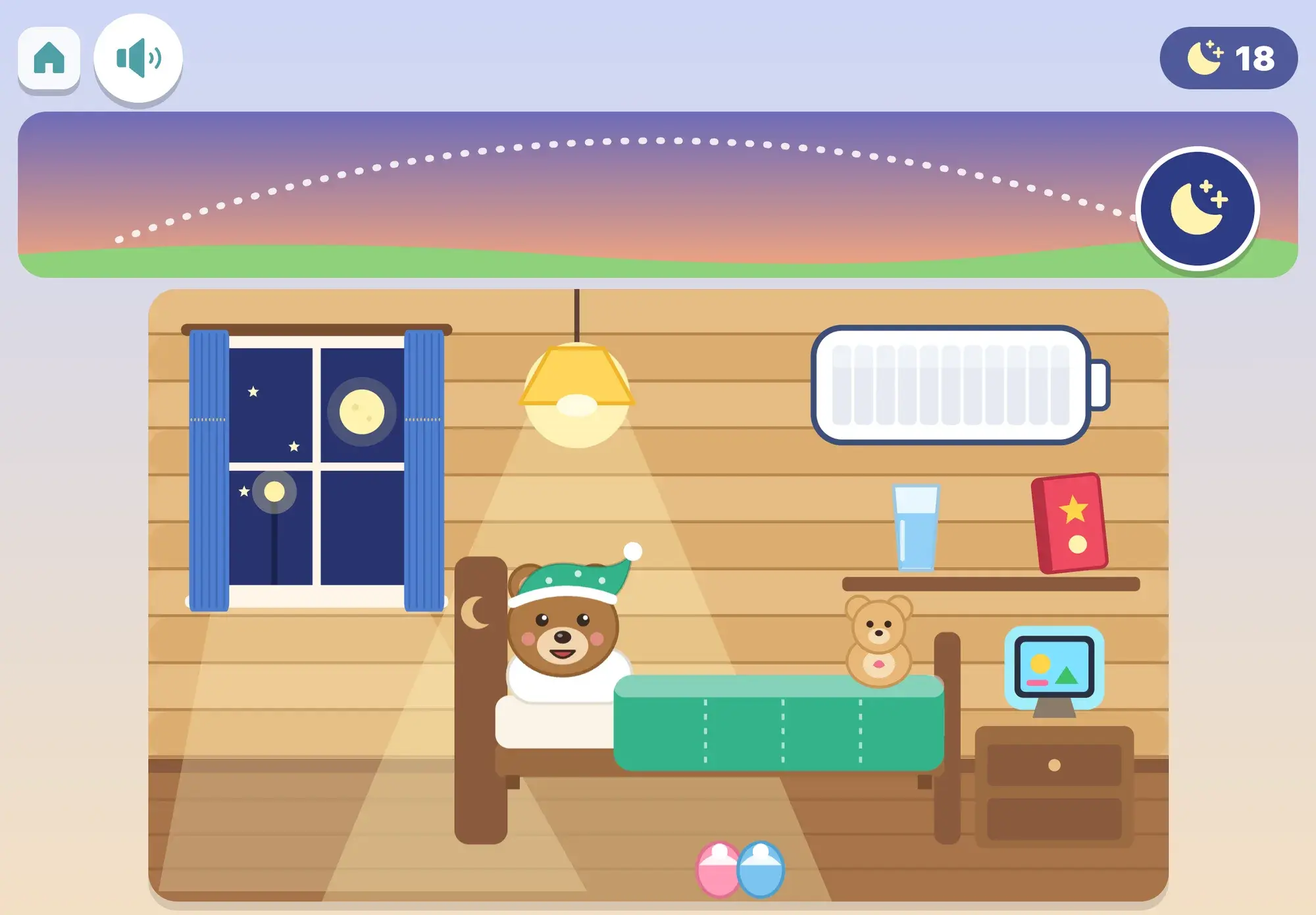
The room is nearly ready: tap the big light off, close the curtains, then tap the moon. On the first night the stars are counted out loud, up to eleven: “Sleep charges Bo up. One star for every hour!” If something still keeps Bo awake, the voice says what (“The big light is on. It’s too bright!”) and the thing wiggles.
Animals go one at a time into the sun basket or the moon basket, on a screen that is day on one side and night on the other. Owls, bats, hedgehogs, moths and fireflies are up at night; butterflies, bees, chickens, squirrels and dogs are up in the day.
Now Bo’s room has two or three problems among fine things: the big light on, the curtains open with a street lamp shining in, loud music, a tablet on, the heater on, a big winter blanket. Teddy, a book, a glass of water and slippers can stay (“Teddy can stay. Teddy is cozy!”).
“After lunch. Can Bo watch now?” Moments of Bo’s day go along the sun’s path, and the last hour before the moon is marked with a crossed-out screen. When the sun gets there, your child puts the tablet on its shelf. Then Bo wants one more game: your child puts his bed on the moon or later, and sees what a late night costs.
In the middle of the day, is Bo tired (yawning, rubbing his eyes) or bouncy? A nap when he is tired gives one or two stars and a small charge. Then two sleepers side by side, their stars coming in rows of ten: who sleeps more, the koala or the giraffe? The baby or the grown-up?
Three things Bo did today are shown in order. That night his dream has three shelves, and your child puts the pictures on them; in the morning Bo remembers his whole day. In the last step the sun is up but the curtains are closed, so your child opens them: “Morning light tells your body it’s daytime!”
Skills
The thinking
Young children learn routines by rehearsing them and by seeing cause and effect, and the battery makes something invisible, being rested, visible and countable. Too little sleep is only ever shown on Bo. Bedtime is anchored to the moon and the sunrise rather than a clock, because a preschooler can’t read one yet, and because the point is that the sunrise doesn’t move.
The stars are a simple version of the evidence: children of 3 to 5 need 10 to 13 hours of sleep in 24, naps included (American Academy of Sleep Medicine consensus, Paruthi et al. 2016, endorsed by the AAP), so Bo needs “about eleven stars”. A midday nap helped preschoolers keep what they had learned that morning (Kurdziel, Duclos & Spencer 2013, PNAS). “Sleep tidies your brain, like toys on shelves” is a picture, not how it works.
The game stays daytime play: it never locks, nags or changes at real bedtime, nothing in it is scary, and nothing listens or records. The facts, their sources and the simplifications are listed in the parent area.
Away from the screen
Ideas to carry the game into everyday life, no screen needed.
At bedtime, do Bo’s check together: is the room dark, quiet and cool?
In the morning, ask “How full is your battery today?” and talk about what charged it.
Open the curtains together after waking up and notice the morning light.
At bedtime, tell the day in three parts, first, then and last, like Bo’s dream shelves.
FAQ
Yes. Bo’s cabin has no minimum age. The first steps are a few taps (the light, the curtains, the moon), sorting is by dragging or tapping a basket, and a night takes about three seconds. A child doing well reaches “who’s awake” within two or three minutes.
No. It doesn’t know about real bedtime and never sleeps, locks or nags. It is meant to be played in the daytime, and your family’s real routine stays yours.
From the sources above, and the parent area lists them with the simplifications. For example, each “one more game” costs two stars so a late night is easy to see, and animal sleep times are approximate (a koala about 20 hours, a giraffe very little).
Guides
How to teach preschoolers healthy eating, handwashing and good sleep through everyday play, with what the main health guidelines say.
Read the guide
What the WHO and pediatricians say about screen time for 3 to 6 year olds, why quality counts, and how to end a session without a meltdown.
Read the guide
More to explore
A family home with four rooms, each one full of everyday life to practice.
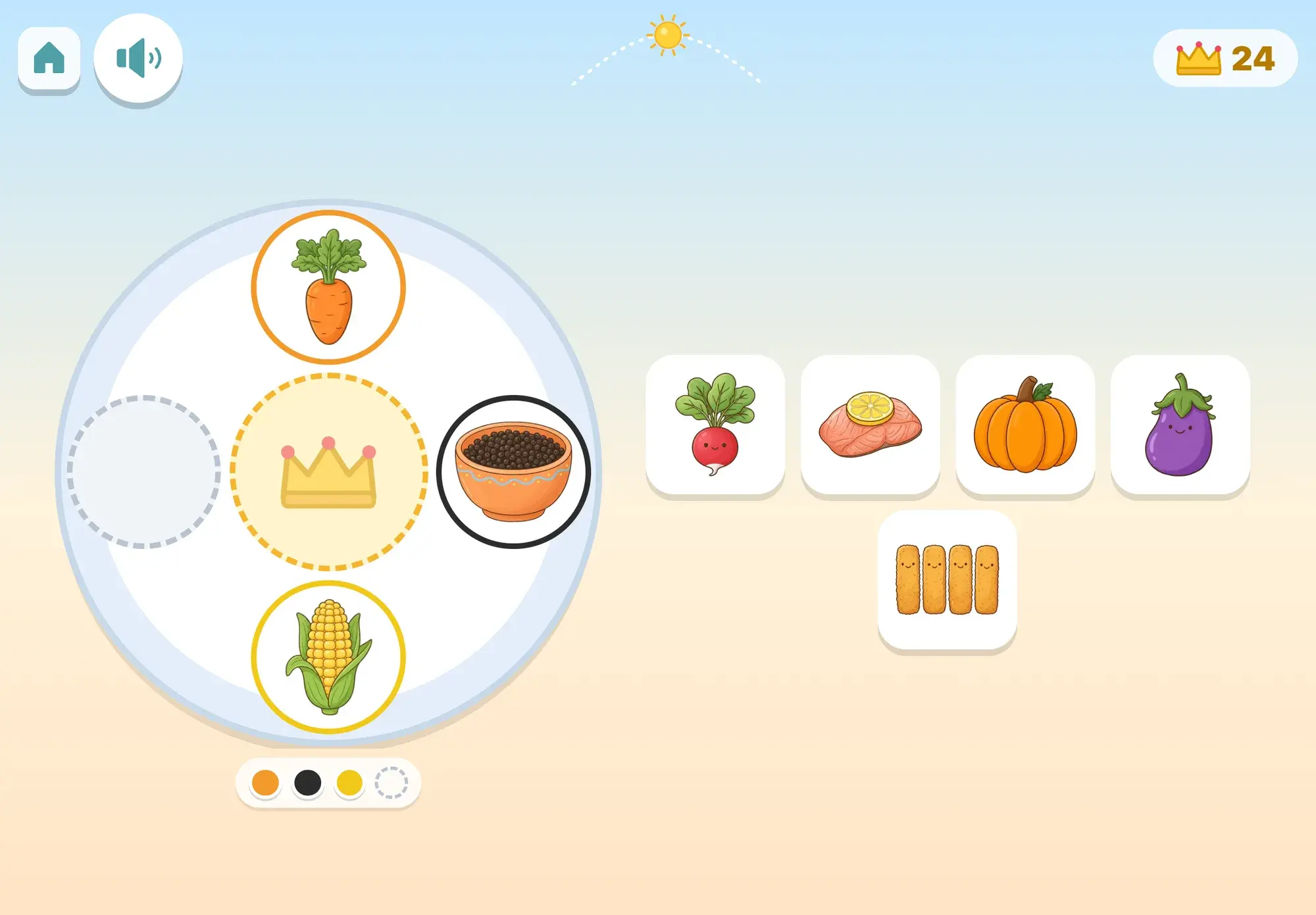
Bo has never eaten at a table before. Your child shows him how.
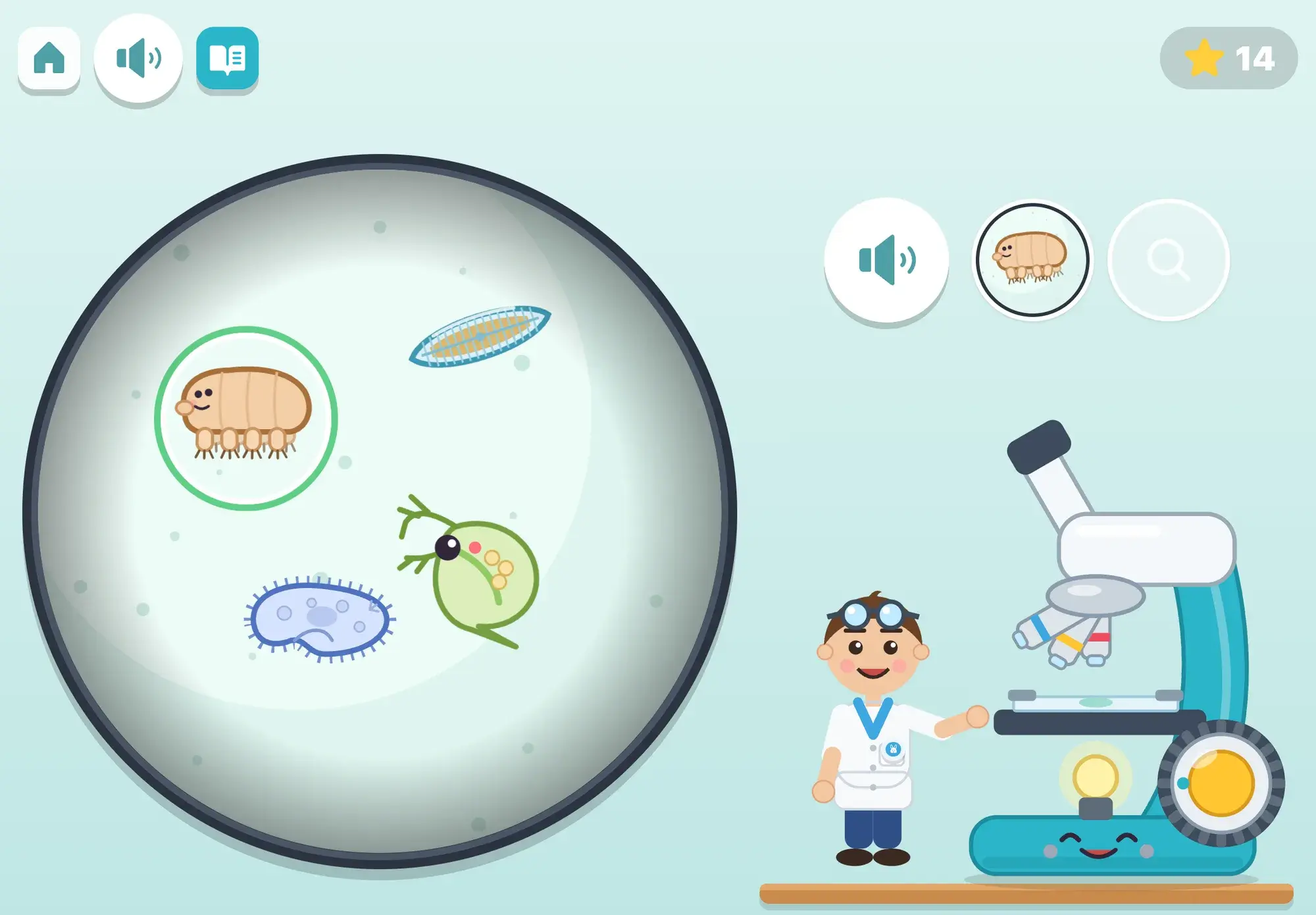
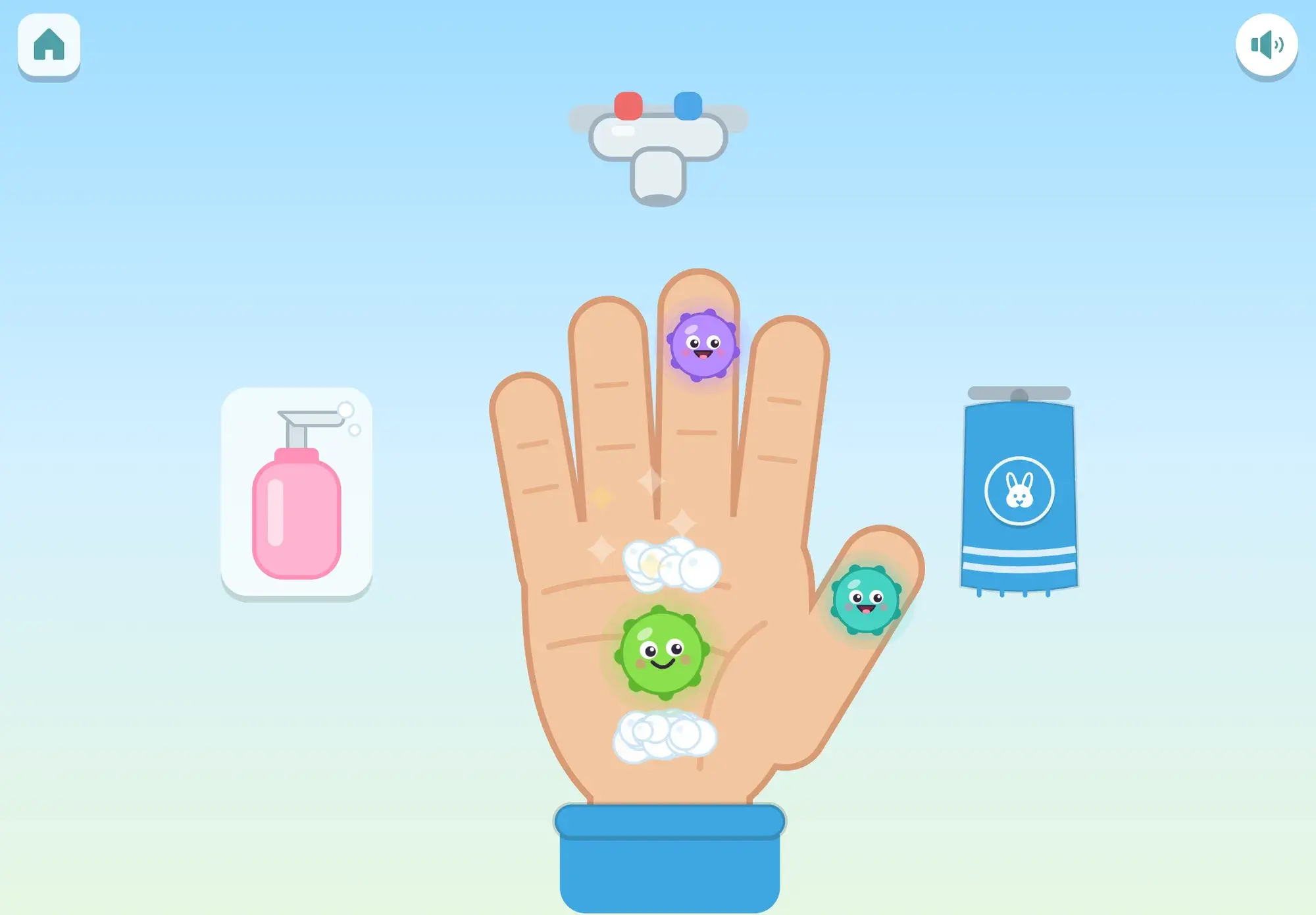
Turn the focus knob, catch a water bear, and find out what soap does.
Spoken from the first tap, no reading needed, no ads, and progress that stays on your iPad.