7 min read
Healthy habits for kids aged 3 to 6: food, handwashing and sleep through play
How to teach preschoolers healthy eating, handwashing and good sleep through everyday play, with what the main health guidelines say.
Read the guide
Our house
A family home with four rooms, each one full of everyday life to practice.
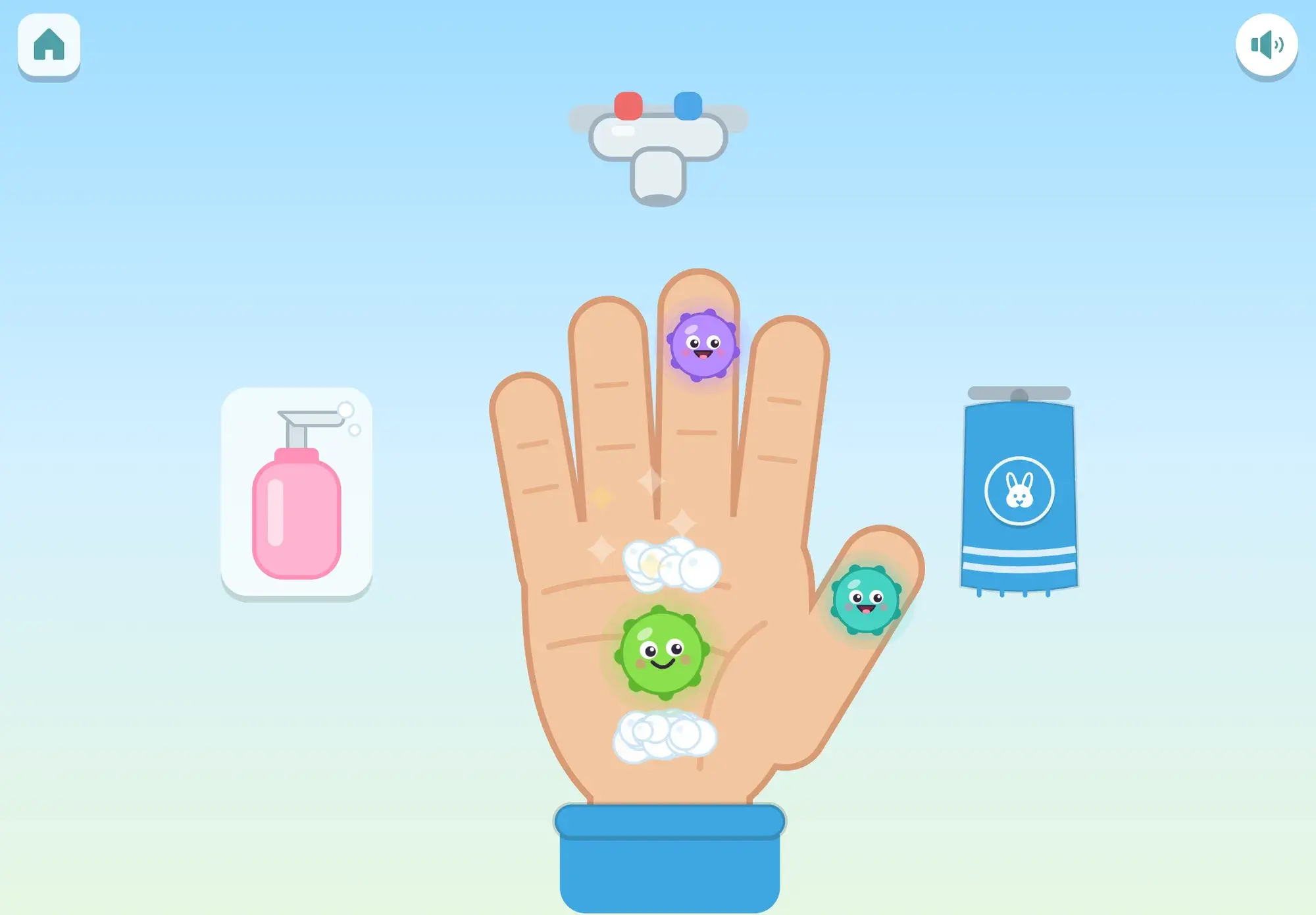
Our house is a family home seen from the front, with four rooms: the kitchen and the living room downstairs, the bathroom and the bedroom upstairs. A tap on a room plays a short round of its games. The kitchen is about food, the bathroom about washing and teeth, the bedroom about night and morning routines, and the living room about family and kindness.
The family in the house is Mom, Dad and the children who have a profile on this iPad. Each child is drawn in their own color with their animal on the shirt, so your child finds themselves in the pictures: washing their own hands, drying with their own towel, looking after a brother or sister if they have one.
Some of the rules are yours. In the parent area you pick your family’s treat days and the steps of your night and morning routines, and the bedroom plays them in your order. There is no microphone and no recording, and nothing counts a hug or an “I love you” as points.
How it plays
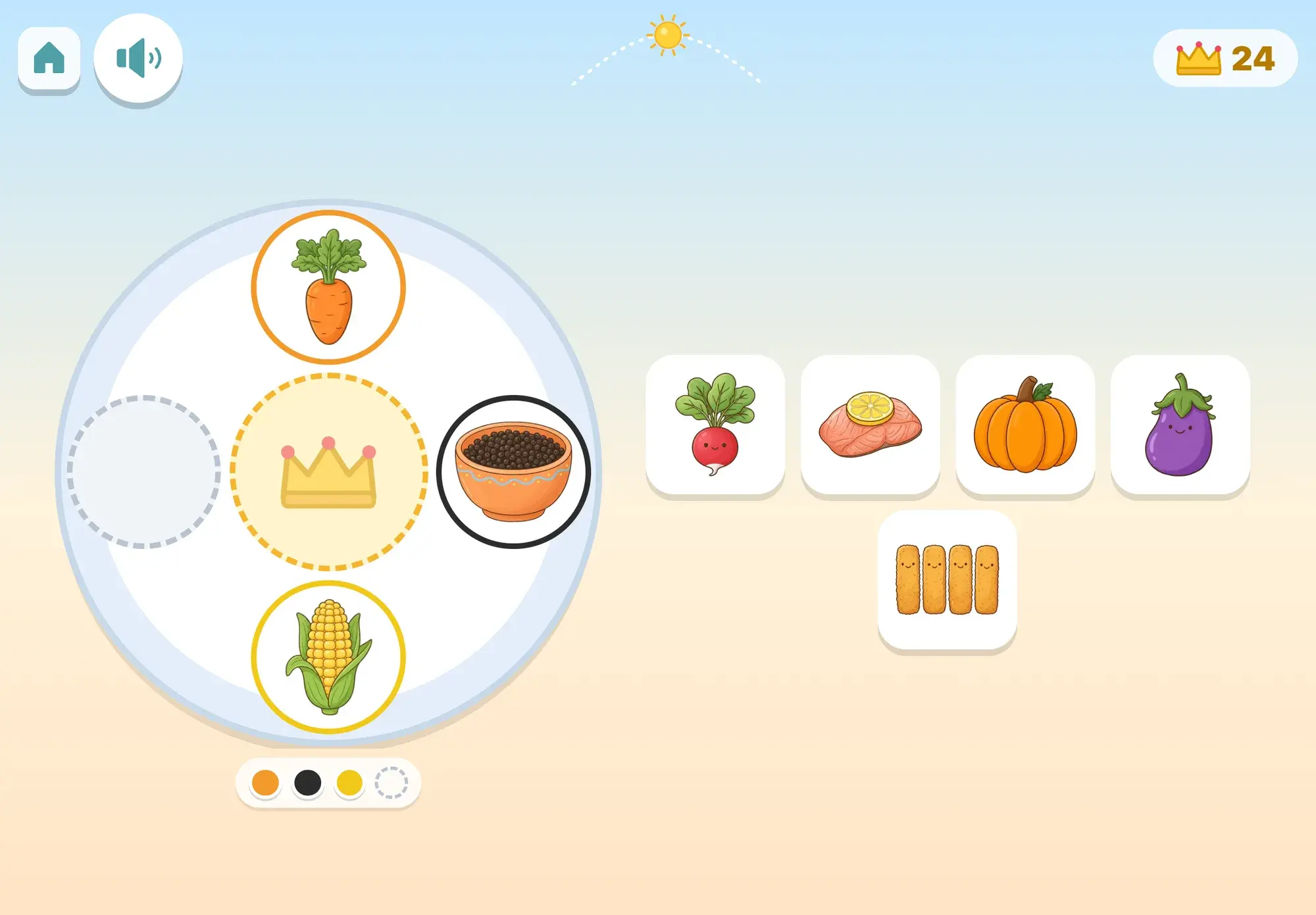
Foods go one at a time into a green basket or a red one, and the voice says why: “Broccoli is healthy!”, “Fries are fried in oil. Unhealthy!” A yellow basket arrives for bread, rice, pasta and potatoes, which are fine “just a little”. Later rounds sort food groups, build a plate with protein as “the king”, and count out sugar in cubes.
The week shows as seven tiles, with an ice cream on your family’s treat days and a star over today: “Today is Wednesday! Is it a treat day today?” Your child answers with a thumb up or down, then for two other days, and last: what comes first, dinner or the treat? The fridge holds every food, and a tap names it.
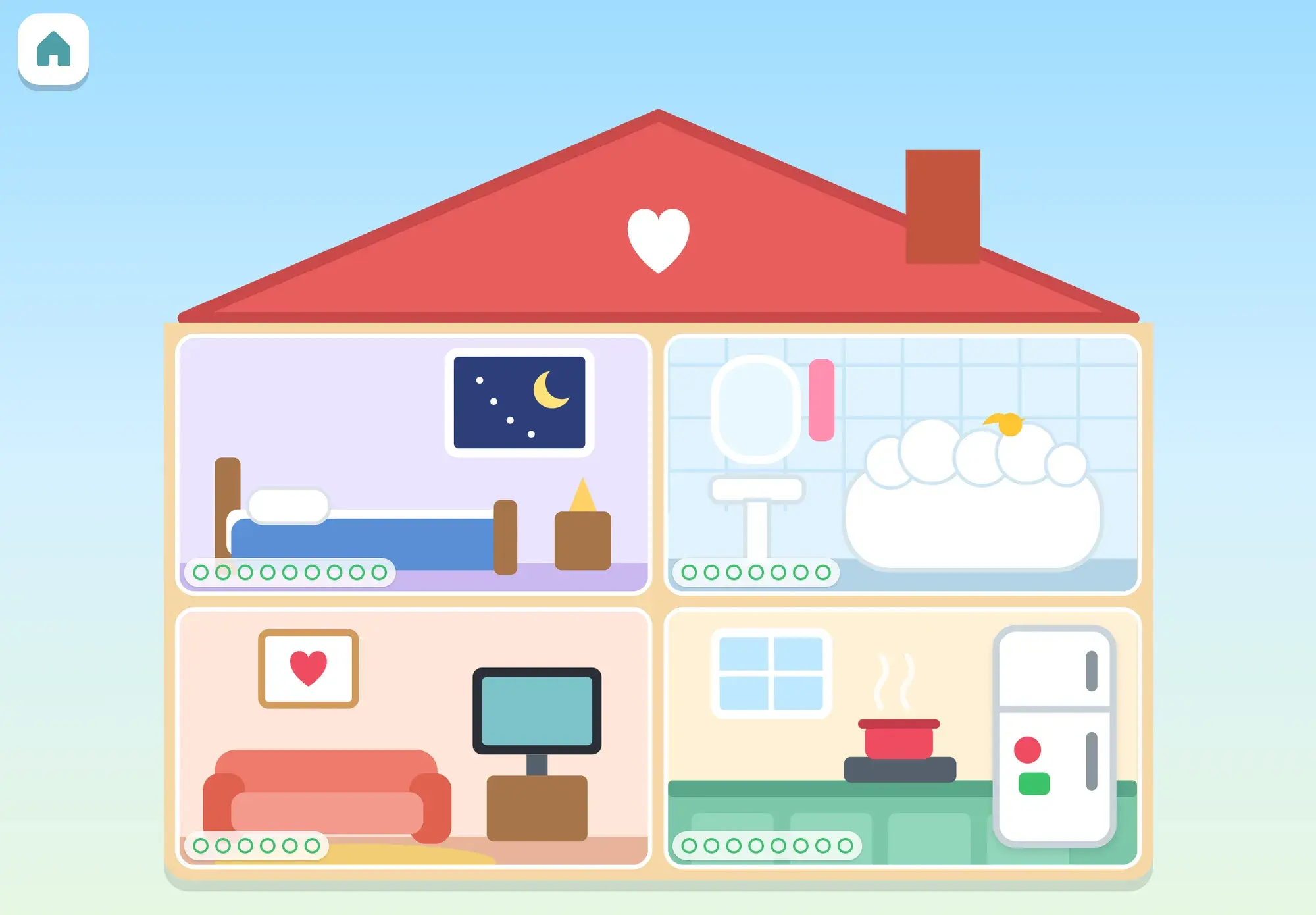
A big hand in your child’s sleeve color has five cute, glowing germs on it. They tap the soap pump and rub with a finger, and each germ giggles and pops into sparkles while a ten-second washing chant plays. Later rounds add when to wash, hands out of the mouth, a runny nose in four steps, the backs of hands, a shower and teeth.
Things go into a moon basket or a sun basket. Then your family’s night routine arrives as train cars: three steps in a row, then five, then all of it, then which step is missing. There is a quiet-or-loud round, where each sound really plays loud or soft, a round of putting on pajamas, and finally the morning routine.
A moment with Mom, Dad or a brother or sister, and three word bubbles read aloud, like “Good morning!”, “Thank you!” and “Sorry!” (“I love you!” is never a wrong answer). Later your child gathers the whole family, reads feelings from faces and helps someone who fell over. Unkind cards only ever show children outside the family.
Skills
The thinking
For a four-year-old, knowing that hands are washed before eating is easy; doing it is the hard part. The rooms are rehearsal: the same routine and the same words, in your family’s own order, so you can say “like in the house game” at the real sink or table.
Sorting and grouping foods are classification games, the kind preschoolers are good at. The plate makes proportions visible, with a crown on the protein, and the sugar cubes turn an invisible amount into something a child can count.
Nothing here shows that playing changes what a child eats or does. That comes from the family doing it together, every day. The game gives your child the words and the steps.
Away from the screen
Ideas to carry the game into everyday life, no screen needed.
At the sink, chant for ten seconds while you scrub, and check thumbs, backs of hands and between the fingers together.
Draw your bedtime routine as a row of train cars and follow it, one car at a time.
Let your child sort the shopping as you unpack: fruit here, vegetables there, eggs and fish in another pile.
Before a family meal, ask your child to check that everyone is there and has a plate, like in the living room.
FAQ
It is open for every age. Each room starts simply, such as one food at a time into a green or a red basket, and moves on after two clean rounds. After three or more slips the next round is a step easier, and earlier steps come back now and then.
Treat days and routines, yes: in the parent area you choose the treat days and pick and order your night and morning steps from fifteen, such as bath, pajamas, story, teeth, getting dressed and shoes.
The food sorting follows the game’s own rules: vegetables and fruit are healthy, protein is “the king”, bread, rice, pasta and potatoes are “just a little”, and fried food, juice, soda and sweets are unhealthy. It teaches simple habits and is not dietary advice.
No. There is no microphone, no recording and no timer longer than a few seconds.
Yes, in a simple way: Mom, Dad and every child with a profile on the iPad, each child in their own color and animal. When there are other children on the iPad, some scenes are about a brother or sister.
Guides
How to teach preschoolers healthy eating, handwashing and good sleep through everyday play, with what the main health guidelines say.
Read the guide
A practical 10-point checklist for judging any learning app for a 3 to 6 year old who can’t read yet: ads, rewards, mistakes, privacy and more.
Read the guide
More to explore
Bo has never eaten at a table before. Your child shows him how.
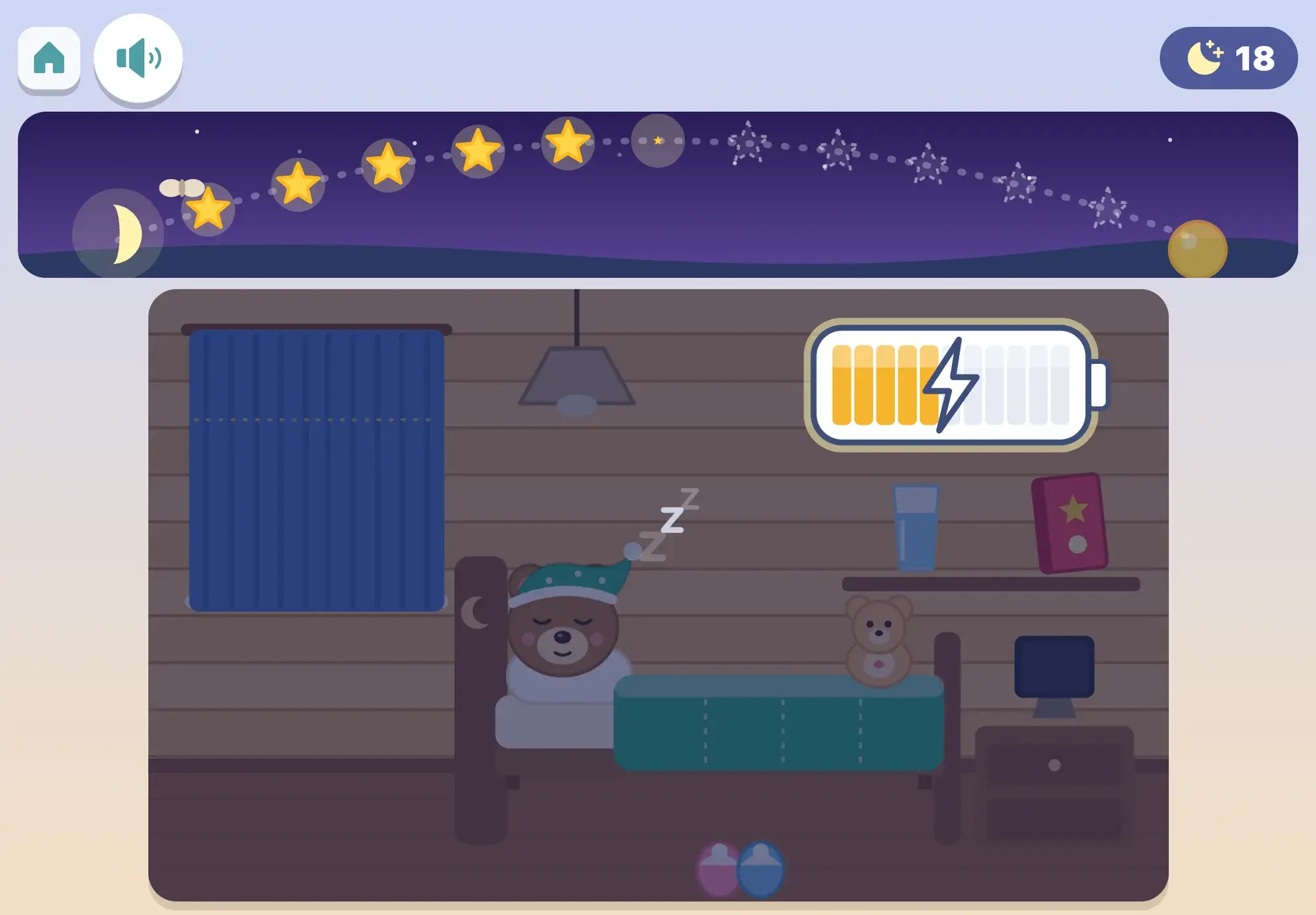
Sleep charges you up, like a battery: a gentle game about bedtime.
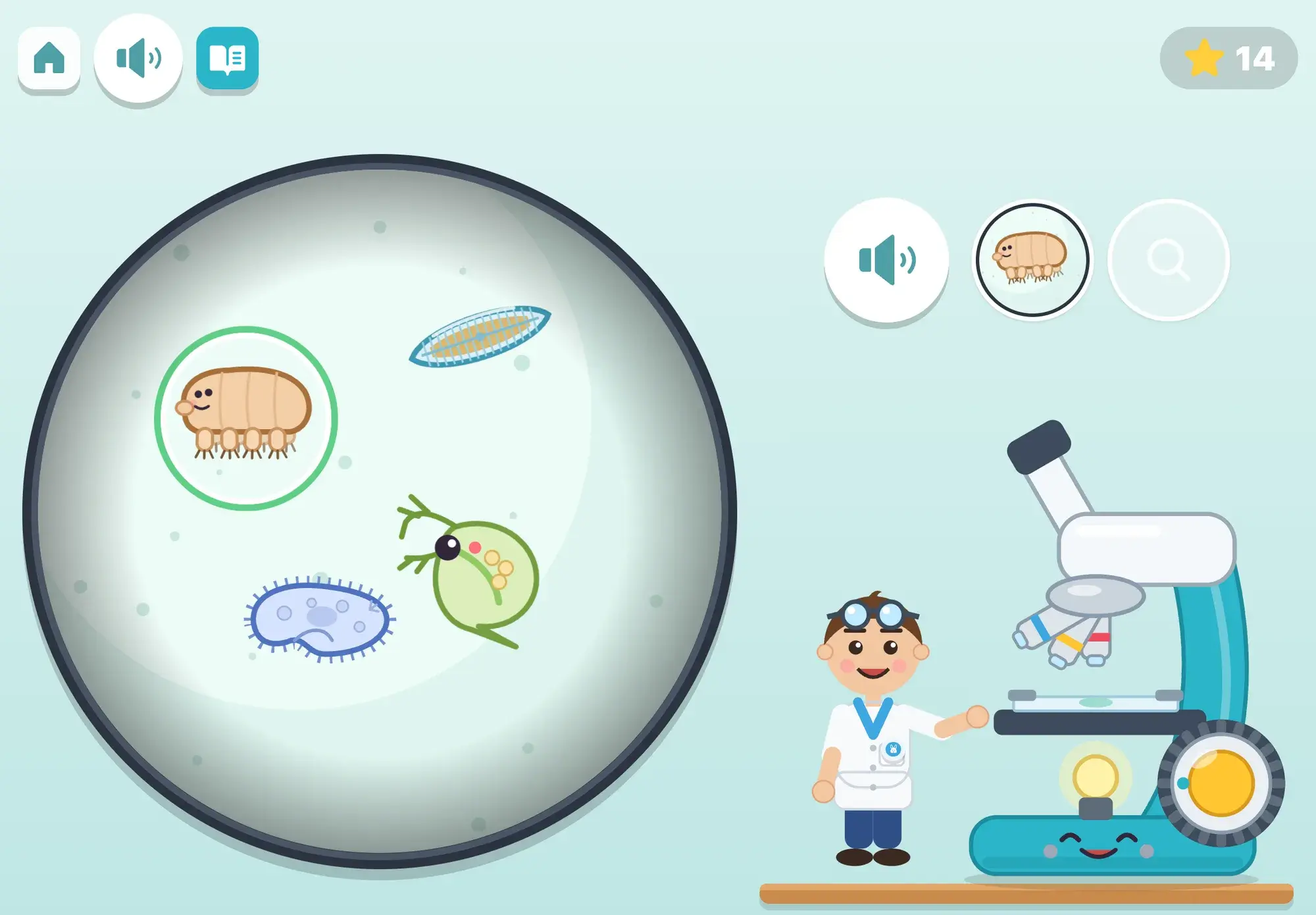
Turn the focus knob, catch a water bear, and find out what soap does.
Spoken from the first tap, no reading needed, no ads, and progress that stays on your iPad.