7 min read
How to teach a preschooler flags and countries
Teach flags and countries to a 3–6-year-old: start with a few, give each a story, paint and puzzle the flags, and bring old ones back over days.
Read the guide
The band stage
Every note lands in time and in tune, so your child sounds good from the first tap.
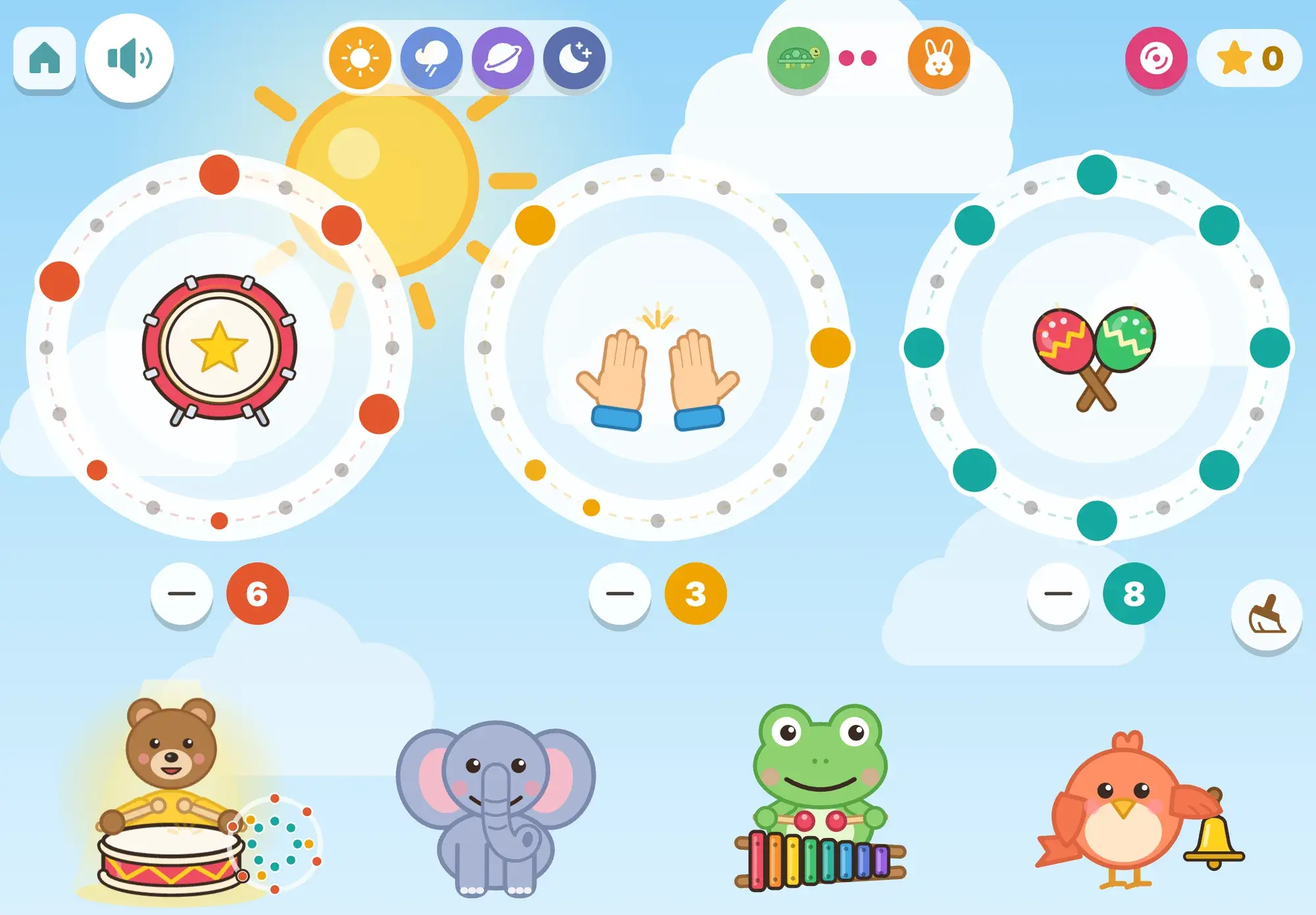
The band is already playing when your child arrives at the band stage, a steady boom and a shaker, and they join in. Everything is built so nothing can sound wrong: every mood uses a five-note scale, so any notes played together sound good, and every note snaps to the beat of a sixteen-step loop, so it is always in time.
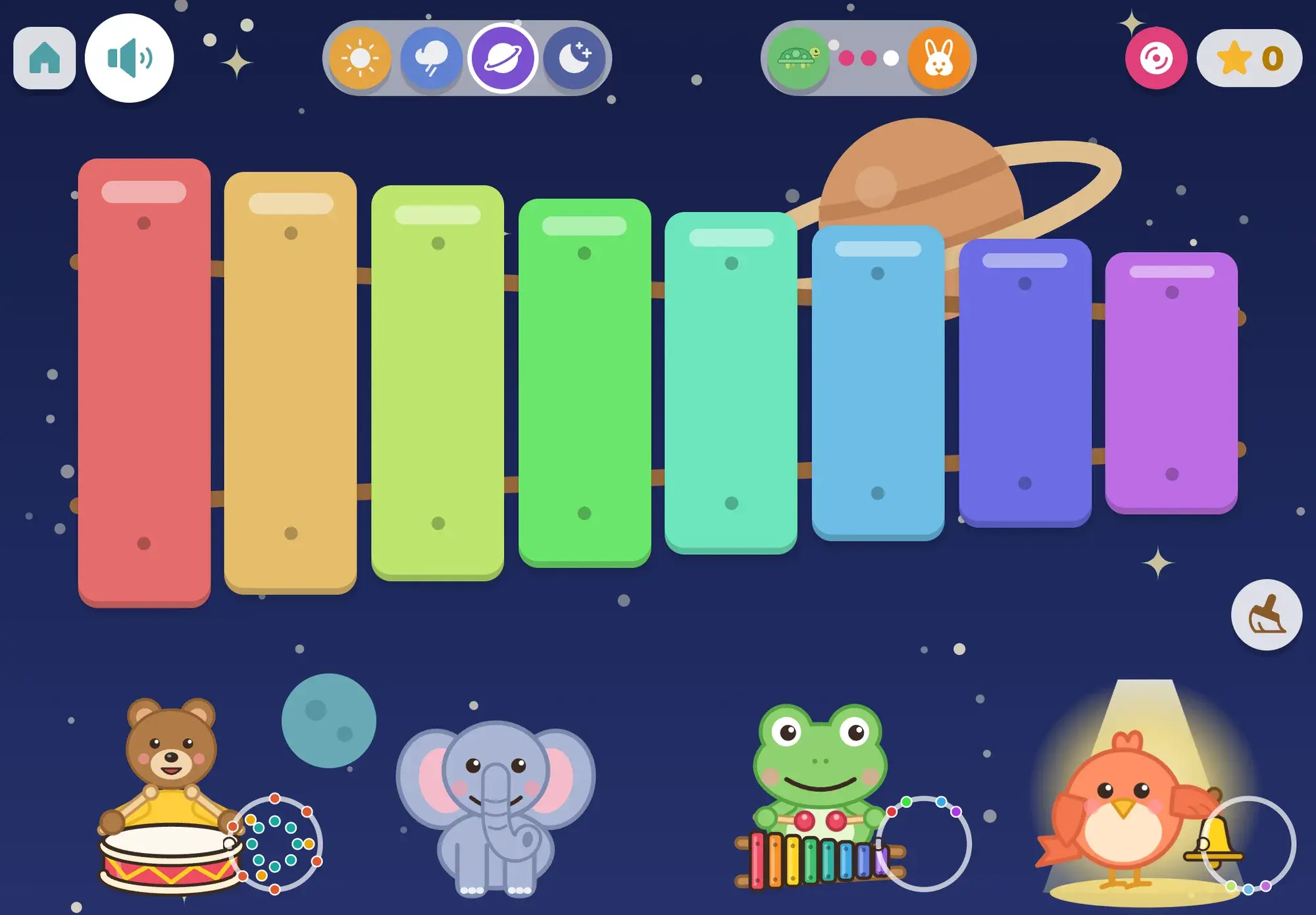
Bo the bear plays three drum wheels: a big drum, claps and a shaker. The elephant, the frog and the bird play xylophones and bells, with big low bars on the left and little high bars on the right. A note sounds the moment your child touches it, with ten fingers at once if they like, and comes back round in the loop.
Moods change the whole song at once: sunny, rainy, space and sleepy, and the sky behind the stage changes with them. A turtle makes the music slower and a rabbit makes it faster. Every so often Bo asks for one small thing, and that is the only “lesson” there is.
How it plays
At first Bo and the frog play, with sunny and rainy music. The elephant joins after two minutes of play, the bird after five, and space and sleepy music after eight. A friend still to come shows as a question mark: “Someone wants to join the band soon!” A broom sweeps away the part of whoever is in the spotlight.
Each drum is a ring of sixteen steps, with the step playing now lit as the music goes round. Tapping the drum adds a hit, and the hits spread themselves evenly round the ring, a pattern known as a Euclidean rhythm: four booms land on the beat, two claps on beats two and four. A minus takes a hit away, and dragging moves them.
About every 45 seconds of play, Bo asks for one small thing in a picture bubble: “Can you give the big drum three booms?” The spotlight moves to the right player. After 15 seconds a hand points at the button that does it, and after 40 Bo says “Let’s play that later!” and it isn’t counted.
The requests climb gently: booms, then claps, then music “faster, like a rabbit”, a high note or a low one, guessing which player Bo is playing alone, a rainy or sunny mood, six shakes of the shaker, and finally copying a little tune of two or three bars that light up on the frog’s xylophone. Two clean requests move on to the next kind.
Once your child knows a country from the trip around the world that has its own band here, a globe appears. Japan, Brazil, India, Mexico, Peru, China, Egypt, Italy and Kenya each bring their own drums and change the frog’s instrument, from taiko drums and a koto to a cajón and pan flute, a sitar, an oud or a marimba.
Up to six songs are kept on a shelf as records in their mood’s color, each with its band’s flag, and a tap plays one again. The song on the stage is kept for next time too. After two and a half minutes without a touch the band stops for a rest, and a tap starts it again.
Skills
The thinking
Music at this age is about playing, and it works when nothing can go wrong. A five-note scale and a beat that catches every note let a child sound good from the first touch, which keeps them exploring.
Bo’s requests carry real early-music ideas: a steady beat and counting beats, fast and slow, high and low, telling instruments apart by ear, mood, and copying a short tune. They come between stretches of free play and are never scored against your child or hurried, so the toy doesn’t turn into a test.
A count is judged 1.5 seconds after the last tap on that drum, so tapping past the number and back is fine, and counting slowly on the way up never counts as a slip. While your child copies Bo’s tune, the band waits for them.
Away from the screen
Ideas to carry the game into everyday life, no screen needed.
Make a drum from a pot and a wooden spoon and play three booms, then four, together.
Walk like a turtle when you sing slowly and hop like a rabbit when you sing fast.
Clap a short rhythm and let your child clap it back, then swap.
Fill a few glasses with different amounts of water and tap them gently with a spoon: which one is high, which one is low?
FAQ
Yes. The stage is there for every child in the town, whatever their age. It starts as free play with a band that is already going, and nothing your child taps can sound wrong or out of time. Bo’s first request comes after about 40 seconds on the very first visit.
No. There is nothing to read and no notes to learn first. Low and high are shown by the size of the bars, and every request comes with a picture and, if needed, a pointing hand.
Yes. Every sound is made by the app itself, so there is nothing to download. The music also goes quieter while the narrator is talking.
Guides
Teach flags and countries to a 3–6-year-old: start with a few, give each a story, paint and puzzle the flags, and bring old ones back over days.
Read the guide
More to explore
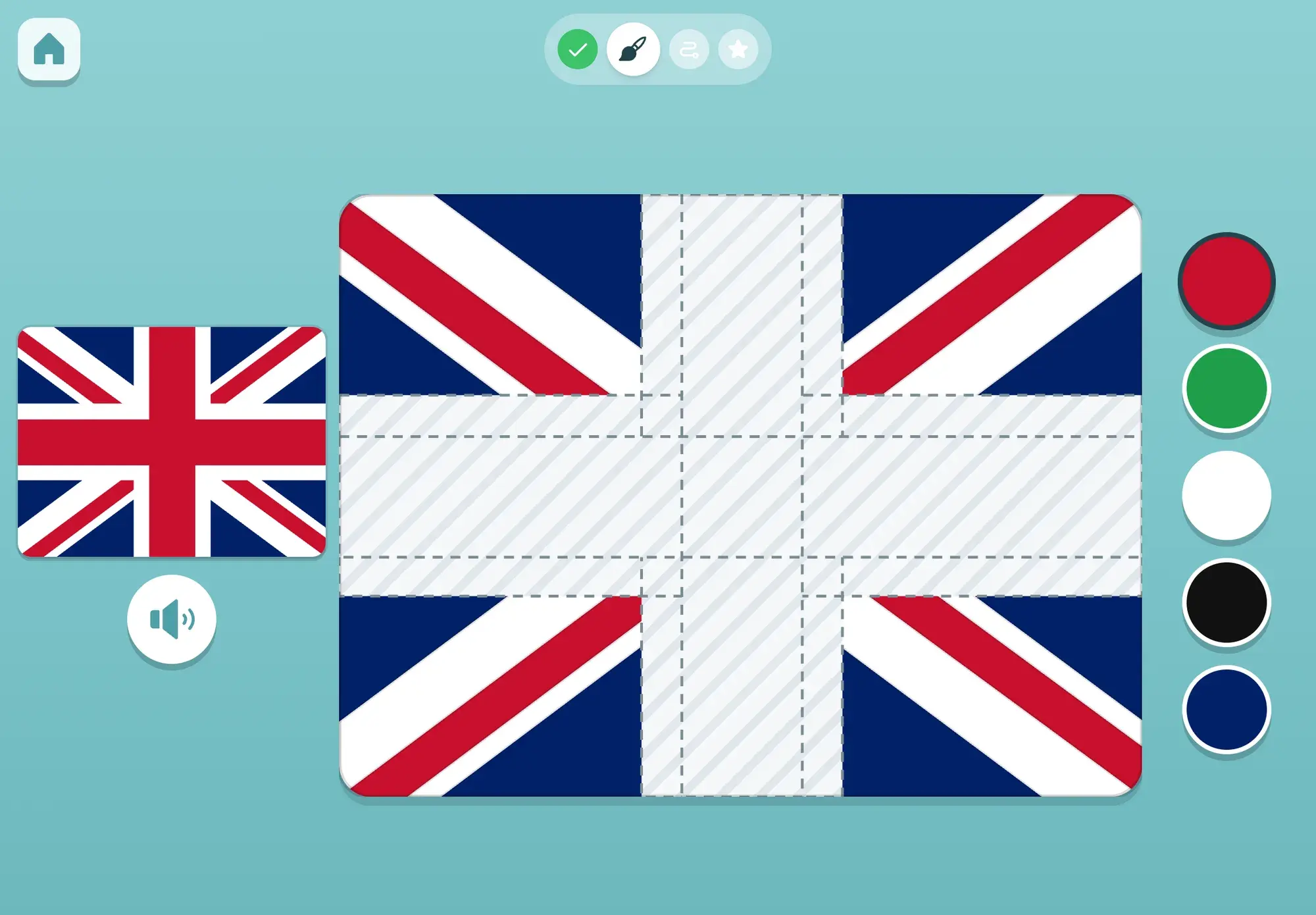
Meet a country, paint its flag, drive there, and earn a passport stamp
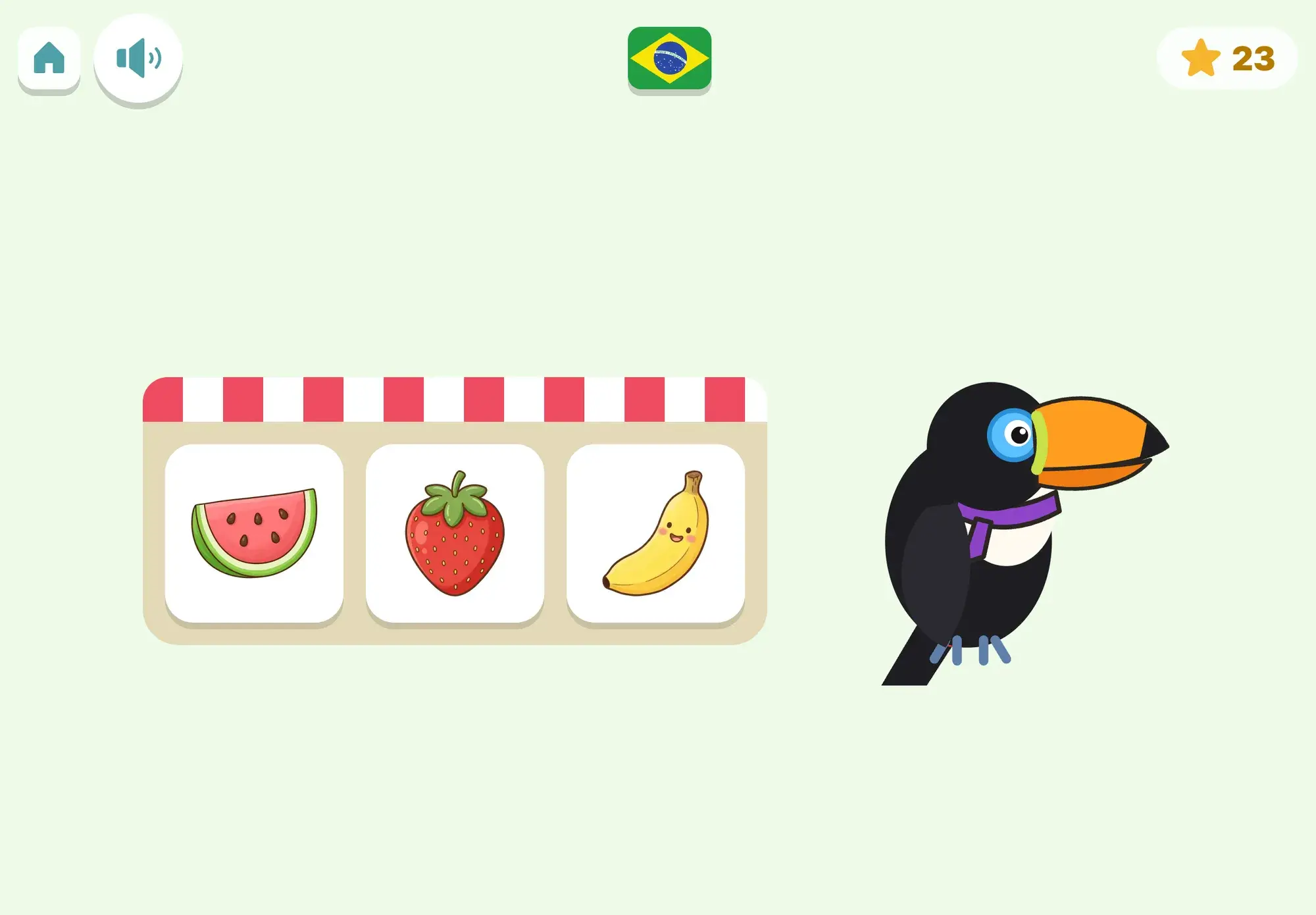
Hello, colors, fruits and numbers in Portuguese, from a toucan who speaks nothing else.
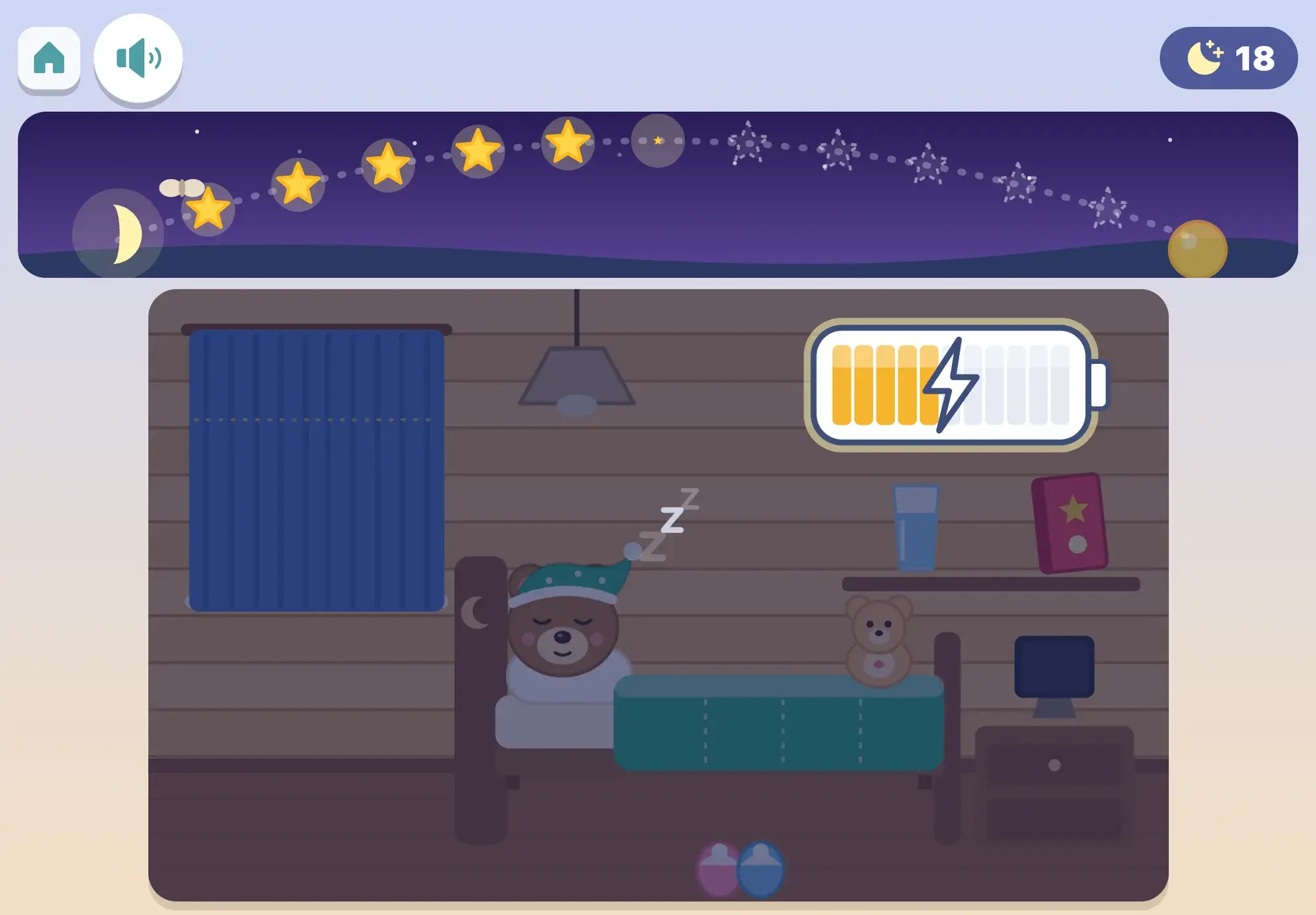
Sleep charges you up, like a battery: a gentle game about bedtime.
Spoken from the first tap, no reading needed, no ads, and progress that stays on your iPad.