7 min read
Healthy habits for kids aged 3 to 6: food, handwashing and sleep through play
How to teach preschoolers healthy eating, handwashing and good sleep through everyday play, with what the main health guidelines say.
Read the guide
Meal time
Bo has never eaten at a table before. Your child shows him how.
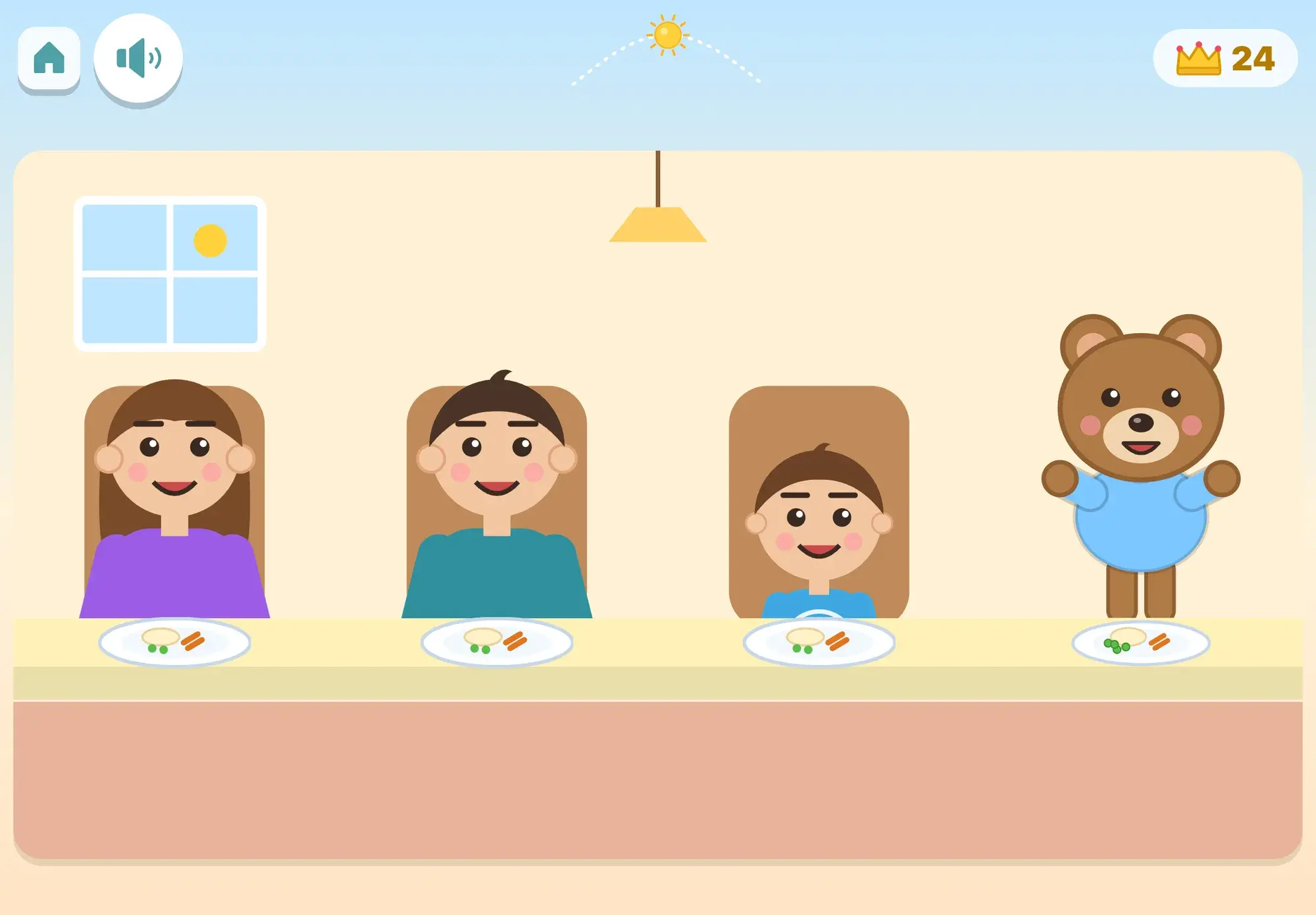
Bo the bear comes over to eat with the family. He has never eaten at a table before, so he makes the mistakes and your child helps him: Bo puts his fingers in the food, chews with his mouth open, stands on his chair or burps. It is never your child or anyone in the family who gets it wrong.
Each round happens at a time of day, shown by the sun on a little path at the top of the screen instead of a clock: breakfast in the morning, a snack, lunch at midday, a little treat after lunch, dinner in the evening. After every round Bo cheers with his arms up and a crown.
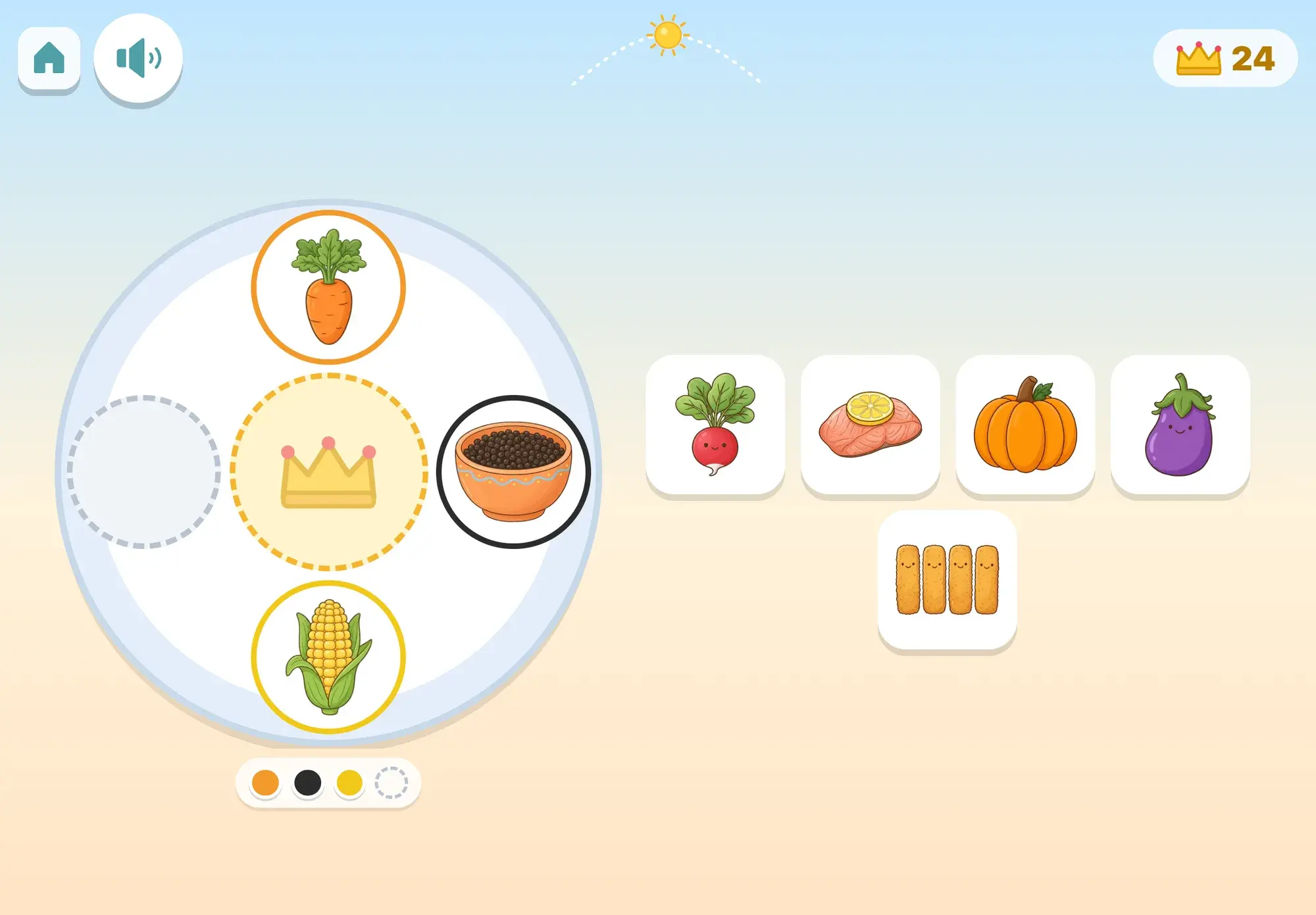
The food follows the game’s own simple rules. Protein is “the king” and belongs in every meal. Lunch is a plate of at least four different colors with the king in the middle. Between meals it is fruit, and water to drink. A little piece of chocolate after lunch is fine, sometimes.
How it plays
Bo’s tray and a few foods on the counter. Your child taps or drags the breakfast foods onto the tray: “A boiled egg! Protein for breakfast!” In this game breakfast is eggs, plain yogurt, cheese and maybe avocado, so bread, porridge, cereal, pancakes and cookies shake and stay on the counter. “A strong breakfast! Protein is king!”
A plate with a crown in the middle for the king (meat, fish, chicken or liver) and a ring of places round it. Each food takes a place in its color (“Broccoli is green!”), and dots under the plate count the colors. A second green food gets “We have green already! Let’s find another color.” Fried and sugary foods stay off.
Two pictures of Bo at the table, one eating nicely and one doing an oops: fingers in the food, chewing with his mouth open, a mess round his plate, a carrot flying like a plane, a slurp or a burp you can hear. “Which Bo is eating nicely?” Easy rounds use only the clearest oopses.
Bo is hungry, but it isn’t lunchtime yet. Your child picks the fruit, not the cookie or the chips, then water, not juice. Then four oranges are squeezed into one glass, counted one by one: that is a lot of sugar. At dinner each dish gets a thumbs up or down: “Does it have the king?”
Bo eats in front of your child, one moment after another. When he does an oops, a tap fixes it with a short catchphrase: “Fork, not fingers!”, “Lips closed, chew chew!”, “Sit on your chair!”, “Oops! Excuse me!” A tap while he eats nicely gets “Bo is eating nicely now!”
Later steps add a spoon or a fork and knife, a whole day of choices from morning to evening, and clearing the table, where Bo forgets his plate (“Tap Bo to remind him!”). The last step is a whole meal: make the lunch plate, wait until everyone sits down (“Wait for everyone!”), tap Bo’s oopses, and bring the plates to the kitchen.
Skills
The thinking
Sorting foods into meals and colors is the kind of classifying preschoolers are good at, and the dots under the plate make “a varied plate” countable: four different colors, whichever they are.
Each manner is one short catchphrase Bo is corrected with, so the family can say the same words at the real table (“like in meal time”). A mistake is always Bo’s, never your child’s, so being corrected is something your child does for a friend rather than something done to them.
Nothing here shows that playing it changes what a child eats. That comes from eating together, every day. The game gives your child the words and a reason to notice.
Away from the screen
Ideas to carry the game into everyday life, no screen needed.
At the next meal, count the colors on your plate together and find “the king”.
Borrow Bo’s catchphrases at your own table: “Fork, not fingers!” or “Lips closed, chew chew!”
Squeeze oranges together and count how many it takes to fill one glass.
Let your child set the table with the right tools and bring their plate to the kitchen afterward.
FAQ
Yes. Meal time has no age limit. Early rounds are short, with fewer foods on easy rounds, and a child doing well reaches the lunch plate within about two minutes. Clearing the table never counts as a mistake.
Its own simple ones: protein in every meal; breakfast of eggs, plain yogurt, cheese and maybe avocado, without bread, oats or sweets; a lunch plate of four colors or more with the king; dinner mostly warm; fruit and water between meals and no juice; a little chocolate after lunch, sometimes.
These are the game’s rules, not dietary advice. If your family does things differently, it is a good thing to talk about at your own table.
No. Every oops is Bo’s, and your child is the one who helps him. A food that isn’t for that meal just shakes and stays on the counter, with a short reason why.
Guides
How to teach preschoolers healthy eating, handwashing and good sleep through everyday play, with what the main health guidelines say.
Read the guide
More to explore
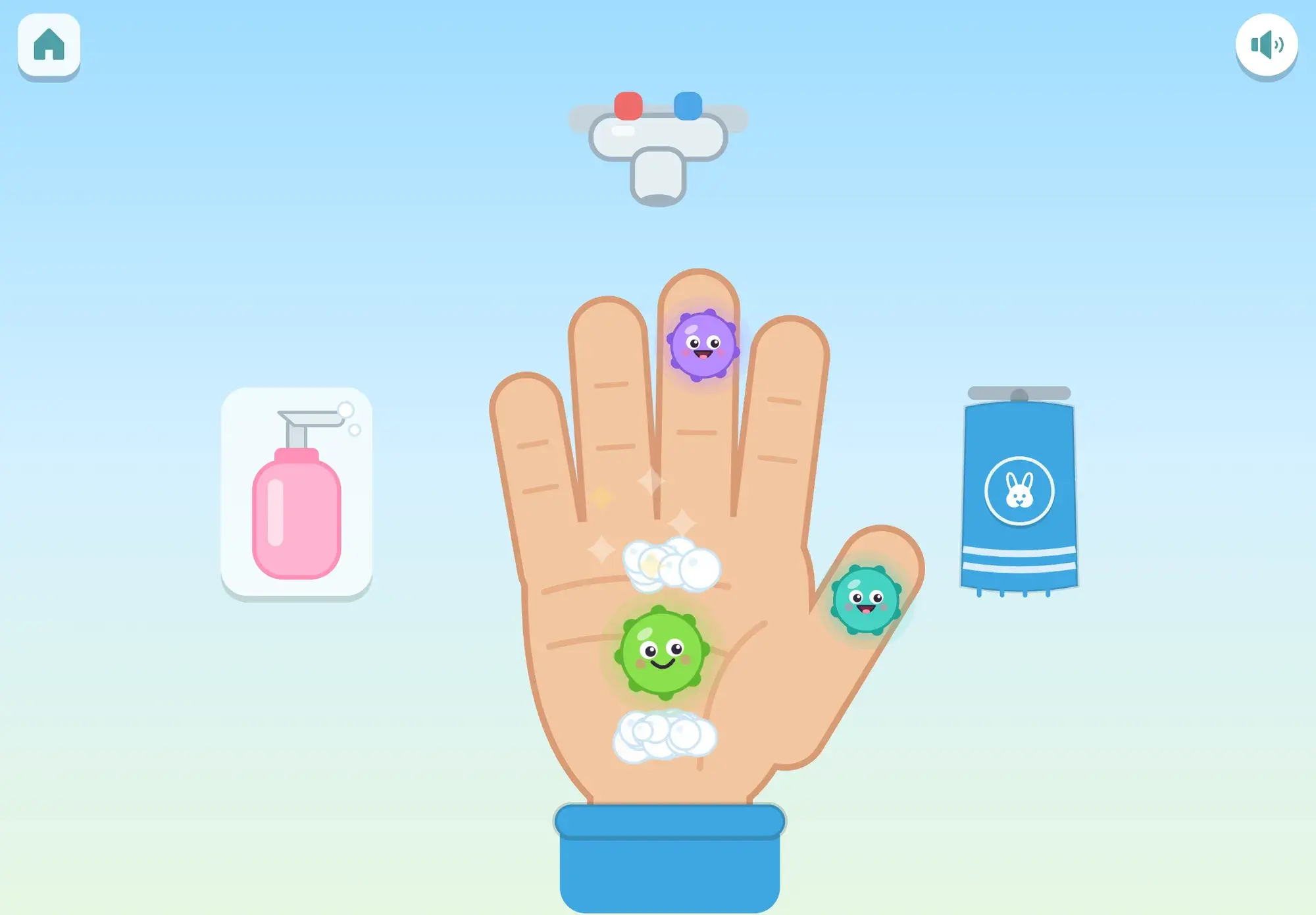
A family home with four rooms, each one full of everyday life to practice.
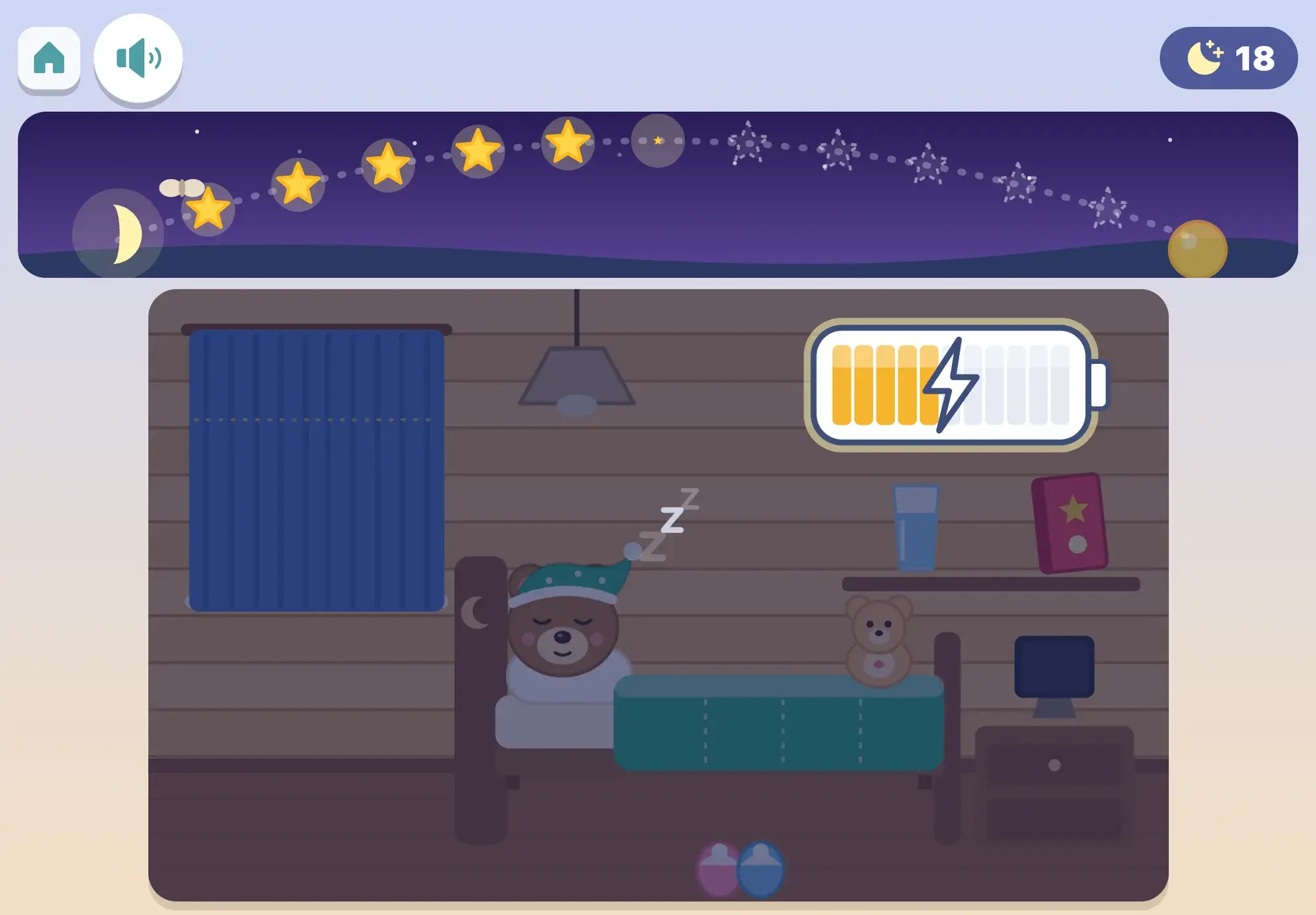
Sleep charges you up, like a battery: a gentle game about bedtime.
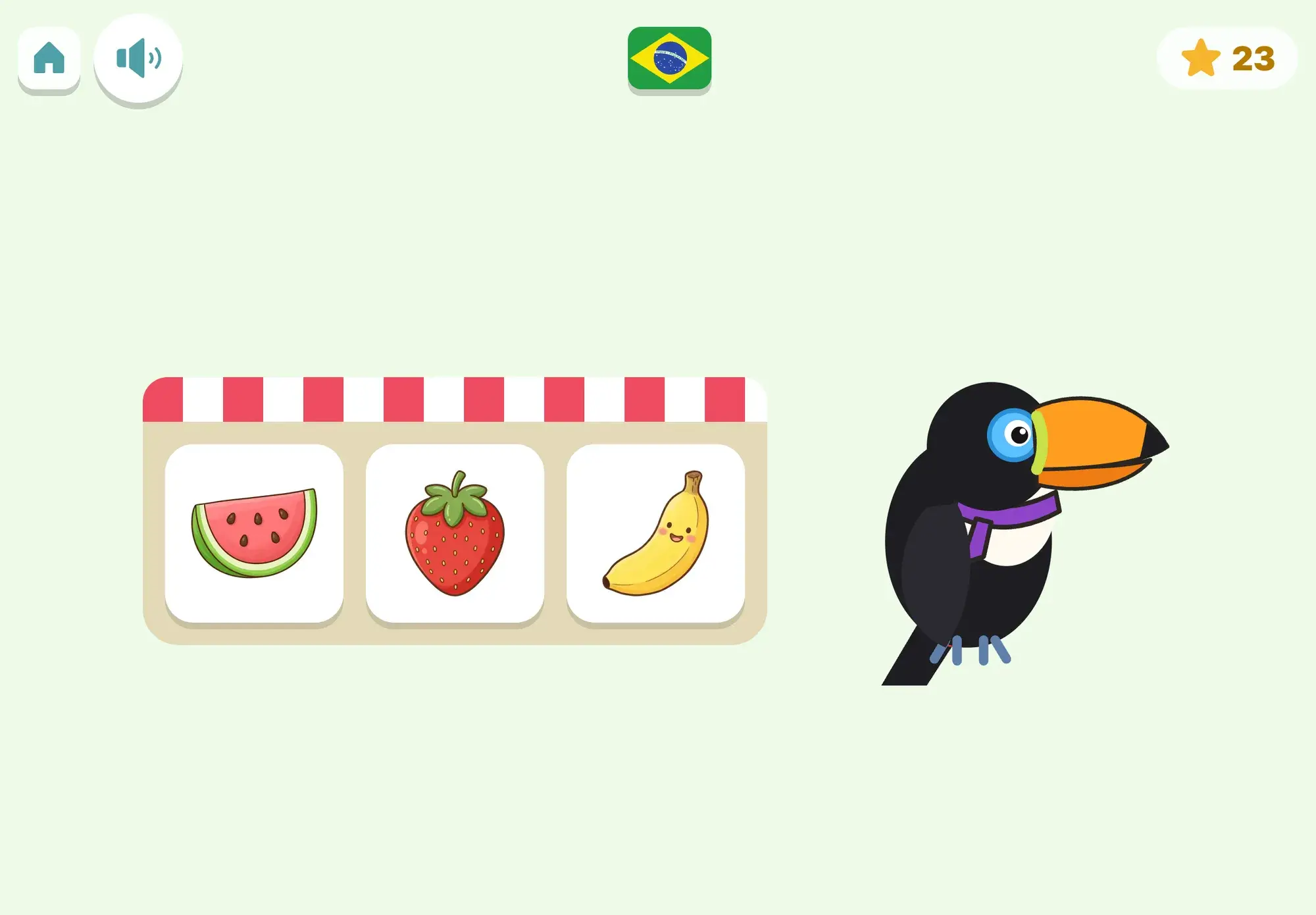
Hello, colors, fruits and numbers in Portuguese, from a toucan who speaks nothing else.
Spoken from the first tap, no reading needed, no ads, and progress that stays on your iPad.