One letter sound at a time, from s, a, t, p to sh and ee, then little books
Ages 3–6Phonics & reading
Before children read, they need to hear that words are made of sounds and link those sounds to letters. Maestri World teaches letter sounds one at a time in a phonics order that starts with s, a, t, p, then i, n, m, d, so real words can be built from the first few sounds.
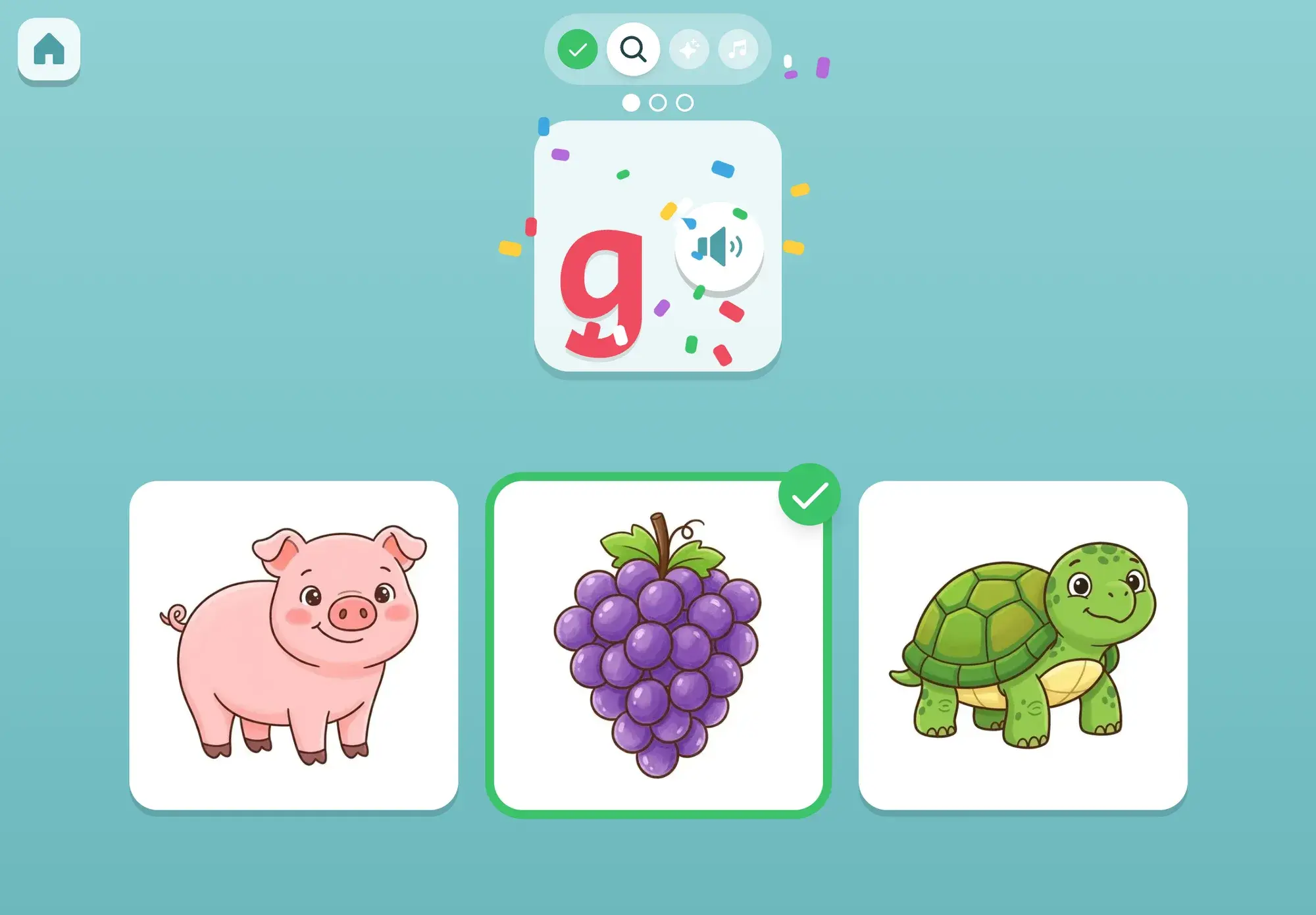
Each stop on the letters path has three parts: meet the letter and trace it with a finger, find pictures that start with its sound, and pop bubbles with it. Two-letter sounds like sh and ee come later, little books open along the way, and every level ends with a review. The word book is a picture dictionary from A to Z where every picture says its name.
One letter sound at a time, from s, a, t, p to sh and ee, then little books
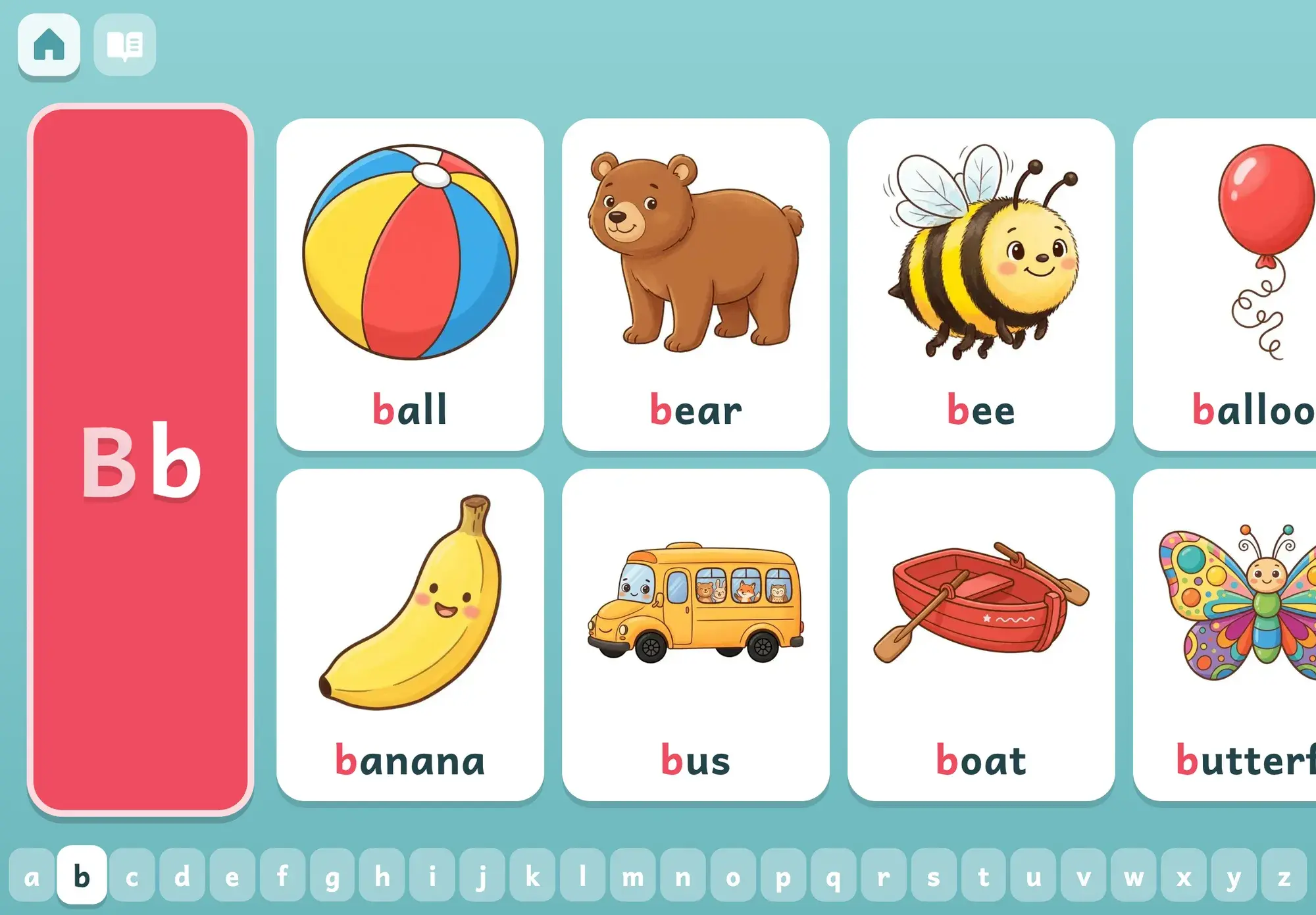
Swipe from A to Z and round again. Every picture says its name.
Skills
Away from the screen
Play I spy with sounds: “I spy something that starts with sss.”
Say the sound, not the letter name, when you point at a sign: “mmm” for M.
Trace letters in sand, in flour on a tray, or on a steamy bathroom mirror.
Why phonics teaches letter sounds in an order like s, a, t, p, i, n, how to say the sounds, and simple ways to practice them at home with a 3–6-year-old.
Read the guide
FAQ
Those sounds blend into real words, like sat, pat and tap, almost straight away. Going in alphabetical order makes a child wait much longer before they can read a word.
Not when it’s play. The letters path asks for listening, tapping and tracing rather than reading, and a wrong tap is never punished.
Spoken from the first tap, no reading needed, no ads, and progress that stays on your iPad.