7 min read
How to choose a learning app for a preschooler: a 10-point checklist
A practical 10-point checklist for judging any learning app for a 3 to 6 year old who can’t read yet: ads, rewards, mistakes, privacy and more.
Read the guide
Letters and sounds
One letter sound at a time, from s, a, t, p to sh and ee, then little books
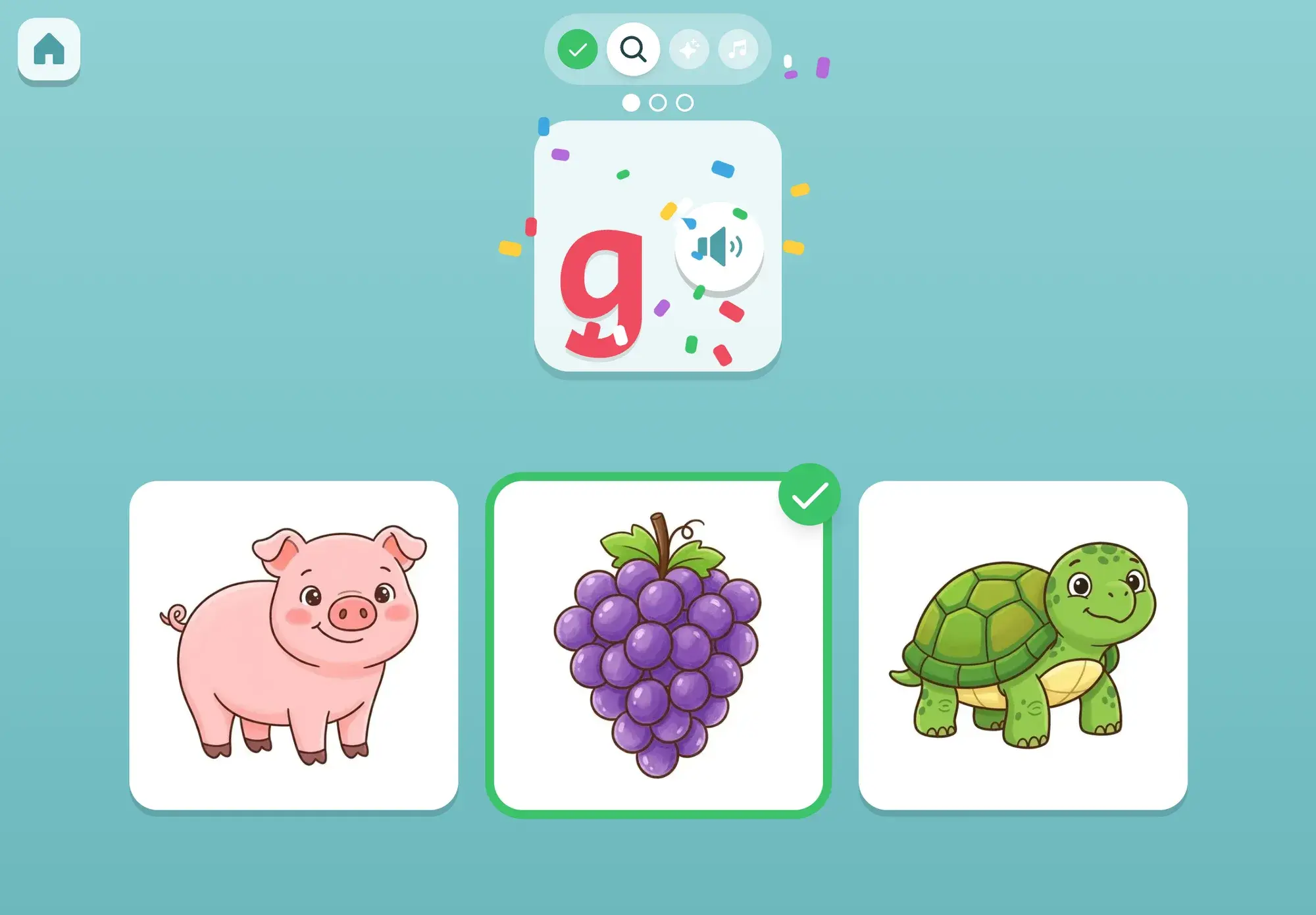
Letters and sounds is a path with one stop for each letter sound. It teaches phonics, which means linking each letter to the sound it makes: “mmm”, not the letter name “em”. Lowercase letters come first, in the Letters and Sounds order (s, a, t, p, then i, n, m, d), a phonics sequence used in many English schools that lets children build short words like “sat” and “pin” early on.
At each stop your child meets the letter, hears its sound, traces it with a finger and hears it in three words. Then come a sound hunt (“Which one starts with mmm?”) and a game of popping bubbles. New games open as the levels go on, each level ends with a review, and the last two levels move on to two-letter sounds like sh and ee.
From level 2 there are little books, 14 in all, written only with sounds your child has learned plus a few “tricky words” taught just before. Nothing is ever failed: a wrong tap says what the picture was (“Moon! mmm”) and the right answer wiggles.
How it plays
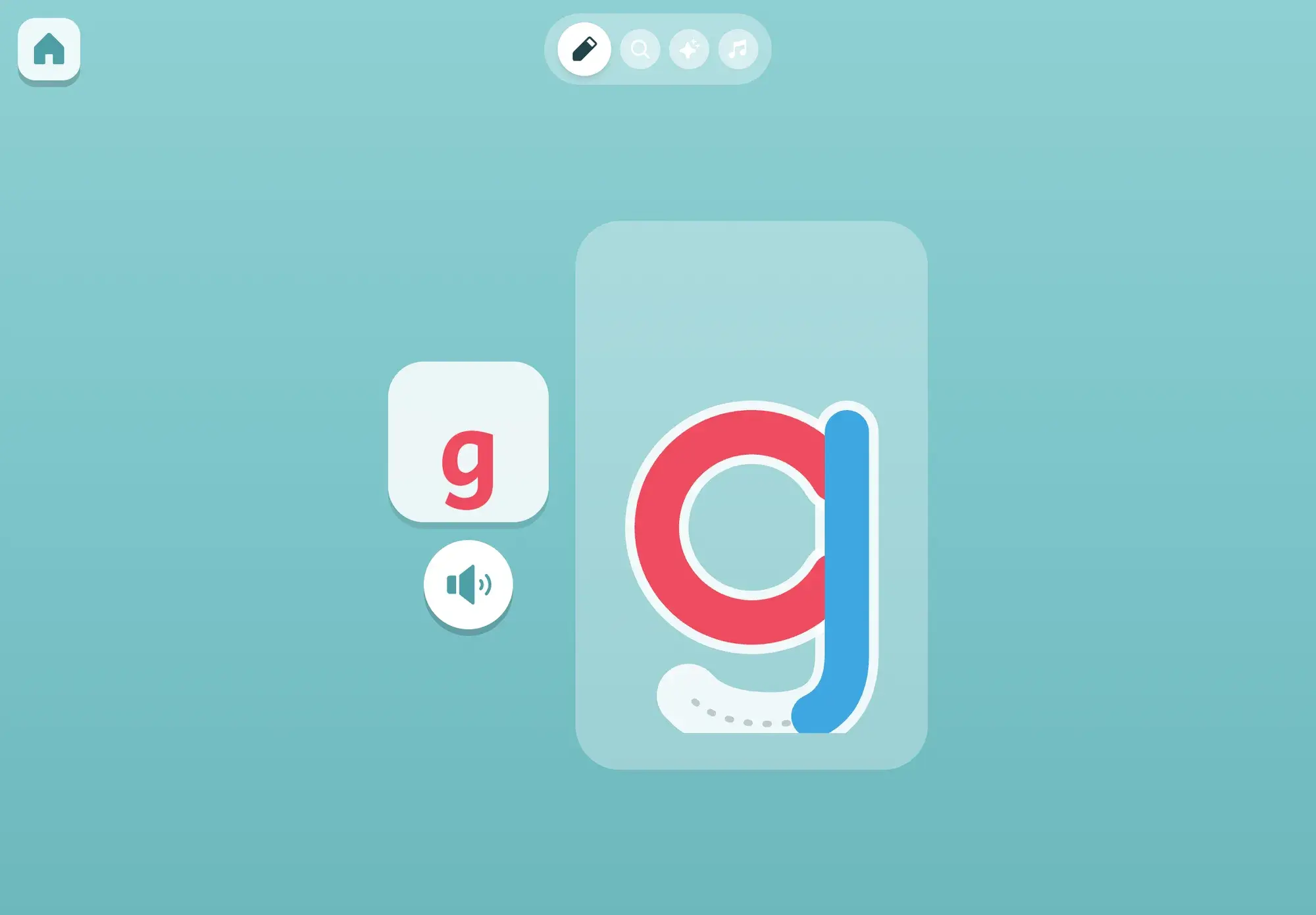
The letter appears big, and the voice says its pure sound, short and clean, with no “uh” after it. Your child traces it with a finger, starting at the green dot, then hears the sound in three words. Letters are drawn the way children learn to write them, with a one-story a and g.
In the sound hunt your child hears “Which one starts with mmm?” and taps the picture that does. (For x the question is which one ends with it, as in fox.) In bubble pop they pop every bubble with the sound, while the other bubbles just say their own sound. Both games come back at every letter stop.
Rhyme time opens at level 2 (“Which one rhymes with cat?”). Level 3 adds Odd one out and Clap the beats (“mon… key”: how many claps?). Level 4 adds Sound it out, where your child hears c… a… t and finds the picture, and Countries and sounds, with flags from the world trail. At level 5, the Word builder puts c-a-t in order on spinning wheels.
Level reviews include Feed the monsters: drag each picture to the monster whose sound it starts with. From level 3, halfway through, the voice says “New rule! Now the monsters eat by claps”, and one monster takes one-clap words, the other two-clap words. From level 4, bubble pop sometimes sounds a horn: “Freeze!” Everything stops until “Go!”
Levels 8 and 9 teach sh, ch, th and ng, then ai, ee, oa and oo. Each gets its own stop: trace both letters, then answer “Which one has sh?”, where the sound can be anywhere in the word, as in ship or fish. Once learned, words like ship and moon join Sound it out and the Word builder.
The sentence is in big letters and every word is a button: a tap sounds it out letter by letter, lighting each one, then says the word. Tricky words have a star and are just said. The picture stays under a flap until every word has been read or heard, and a question at the end checks understanding. A bookshelf keeps every book to read again.
Skills
The thinking
Reading text made only of sounds a child knows is the bridge from sounding out to reading, and reading it again builds fluency. That is why every word in every book can be sounded out with the sounds taught by its level, or is a tricky word already introduced, and why the bookshelf is always open. Letter sounds and tricky words also go into review boxes, so each one comes back after a day, then a few days, then a couple of weeks.
Two small twists train thinking skills alongside the letters. Switch the rule is the card-sorting test of flexible thinking used with four- and five-year-olds (Zelazo 2006): a miss right after the switch means the child stuck to the old rule. Freeze! is practice in holding back. Both show up in the parent area and are never punished.
Away from the screen
Ideas to carry the game into everyday life, no screen needed.
Play I spy with sounds: “I spy something that starts with mmm.”
Look for a tricky word like “the” or “was” in a real picture book and let your child point to it.
Trace letters with a finger in sand, flour or on a steamy window, saying the sound, not the name.
Clap the beats of family names or animals at dinner, and make up silly rhymes: cat, hat, bat.
FAQ
This path starts with sounds, because sounds are what children blend together to read a word. The names aren’t hidden: in the word book, tapping a big letter says both (“This is the letter M! It says mmm.”).
It opens at every age. The first level is just four letters (s, a, t and p), every instruction is spoken, and a wrong tap just names the picture and shows the right answer.
Words that can’t be sounded out with the sounds learned so far, such as “the”, “was”, “you” and “they”. They come a few at a time, just before the book that first uses them: “This is a tricky word! It says the. We can’t sound it out. We just remember it!”
Fourteen short books, from “The ant” at level 2 to “Zoom to the moon” at level 9. The voice can read each sentence aloud, lighting the words as it goes, or your child can tap one word at a time to hear it sounded out.
Guides
A practical 10-point checklist for judging any learning app for a 3 to 6 year old who can’t read yet: ads, rewards, mistakes, privacy and more.
Read the guide
Why phonics teaches letter sounds in an order like s, a, t, p, i, n, how to say the sounds, and simple ways to practice them at home with a 3–6-year-old.
Read the guide
More to explore
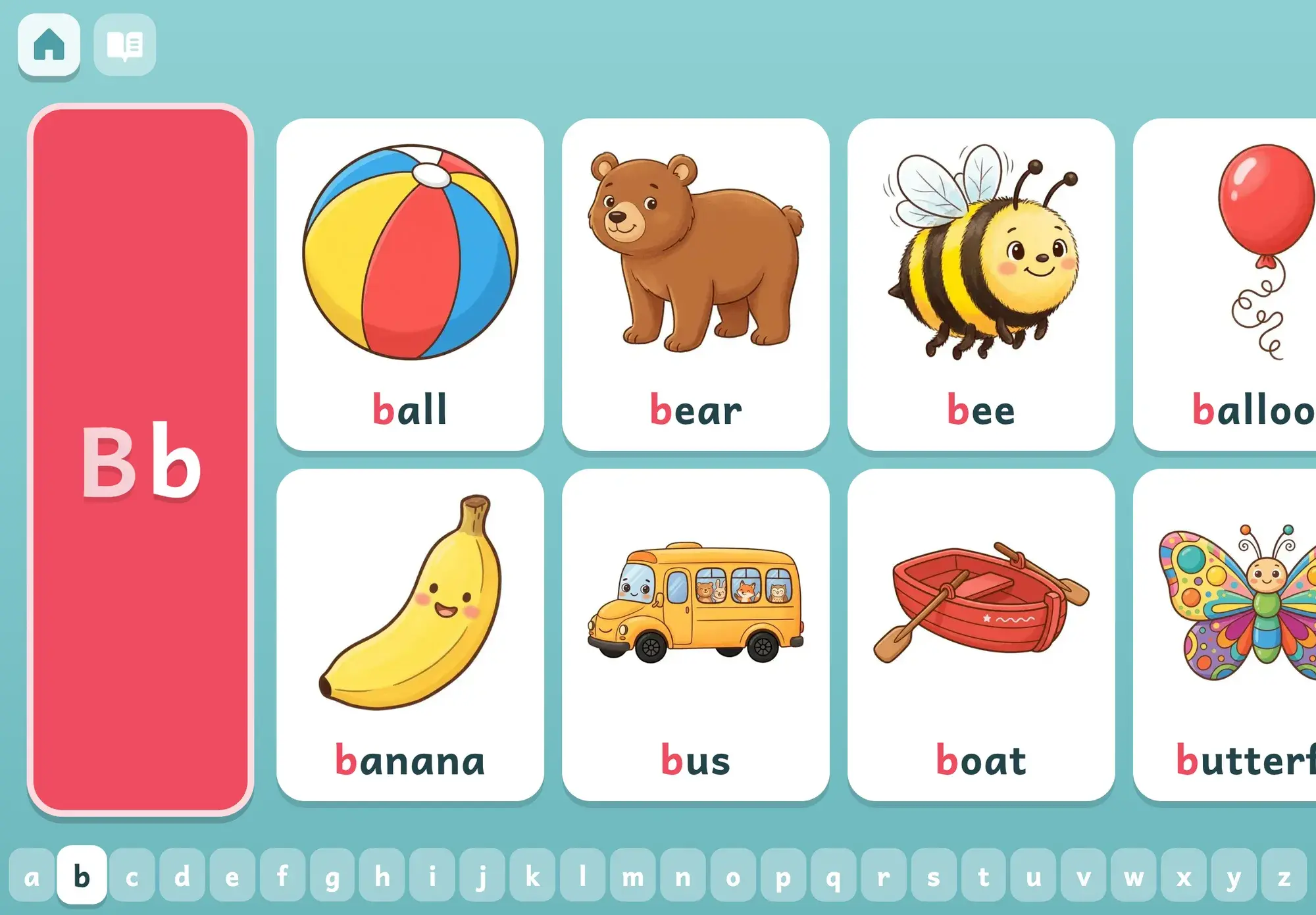
Swipe from A to Z and round again. Every picture says its name.
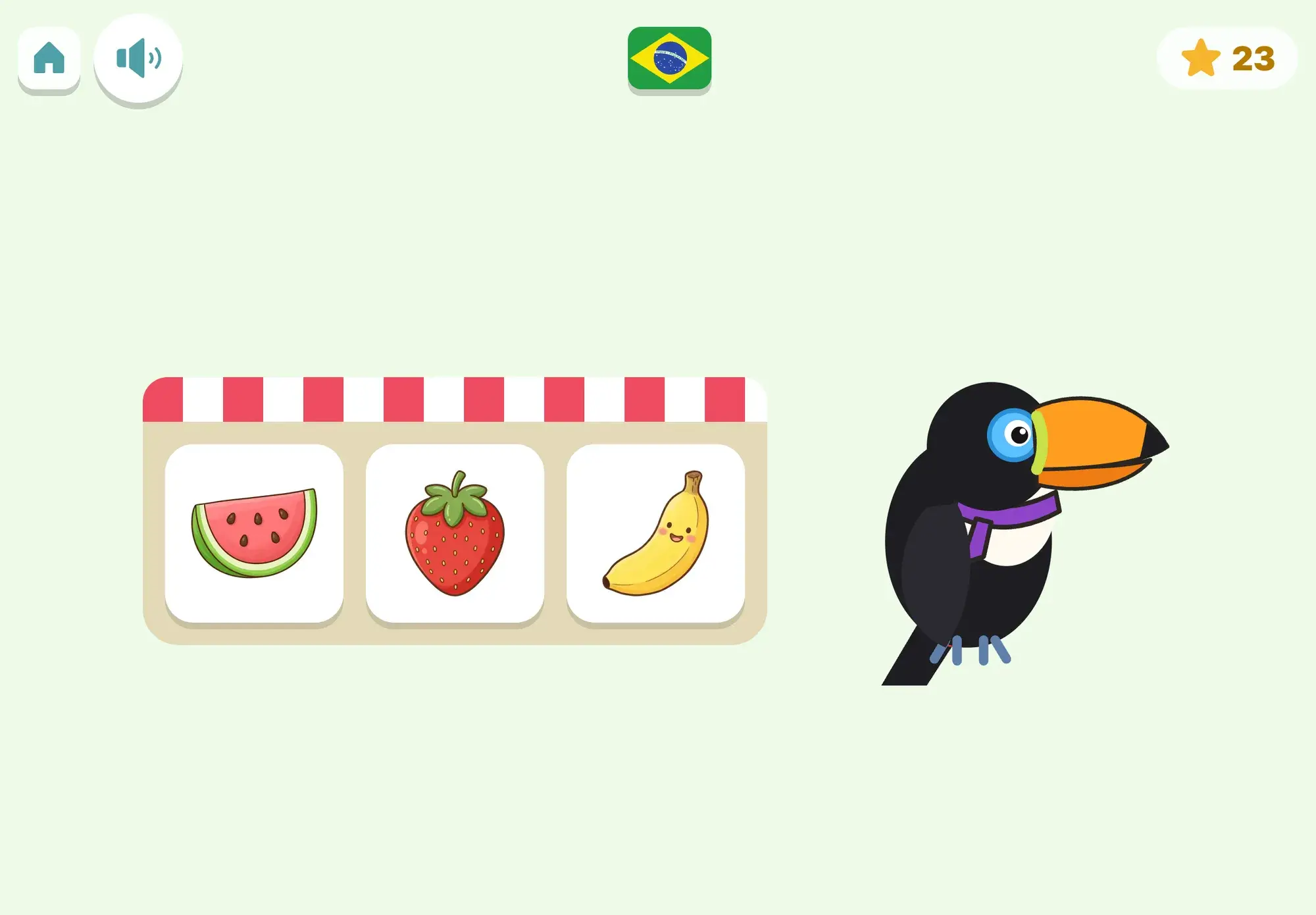
Hello, colors, fruits and numbers in Portuguese, from a toucan who speaks nothing else.
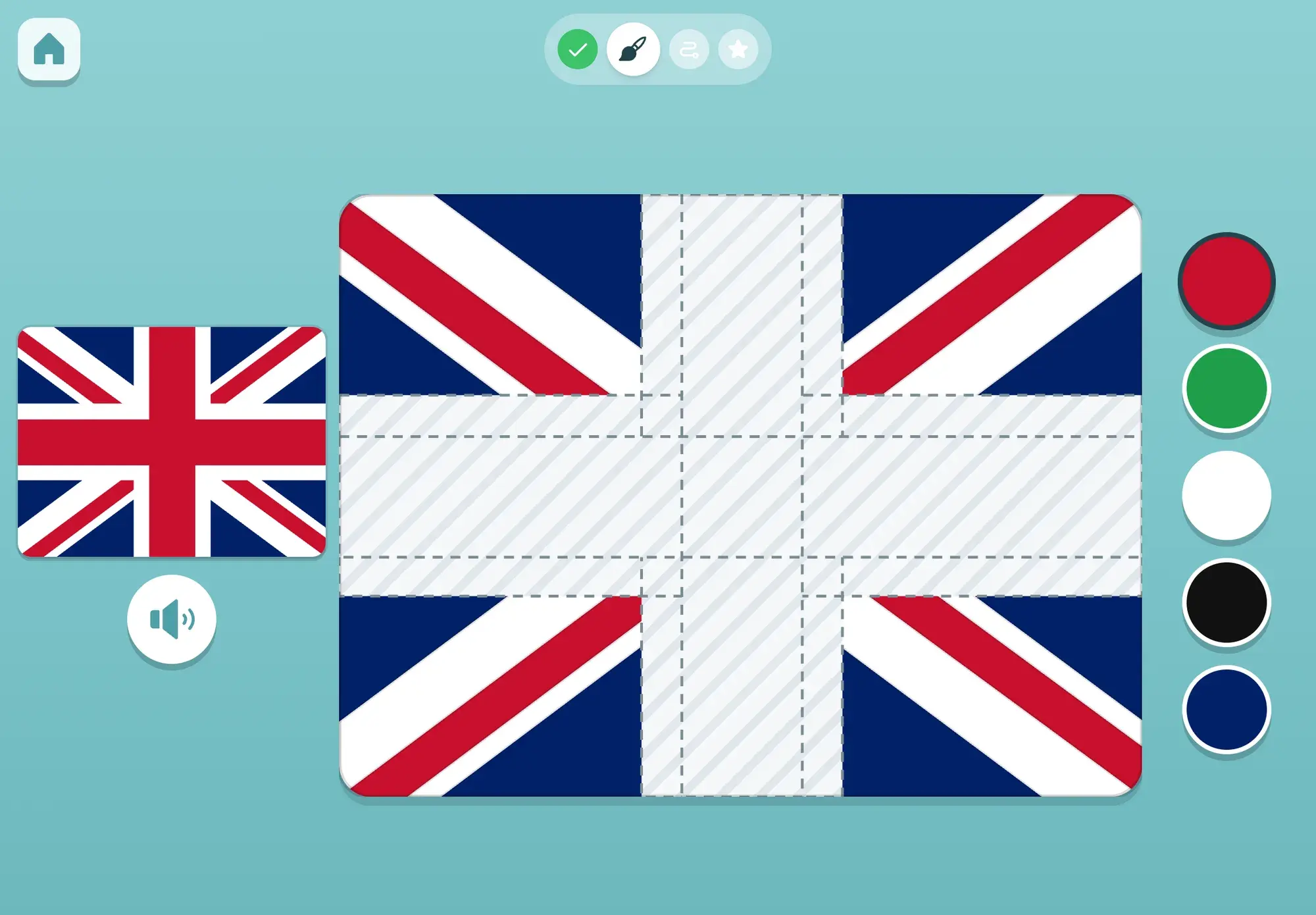
Meet a country, paint its flag, drive there, and earn a passport stamp
Spoken from the first tap, no reading needed, no ads, and progress that stays on your iPad.