

Ticket, suitcase, flight and postcard: a trip to a country your child knows
Ages 4–6GeographyMath
The adventure planner
Pack what the trip needs, make room for a toy, and count coins at the shop.
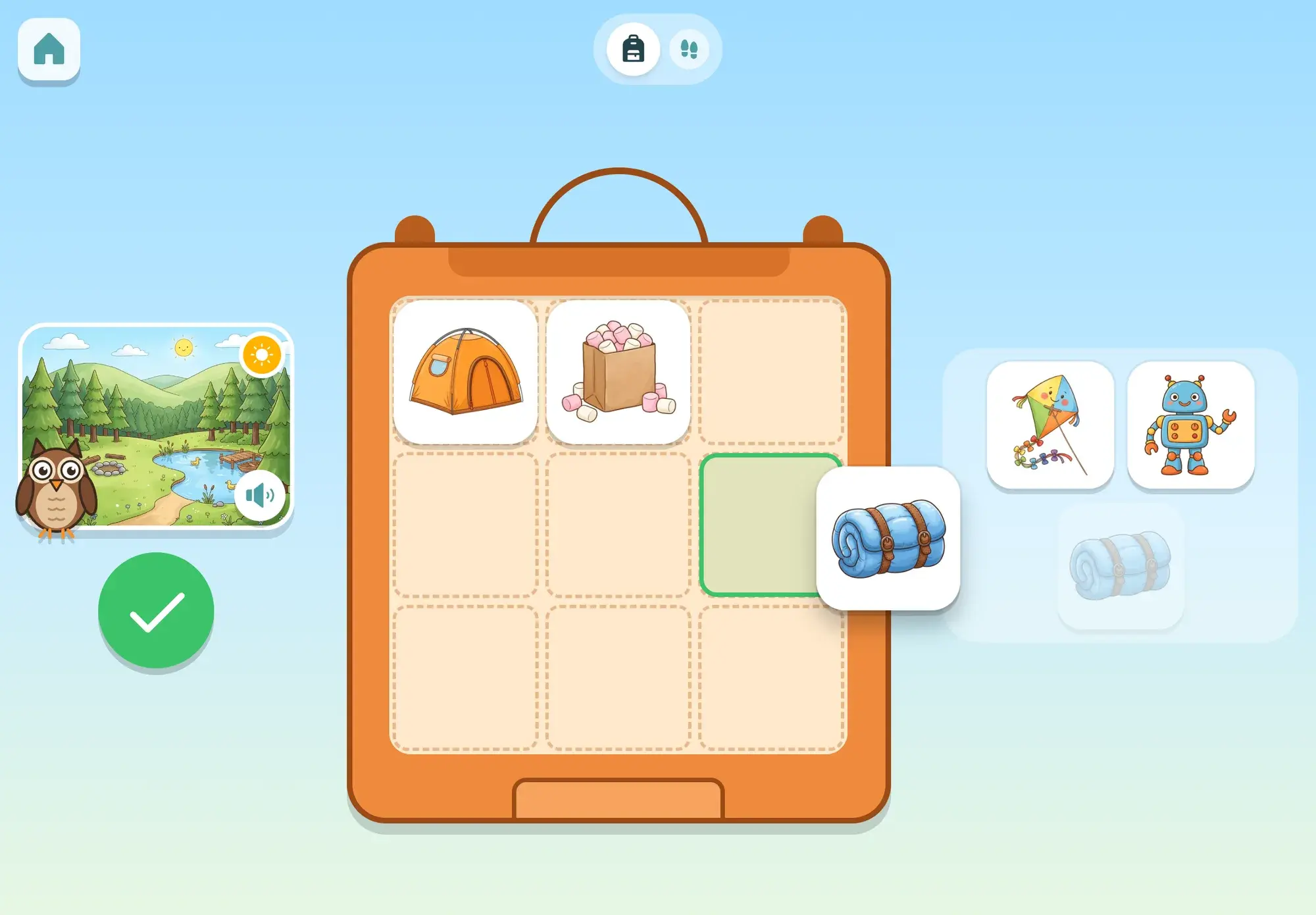
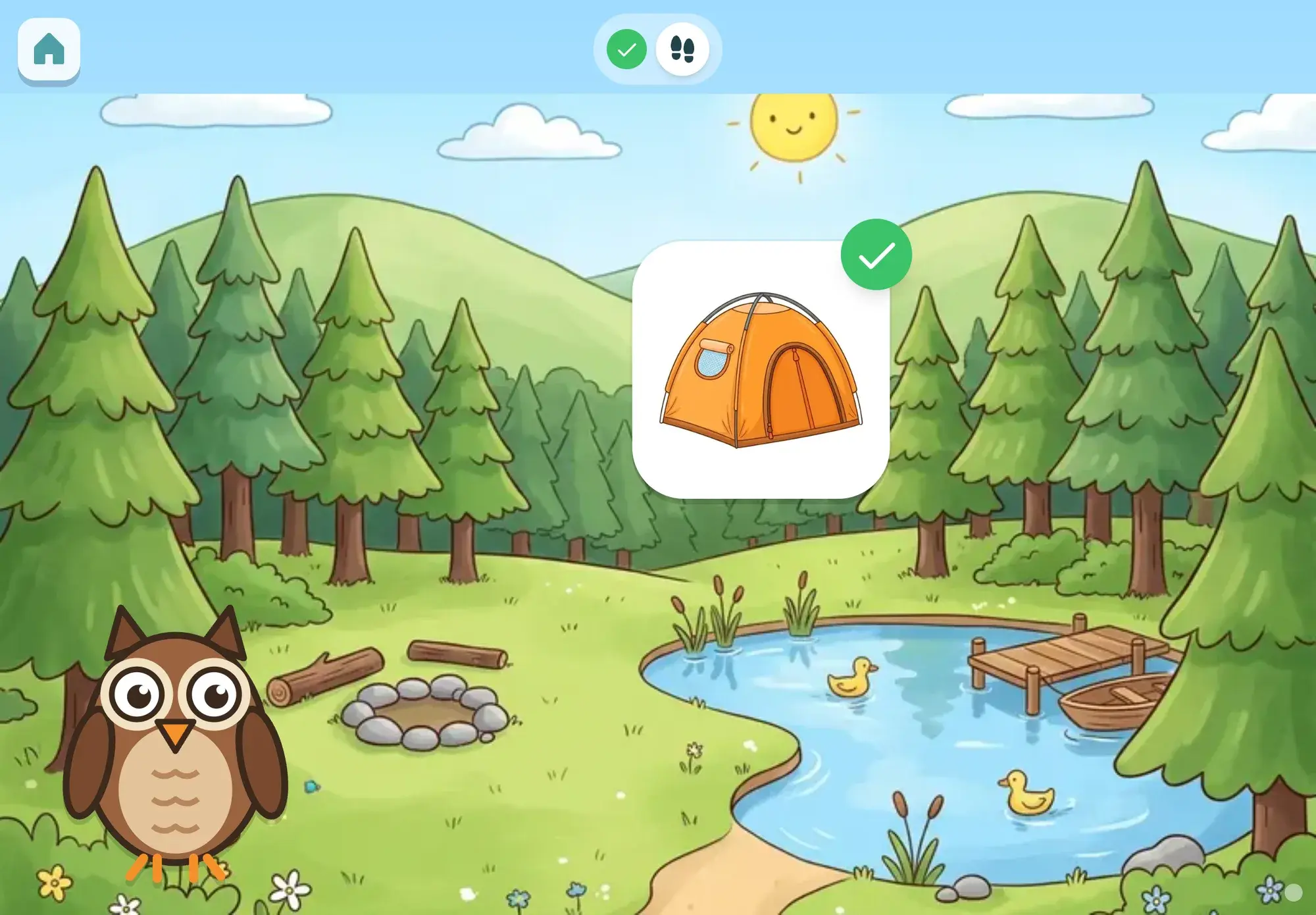
In the adventure planner your child gets a trip ready with a friendly animal guide: camping with the owl, a mountain walk with the goat, the beach with the crab, sledding with the penguin, or a rainy walk with the duck. The guide says where you are going and what you will do (“Hoo hoo! We’re going camping in the woods. We’ll sleep in a tent!”), and your child packs by dragging things from a shelf into a backpack.
The things the trip needs go in first. Toys, like a ball, a kite or a big toy dinosaur, are wants, and they only come if there is room. If a toy goes in before the needs it can stay, but the guide says so kindly (“That’s a want, something fun. Let’s pack what we need first!”) and the needs wiggle.
Then the trip happens, in a short scene where each packed thing gets used. Something left at home becomes a gently funny moment, like using the moon when there is no flashlight, and the end shows what to pack next time. There is no fail screen, and a toy that came along gets its own moment too.
How it plays
A roomy backpack, three things the trip needs and two toys. Everything takes one space, and a tap packs it too. The green button lights up once everything needed is in. A clean trip has no toy packed before the needs and nothing needed left at home.
Now there is room for the three needs and just one more. If two toys go in first, the last need won’t fit: “It’s full!” The toys wiggle, and a tap takes one out. Your child sees, without being told off, that what we want sometimes has to wait for what we need.
Every need now has its real shape: a sleeping bag takes a square of four spaces, a tent a long two, a flashlight just one. Your child drags things so they fit and taps a long one to turn it. A thing dropped near a free spot snaps in, and after two drops that don’t fit, a green outline shows a spot that works.
When your child presses go, the forecast changes: “Listen! The weather is changing. Rain is coming!” There is something new to take, and sometimes something isn’t needed anymore, like the sun hat on the mountain walk. With at most one spare space, a toy (or the sun hat) has to make way.
Your child gets up to ten coins, each worth one, and price tags show one to three. A tap buys, and the coins are counted out loud. If there aren’t enough: “That costs three coins. We have two.” The last step is a two-day trip with a night in between, a T-shirt to buy for each day, and a forecast that changes.
Skills
The thinking
Choosing what a future situation will need is called episodic foresight. In Atance & Meltzoff (2005), three- to five-year-olds imagined going to different places and chose what to take; four- and five-year-olds did clearly better than three-year-olds. Putting needs before wants means holding a goal in mind and holding back an impulse, and adjusting to a new forecast is flexible thinking. These skills, called executive functions, develop fast between three and seven (Diamond 2013).
Money comes in only on the last two steps. A review for the UK Money Advice Service (Whitebread & Bingham 2013) concluded that many money habits are formed by about seven, and that recognizing and adding coins of different values is usually a skill for six- and seven-year-olds. So every coin here is worth one, and your child practices counting and “is it enough?”, not coin values.
To be honest about it: that review is about when habits form, not evidence that a game builds them. Packing a real bag for a real outing with a grown-up is the real practice; the game gives your child the words and the idea.
Away from the screen
Ideas to carry the game into everyday life, no screen needed.
Before an outing, let your child pack their own bag: first “what will we need?”, then “is there room for a toy?”
Check the weather together in the morning and change the plan out loud: rain means a raincoat and boots.
Play shop with ten coins of the same kind and price tags of one, two or three coins.
Keep a jar for saving coins and decide together what it is for.
FAQ
It opens from age 5 in the town. The first trips are simple (one space per thing, plenty of room), and shapes to fit and coins to count come only later. If a four-year-old is keen, a parent can open it for them in the parent area.
The trip still happens. The missing thing becomes a gently funny moment, and the end shows it with a hint for next time. After a trip with two or more mistakes, the next one is a step easier.
In the airport, each thing goes in the suitcase or stays home depending on the weather. Here the backpack has limited space, needs come before wants, plans change, and later there is a little money to spend.
More to explore
Ticket, suitcase, flight and postcard: a trip to a country your child knows
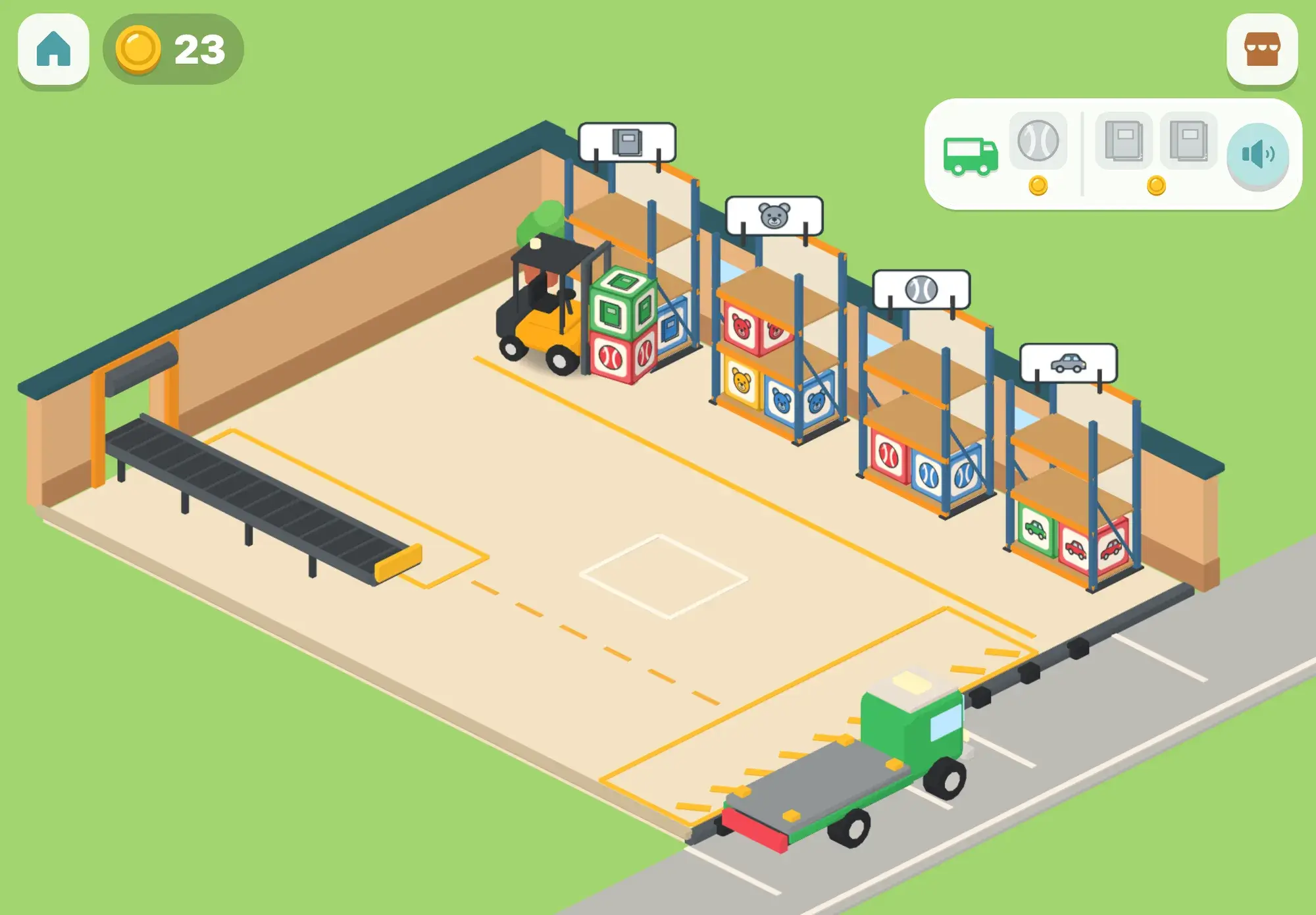
Sort the boxes, fill the trucks, and save up for a faster forklift
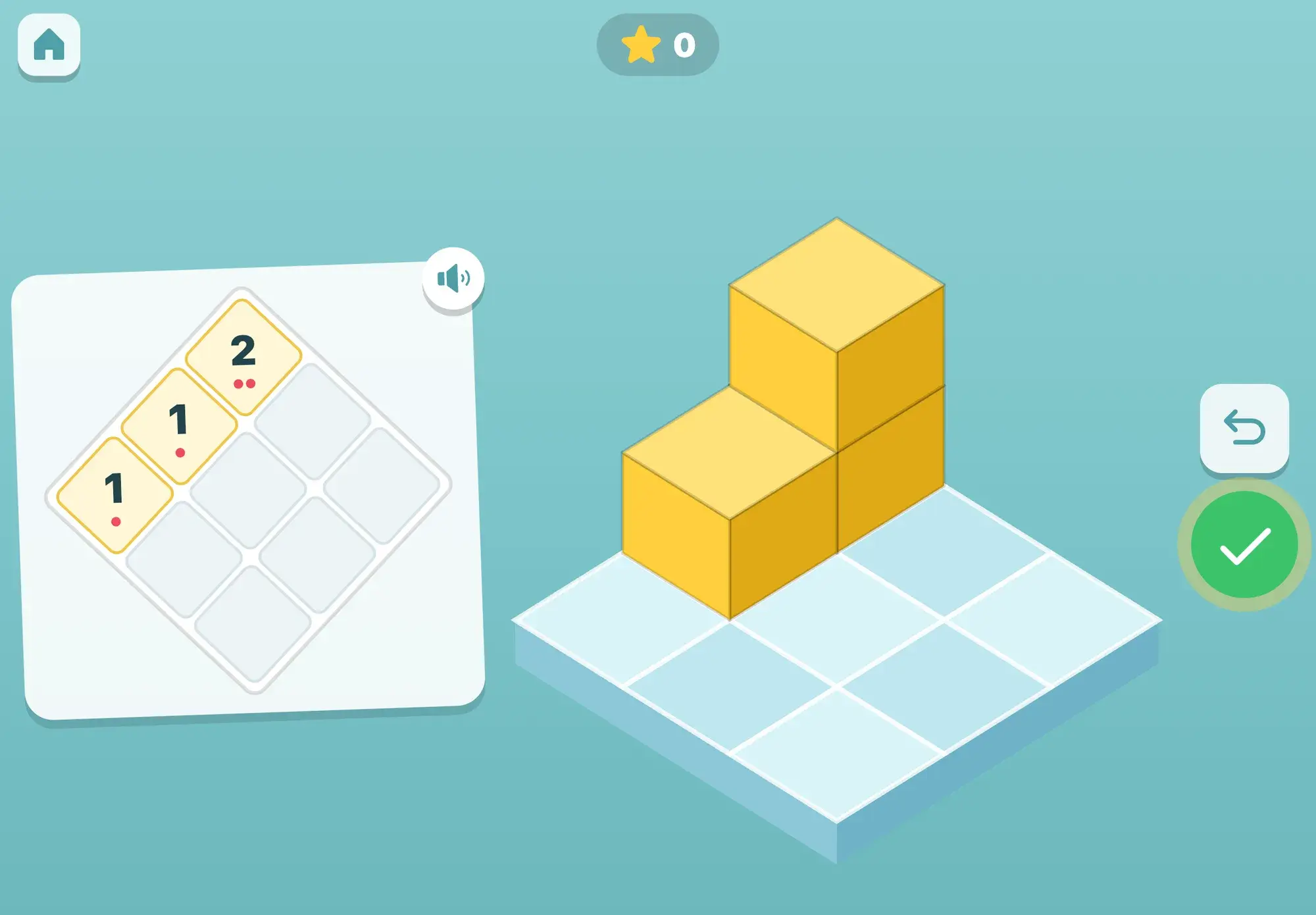
Copy the build, then build what the puppy’s camera sees from the other side
Spoken from the first tap, no reading needed, no ads, and progress that stays on your iPad.