
7 min read
How to choose a learning app for a preschooler: a 10-point checklist
A practical 10-point checklist for judging any learning app for a 3 to 6 year old who can’t read yet: ads, rewards, mistakes, privacy and more.
Read the guide
The dig site
A digger to drive yourself, a world to explore, and no levels at all.
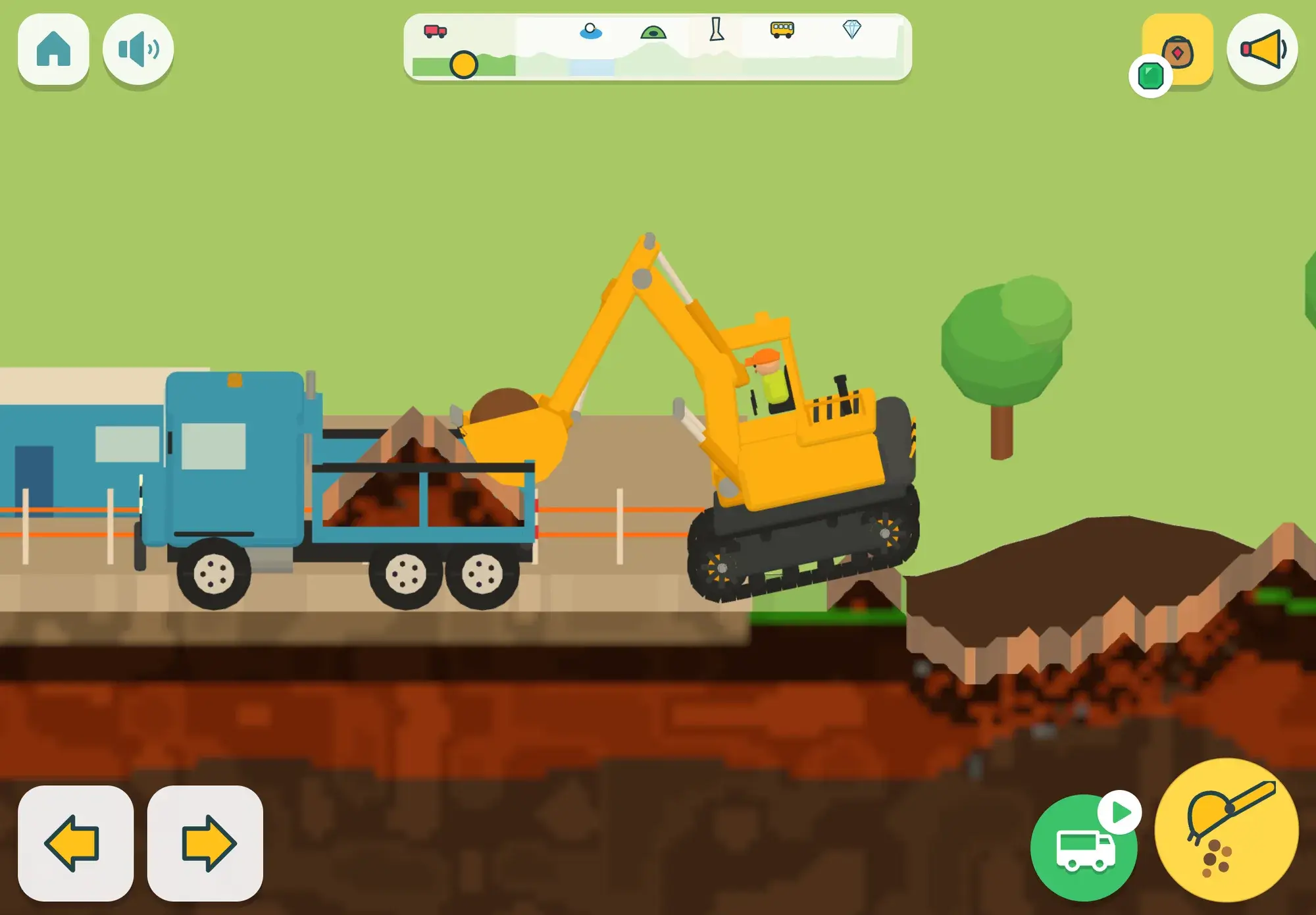
The dig site is a long world seen from the side and cut open like an ant farm, so your child can see every layer under the grass and the treasure buried in it. They drive a yellow digger from the yard at home past a meadow, a duck pond, a hill with a cave inside, dinosaur sand and a road with a deep ditch, to a rock quarry at the far end.
There are no levels, timers, scores or lessons. Your child drives and digs where they like. Earth falls, heaps up and slides off steep slopes, and water runs into any channel they dig. The land is the same every visit, so it becomes a familiar place, but the gems are buried somewhere new each time.
Two big arrow pedals drive the tracks, and the bucket goes wherever your child points. The machine does the fiddly parts itself: it scoops when dragged through the earth, curls up to hold a load and swings round when the target is behind it. A four-year-old only has to decide where.
How it plays
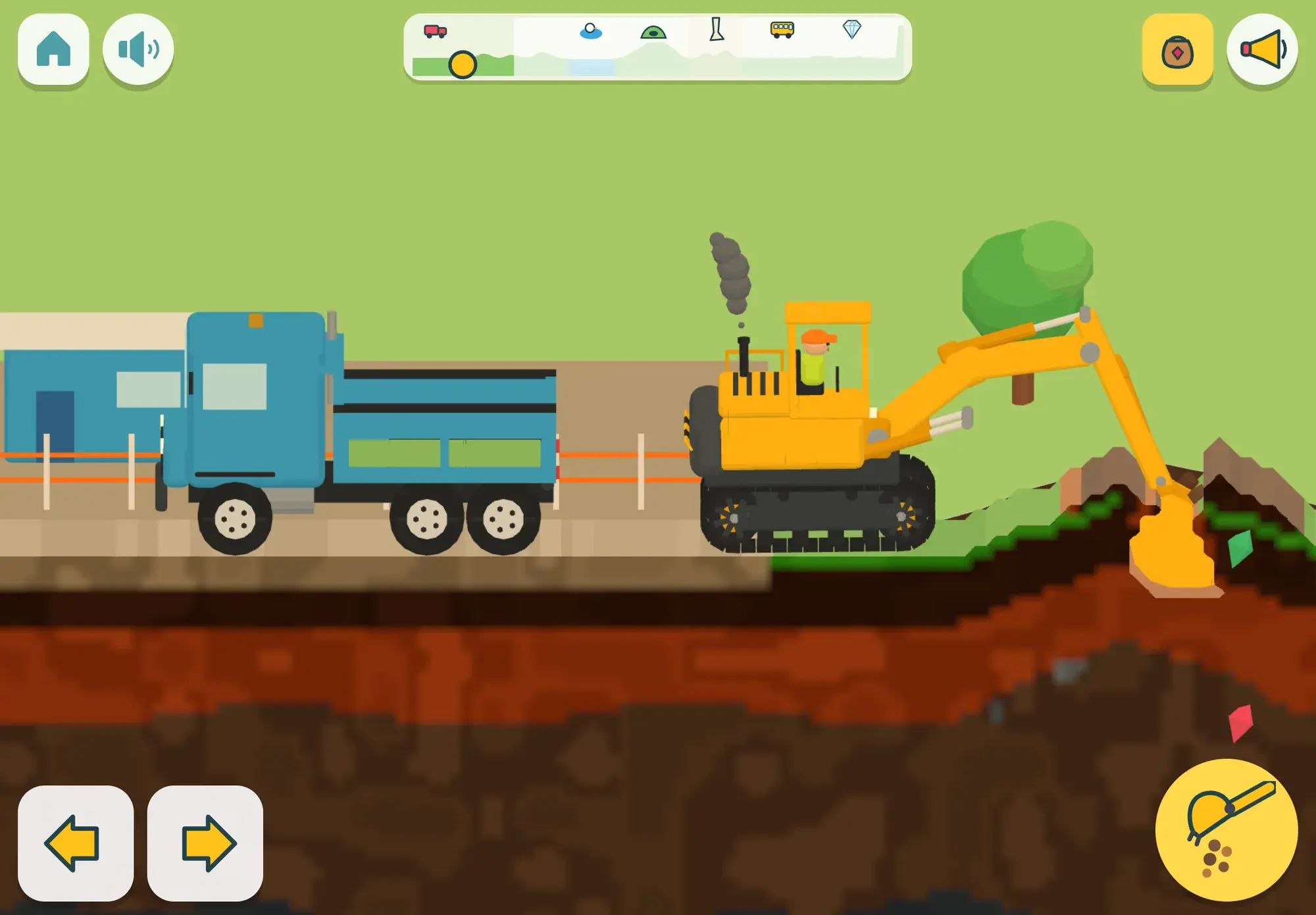
On the first visit the voice shows how to drive and dig, with a pointing hand on the pedal and then on the dirt. The digger tilts on slopes, thumps down off small drops and crawls up steep ones. When it can’t go further (a wall too steep, water too deep), the voice says why, once.
At home a dump truck waits with its near side cut away, so your child can watch the load grow. Three full buckets fill it, and too much spills over the back. A green button sends it off: it honks, tips its load on the dirt mountain, which grows, and backs in again, beeping.
Dirt tipped into the duck pond sinks and pushes the water up until it spills, and a channel dug beside it fills as the water runs in. Your child can pile up a mountain, dig a hole and drive down into it, or dig into the hill until they break into the cave with the treasure chest.
A yellow school bus full of children can’t get home: the ditch by the road is too deep to cross. The voice asks your child to fill it. Once the ditch is level, the bus honks, rolls across and drives away, with a thank you and confetti, and the way to the quarry’s gold and diamonds is open.
Everything buried shows through the cutaway. When the bucket touches a find, it flies to the treasure bag and the voice names it. The bag keeps every kind of gem, the chests, the buses helped, and a dinosaur skeleton that fills in bone by bone over many visits, until “You found the whole dinosaur!”
Skills
The thinking
Most vehicle games for young children do the driving for them. Here your child operates the machine, with physics they can see: earth heaping and spilling, water running, a digger tilting on a slope. An early version was a single site with one loop (dig, fill the truck). It felt repetitive, so it became a world to explore, with jobs to choose and finds that build up over visits.
Nothing is paid out for digging. In one study, preschoolers who were promised a reward for drawing later chose to draw less in free play (Lepper, Greene & Nisbett 1973). Here the digging itself is the fun.
Taps and one-finger drags work well for children this age, but we know of no evidence that a four-year-old can work an on-screen joystick and buttons at once. So the parent area lets you choose how the bucket is steered (by dragging, with a joystick, or a different way each day) and shows the two side by side.
Away from the screen
Ideas to carry the game into everyday life, no screen needed.
Dig in a sandbox and notice that damp sand stands up in walls while dry sand slides, just like the earth in the game.
Make a pond in the sand: dig a hole, pour in water, then tip sand in and watch the water rise.
Bury a few shells or small toys for your child to dig up and load into a toy truck.
Watch a real digger at a building site from behind the fence, and name the arm, the bucket and the tracks together.
FAQ
It opens from age 4 in the town, and it was designed so a four-year-old only has to say where: the digger scoops, lifts and swings by itself, and if a finger is a little out of reach, the tracks creep closer on their own. A parent can show it earlier, or hide it, in the parent area.
No. Filling the truck and helping the bus are jobs to choose, never required. In the town, the dig site’s progress dots stand for its first big moments instead, such as a whole dinosaur, a treasure chest and the bus helped across.
Not for long. The digger can always climb out of a hole it dug, because a dug wall caves in to a slope. After 24 seconds without driving, treasure in view twinkles and the voice suggests digging it out, or driving on.
Visits, how far your child has driven, truckloads, buckets tipped, treasure by kind, dinosaur bones, chests and buses helped, plus the steering setting.
Guides
A practical 10-point checklist for judging any learning app for a 3 to 6 year old who can’t read yet: ads, rewards, mistakes, privacy and more.
Read the guide
Easy STEM activities for 3 to 6 year olds: build bridges, dig and pour, look through a magnifier, grow plants and race cars down ramps.
Read the guide
More to explore
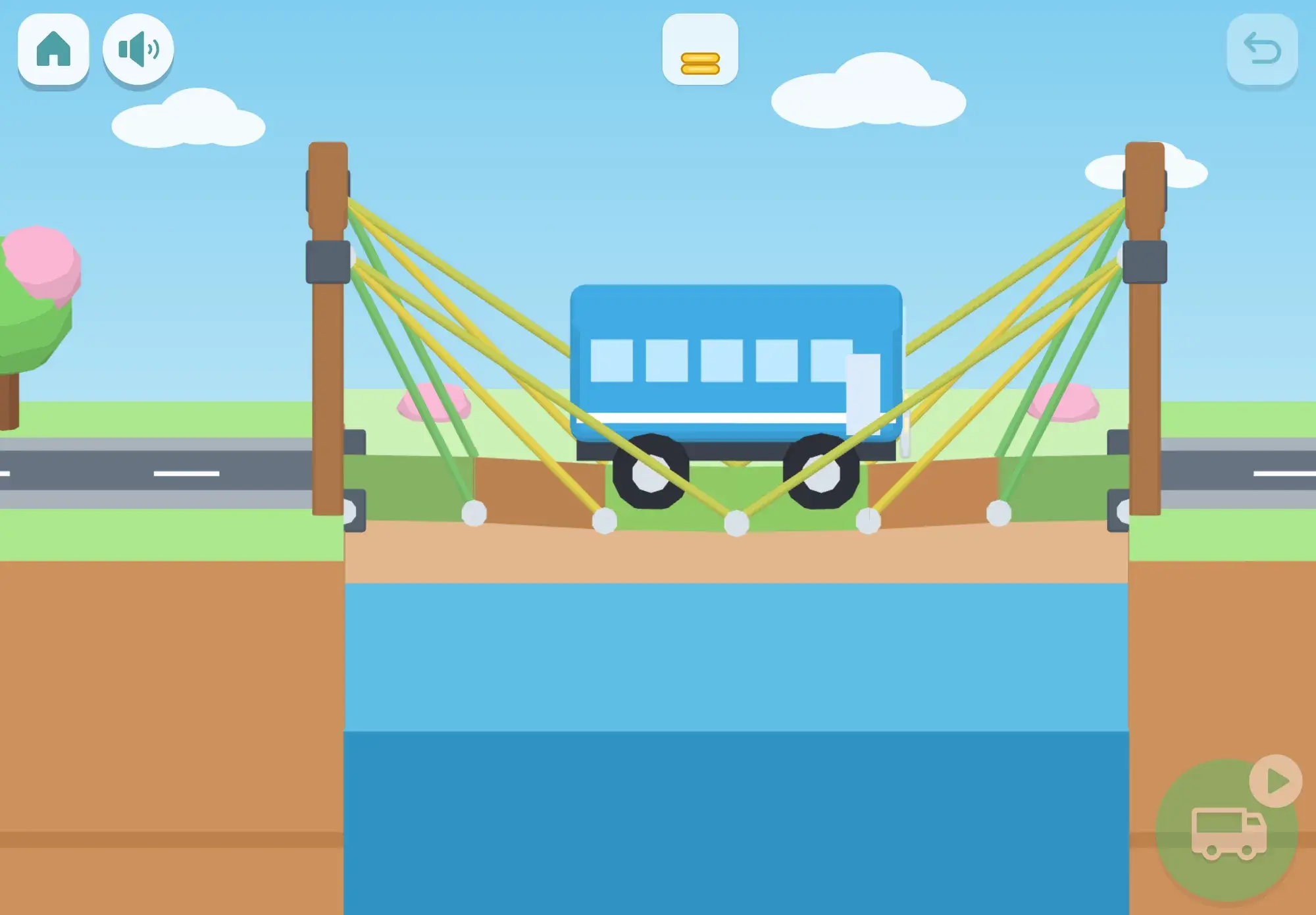
Join the dots, send the truck across, and see what happens
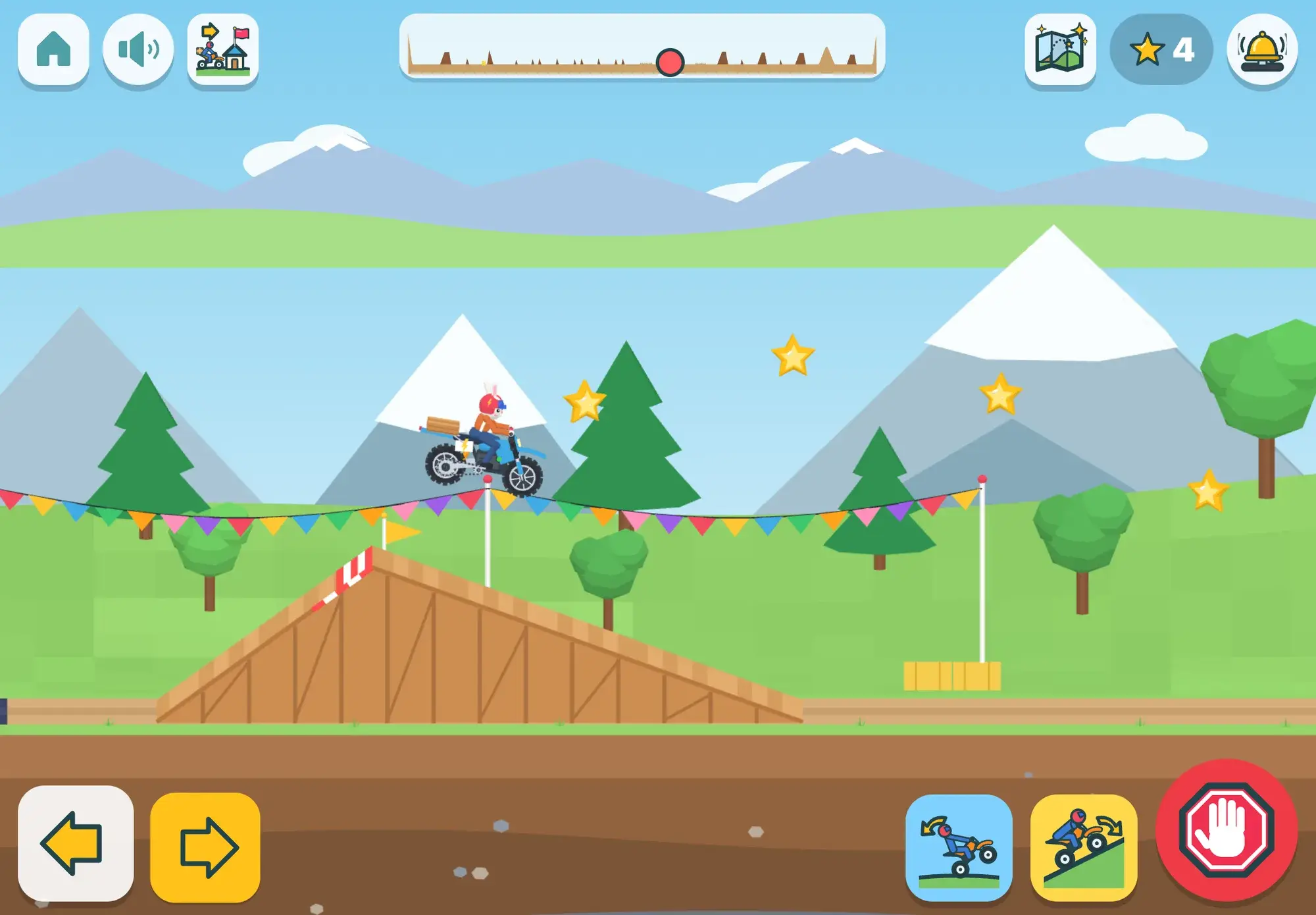
Deliveries by electric dirt bike, and the science of motion in every hill and jump.
Spoken from the first tap, no reading needed, no ads, and progress that stays on your iPad.