7 min read
Coding for kids who can’t read yet: screen-free and app ideas
How 3–6-year-olds can learn sequencing, debugging, loops and functions before they read, with floor games, arrow cards, robot play and picture-based apps.
Read the guide
Helper Town
A cat up a tree? Send the right helper and plan the way there
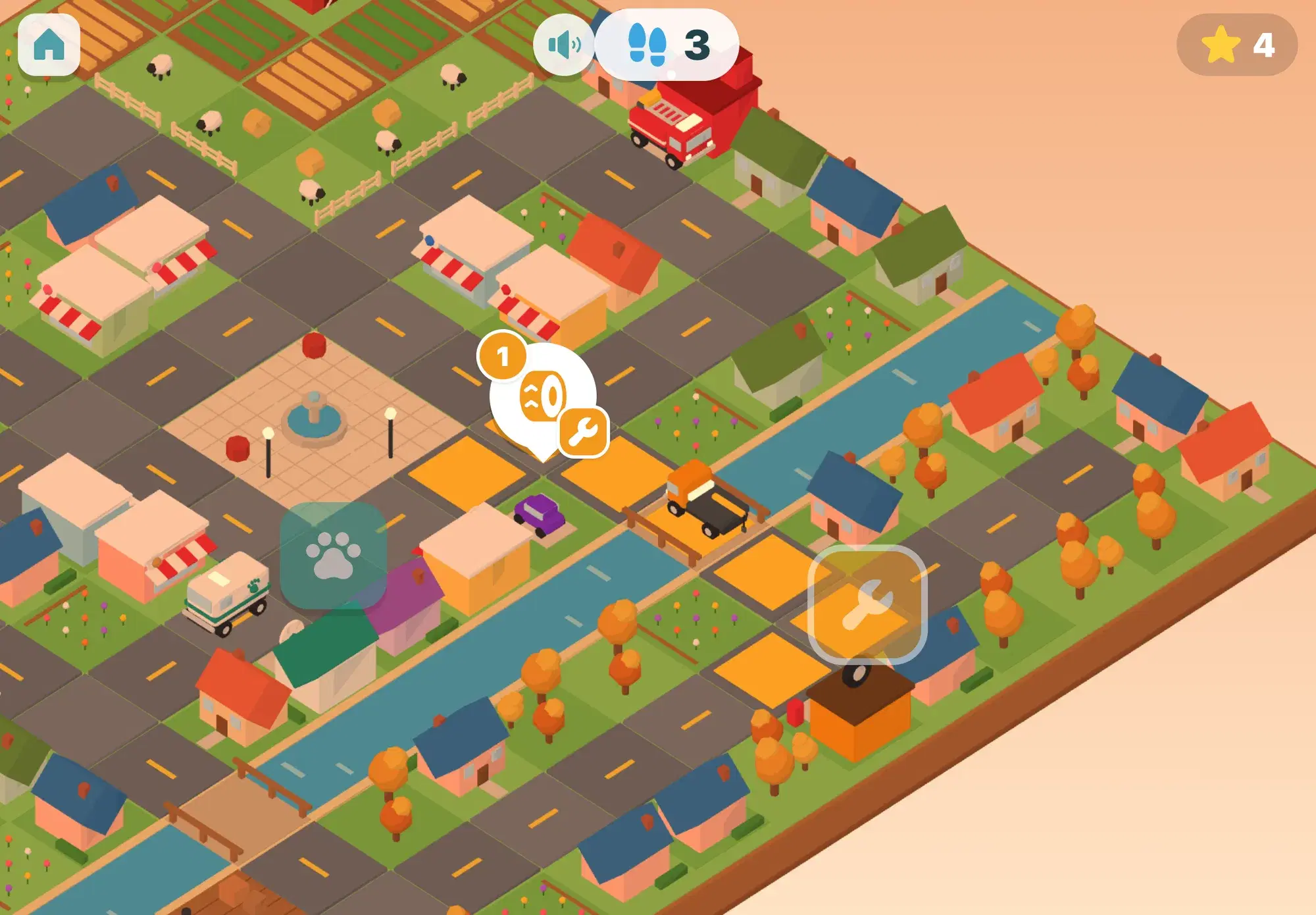
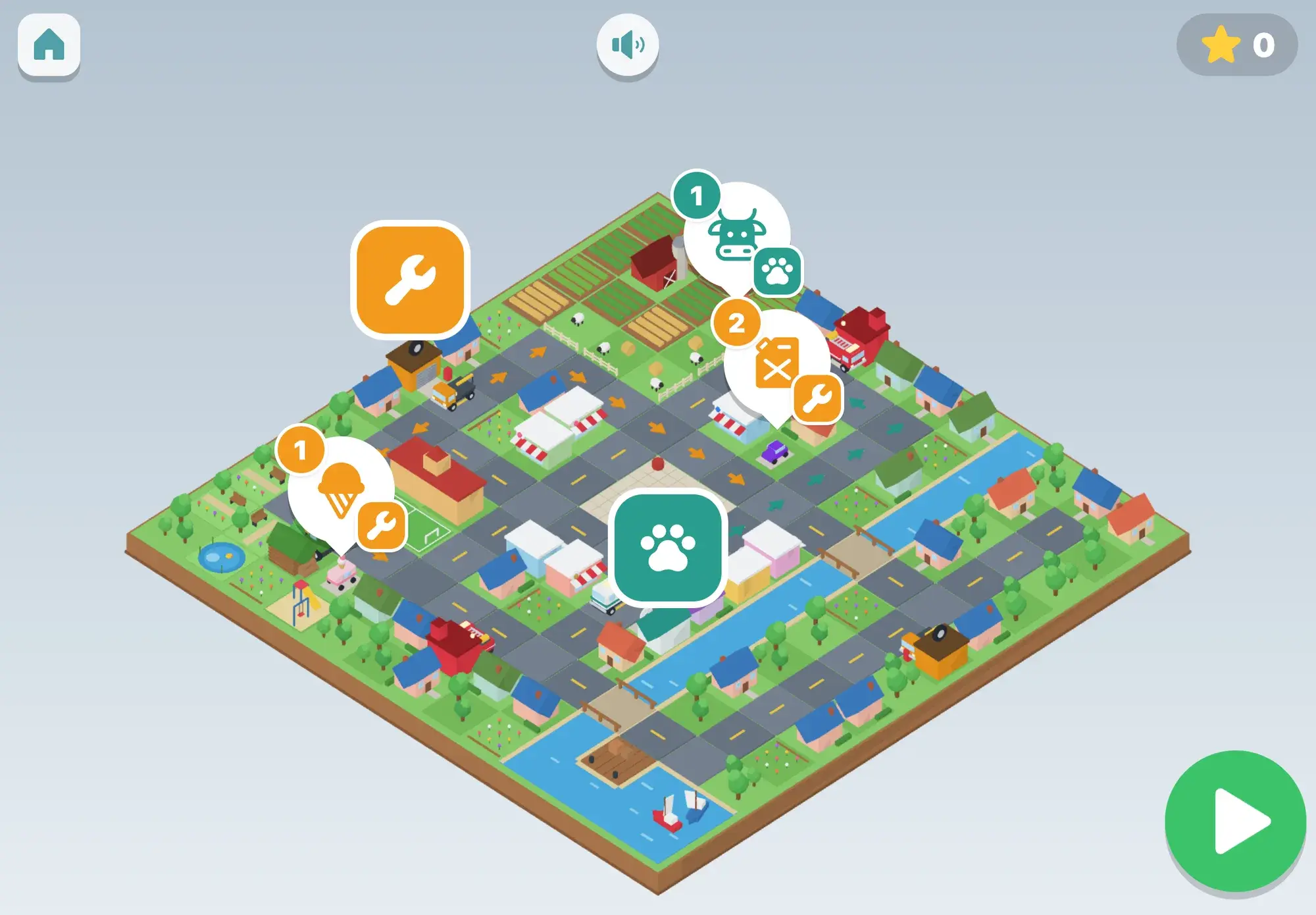
Helper Town is a little 3D town on an island, and it is always the same town, so it becomes a familiar place: a farm with sheep, a park with a pond and a playground, a school, a square with a fountain and shops, and a river with two bridges running down to a harbor. The helpers live at six stations: two fire stations (a fire truck with a long ladder and a water pump), two garages (a tow truck), the vet (an animal van with a ramp) and the park keepers (a little digger).
Friends pop up with a ding, each with a big round button showing what’s wrong: a sleepy cat up a tree, a car with a flat tire, a garden filling with water, a lost puppy, a tree across a lane. Nobody is ever hurt and there is never a fire.
Your child taps a friend to hear what’s wrong and who can help, taps that helper’s station, presses the green button and watches: the fire truck drives there square by square, the ladder goes up and the cat climbs down.
How it plays
One friend and two or three stations of different kinds. A wrong helper explains what it does (“The tow truck! It fixes cars and pulls them.”) and the right station wiggles. Each friend helped earns a star, and one more when the trip took the fewest squares. The very first mission is the fire truck and a cat up a tree, under a rainbow.
Now both fire stations or both garages are open, and one is clearly closer. If your child picks the far one, the road is counted out square by square: “Fifteen squares! That is a long way. Is there one closer?” The near one counts out loud as it drives, so comparing distances becomes counting.
Two friends and one helper: which one is getting worse? “That one is happy to wait a little. Look, the water is getting higher!” Then three friends and two helpers, each doing its own jobs, urgent ones first. Nothing gets worse while your child thinks; water only creeps up while a helper is driving, and never past a little.
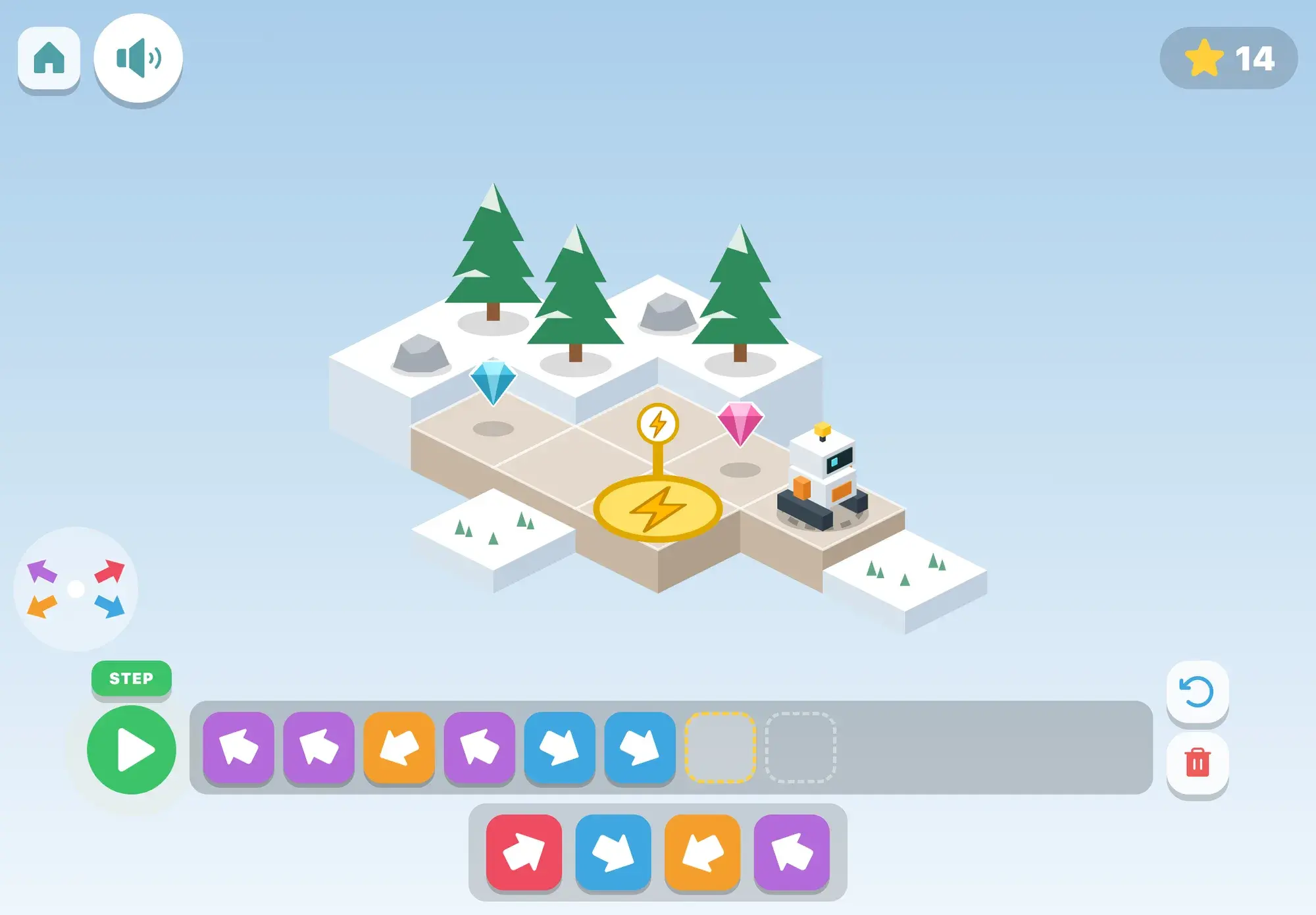
The camera glides in close, and your child taps or slides along the road from the helper to the friend, one square at a time. Next the route becomes a program: arrow blocks first, then forward, turn left and turn right. A program that drives off the road says so and the helper tries again; after two tries, footprints show the way.
One helper and three, then four, jobs that can all wait. Your child taps them in order, sees the planned trip and how many squares it is, can change the order, and presses go. Any shortest order counts. A longer one still helps everyone (“We got there! There is an even shorter way, too.”), and the shortest way is shown afterwards.
Skills
The thinking
Planning ahead and choosing what matters most are executive-function skills (the mental skills for managing goals and actions) that grow quickly between four and seven; on planning puzzles like the Tower of London, children improve a lot over these years (Luciana & Nelson 1998). Practice helps, but mostly with the kind of task practiced: training effects on executive functions transfer narrowly (Diamond & Lee 2011). So this is practice at planning routes and choosing what comes first, not general brain training.
Counting squares is counting practice too, and vehicles are simply something many children this age love. The pacing is brisk: two clean missions open the next rung, and while your child stays clean each further one moves them straight on. No mission repeats the one before, and the town changes its look each time, from morning to evening, spring blossom to autumn leaves, sometimes with a rainbow or ducks on the river.
Away from the screen
Ideas to carry the game into everyday life, no screen needed.
On a walk, let your child plan the way: “Left at the corner, then straight on to the park.”
Make roads on the floor with masking tape and guide a toy car with “forward, turn left, turn right”.
Spot real fire trucks, tow trucks and delivery vans and talk about the job each one does.
Before errands, ask which stop should come first, and why (frozen food last, so it doesn’t melt).
FAQ
No. Nobody is ever hurt and there is never a fire. The problems are things like a cat up a tree, a balloon on a roof, a flat tire or a bunny out of its garden, and the fire truck’s jobs are ladders and pumping water.
Partly. The first rungs are about choosing the right helper and what comes first. Later your child programs the route, first with arrow blocks and then with forward, turn left and turn right, which is the sequencing at the heart of early coding.
It opens from age 4, based on your child’s birth month, and a parent can show it earlier or hide it. The early rungs only ask for the right helper; drawing and programming routes come later.
No. Nothing gets worse while your child is thinking. Problems only change a little while a helper is already driving, and if your child goes quiet, the friends fidget and the voice gives a nudge.
Guides
How 3–6-year-olds can learn sequencing, debugging, loops and functions before they read, with floor games, arrow cards, robot play and picture-based apps.
Read the guide
More to explore
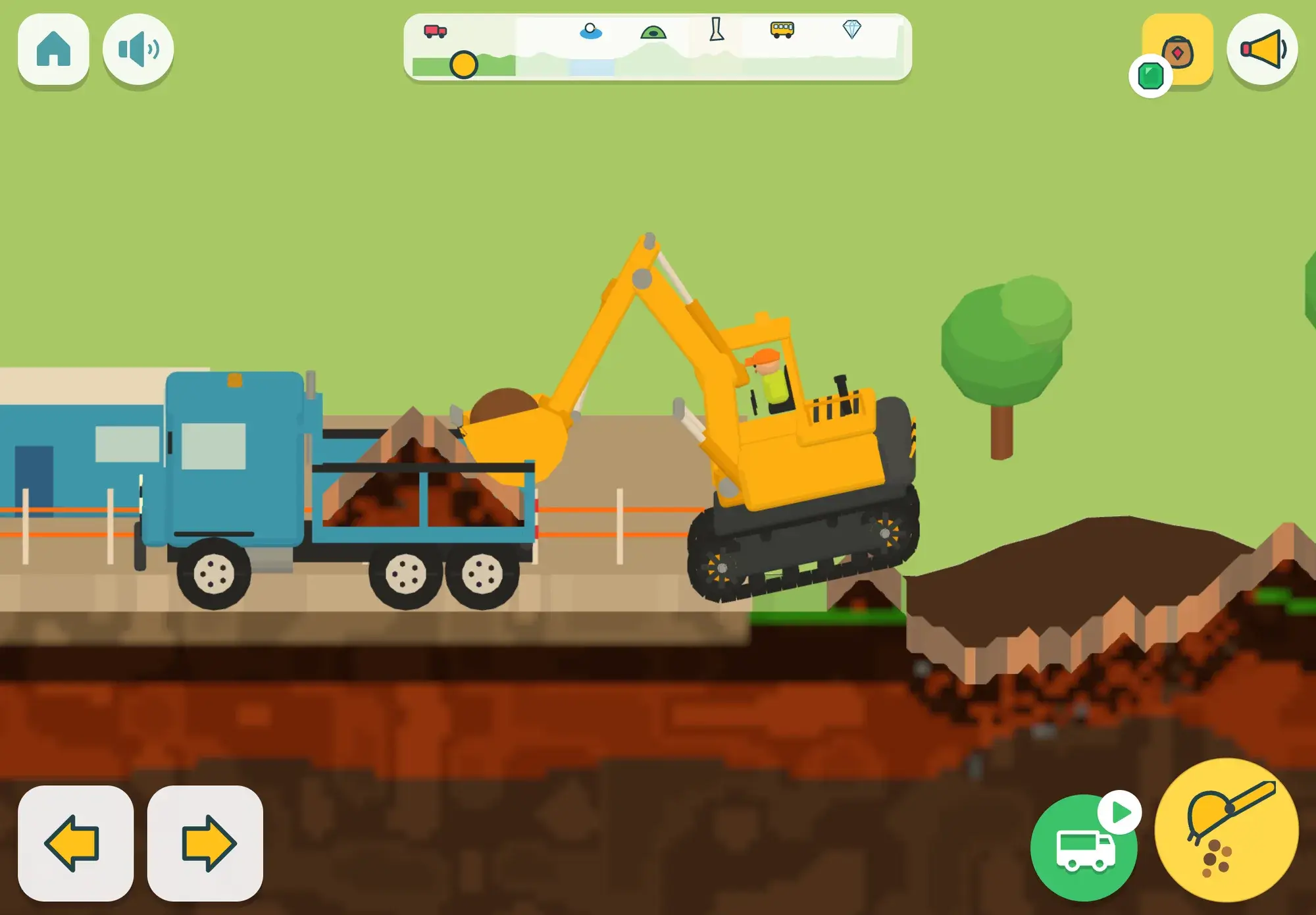
A digger to drive yourself, a world to explore, and no levels at all.
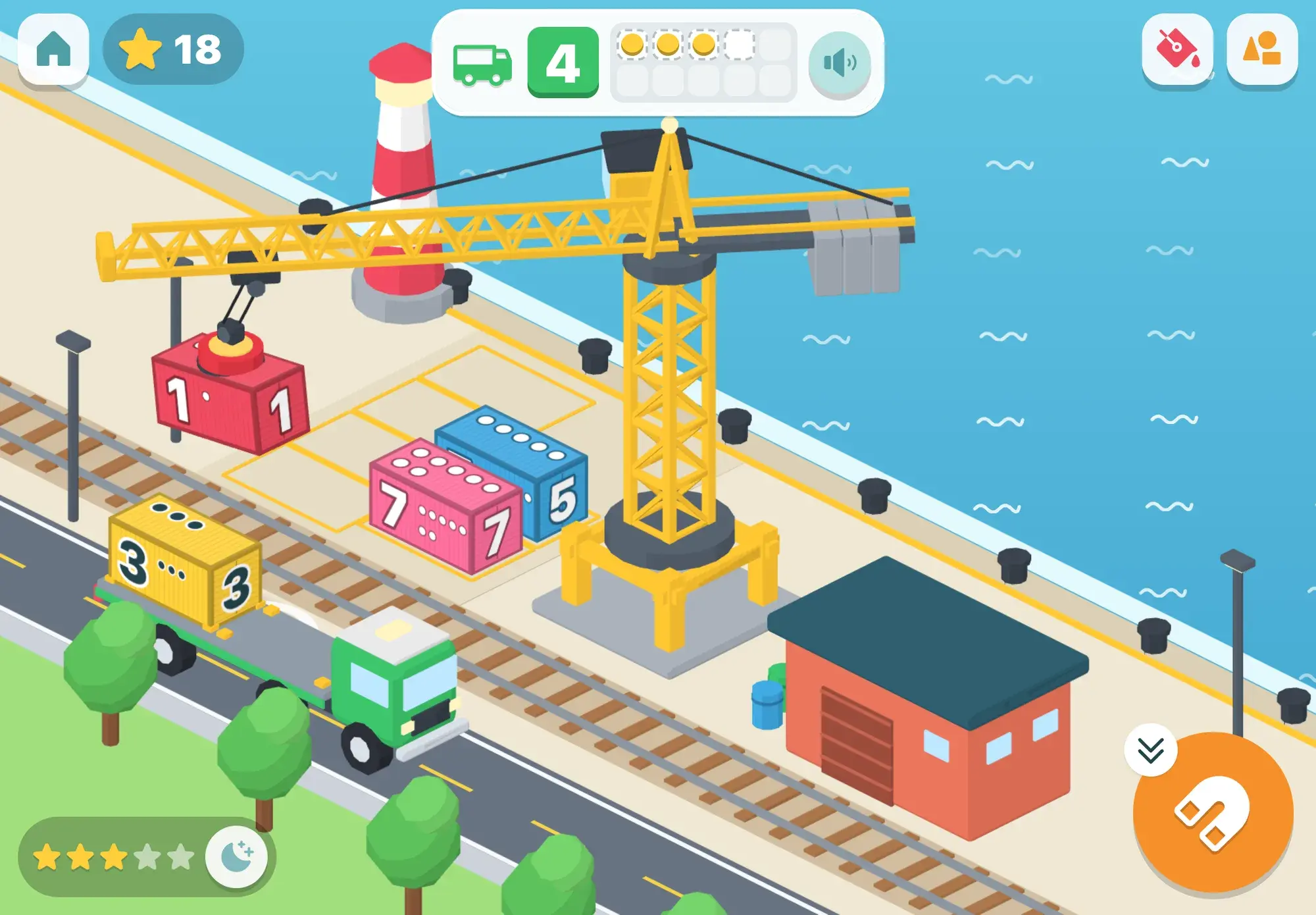
Spoken from the first tap, no reading needed, no ads, and progress that stays on your iPad.