7 min read
STEM activities for preschoolers: science and engineering through play
Easy STEM activities for 3 to 6 year olds: build bridges, dig and pour, look through a magnifier, grow plants and race cars down ramps.
Read the guide
The plant lab
Plant seeds, keep the gauges in the green, and pick what grows
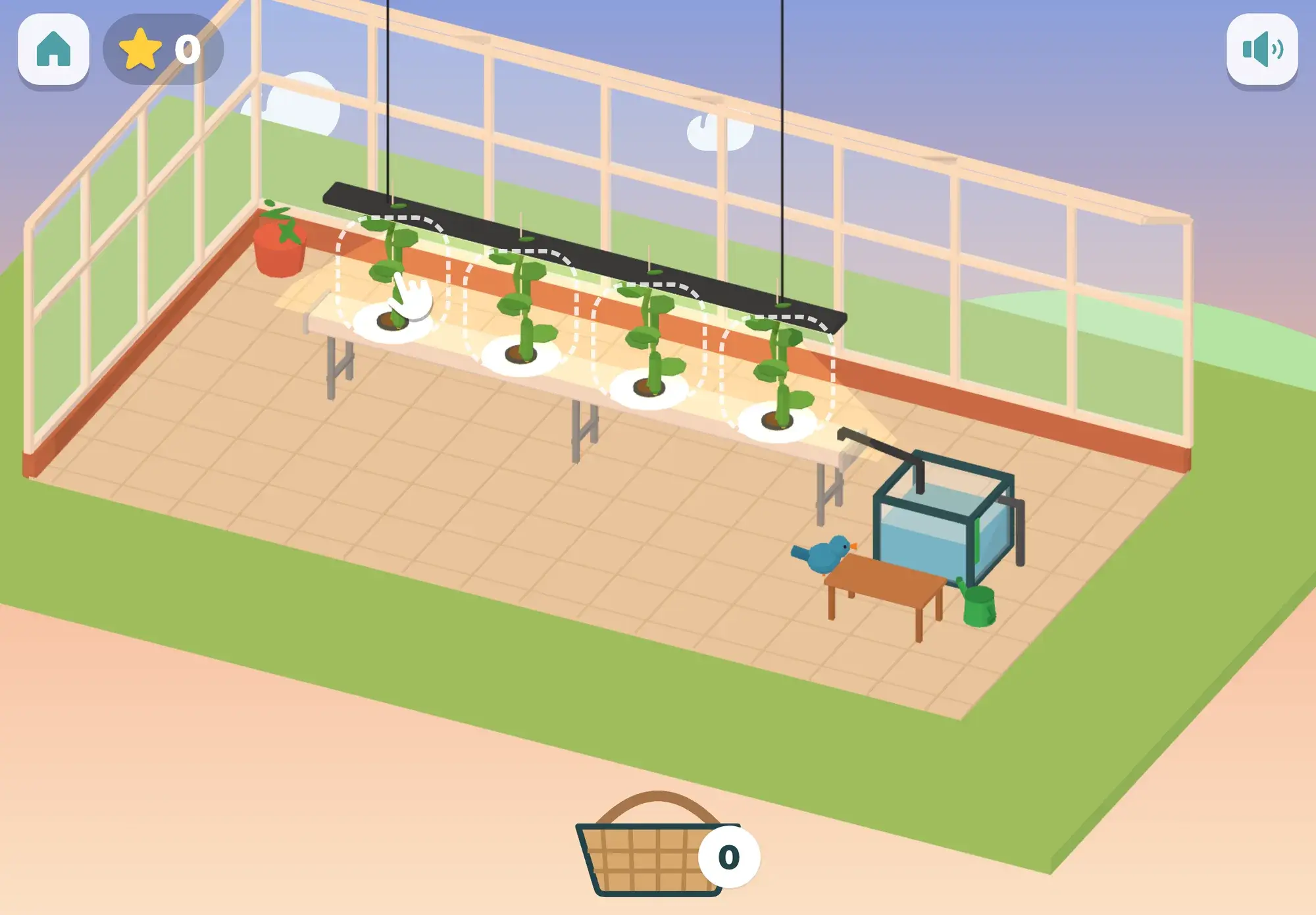
The plant lab is a bright glass greenhouse where plants grow in little pots with their roots in water, fed from a tank, under a grow lamp. Your child chooses a seed packet (lettuce, basil, chili peppers, tomatoes or cucumbers), taps each pot to plant a seed, and then checks the gauges along the bottom. Each gauge has a green “just right” band, and the job is to keep the needles in the green.
Then they press fast-forward and watch. Days pass in seconds, with a sun filling in for each one: the plants grow, the tank goes down and the plant food gets used up, as in a real tank. When something leaves the green, the days stop, the gauge wiggles, the plants show it (droopy when thirsty, pale and thin in the dark, brown leaf tips with too much food) and the voice says how to fix it. The moment it’s fixed, they perk up.
When the plants are ripe, your child taps them to pick them into a basket, counted out loud (“We picked twelve tomatoes!”), and can share them with animal friends at a little market.
How it plays
Only the water gauge to watch at first. The tank starts low, or empty, or half full so it runs low along the way. Your child holds the green jug and it tips over the tank, pouring for as long as they hold it, until the needle is back in the green.
The lamp starts off, too near for lettuce or too far for the others, and arrows move it nearer or further away. Then the tank starts with plain water or far too much food. One squeeze of the bottle adds one drop, and too much is washed out by pouring fresh water into a full tank: not too little, not too much.
Two jars with the same plant, each with its own lamp. Your child chooses what to test, light or food, taps the jar that goes without, fast-forwards, then taps the bigger plant and shows why with a tap on the lamp or the food bottle. “We changed only one thing, so we know what made the difference. That is a fair test!”
All four gauges now, including a test strip for water that is too sour or too soapy. A sour drop or a soapy drop changes the strip’s color and moves a marker along the color chart. This rung grows tomatoes, chili peppers or cucumbers, because they take longer and need more care.
Six pots: two right under a lamp, two a step away and two at the shady end. Your child plants each kind where they think it belongs, and a plant in the wrong spot says it wants more light or a little shade. The last rung shows the real values beside the gauges (liters, EC for food strength, pH and daily light), which a button can hide again.
Skills
The thinking
What plants need (water, light, nutrients) and growing them from seed are in early-years science curricula, and “fair tests” are the core of it later on. Children of six and seven can already pick a test that tells two ideas apart in a simple setting (Sodian, Zaitchik & Carey 1991), but changing only one thing at a time (controlling variables) mostly develops later and is taught directly to seven- to ten-year-olds (Chen & Klahr 1999). That is why the experiments come halfway up the ladder, are always set up with just one difference, and are answered by tapping.
Care is taught by keeping things right while your child watches, never by guilt. Nothing dies, and nothing happens while they are away; children wait far longer for a reward when earlier promises have been kept (Kidd, Palmeri & Aslin 2013). The numbers are typical values from hydroponic growing charts, and the simplifications are listed in the parent area: game days are short (lettuce is ready in 8 days instead of about 5 weeks), and burnt leaf tips heal, while in a real plant only new leaves grow back healthy.
Away from the screen
Ideas to carry the game into everyday life, no screen needed.
Grow a pot of basil on a sunny windowsill together and check on it every day.
Try a fair test: two cups of cress seeds, one on the windowsill and one in a dark cupboard, both watered the same.
When a houseplant droops, let your child water it and look again later to see it perk up.
At a garden center, find “full sun” and “shade” on plant labels together and talk about why they differ.
FAQ
No. Nothing dies and nothing is lost, and there is no daily upkeep. A plant with something off just grows slower, and looks well again as soon as it is put right.
Your child only sees gauges with a green band, plants that show how they are doing, and a voice that says what to do. The real measurements appear only on the last rung and can be hidden. The lab opens from age 5, based on birth month, and a parent can show it earlier or hide it.
An experiment where only one thing is different, so you know what caused the result. Here two jars hold the same plant, and only the light or the food changes. Setting that up alone usually comes later in school, so the game sets it up and your child taps to answer.
Not exactly. “Plant food” is how shops label the bottles, and the game uses the same words. Strictly, plants make their own food from light, and the minerals in the bottle are more like vitamins, which is worth explaining if your child asks.
Guides
Easy STEM activities for 3 to 6 year olds: build bridges, dig and pour, look through a magnifier, grow plants and race cars down ramps.
Read the guide
More to explore
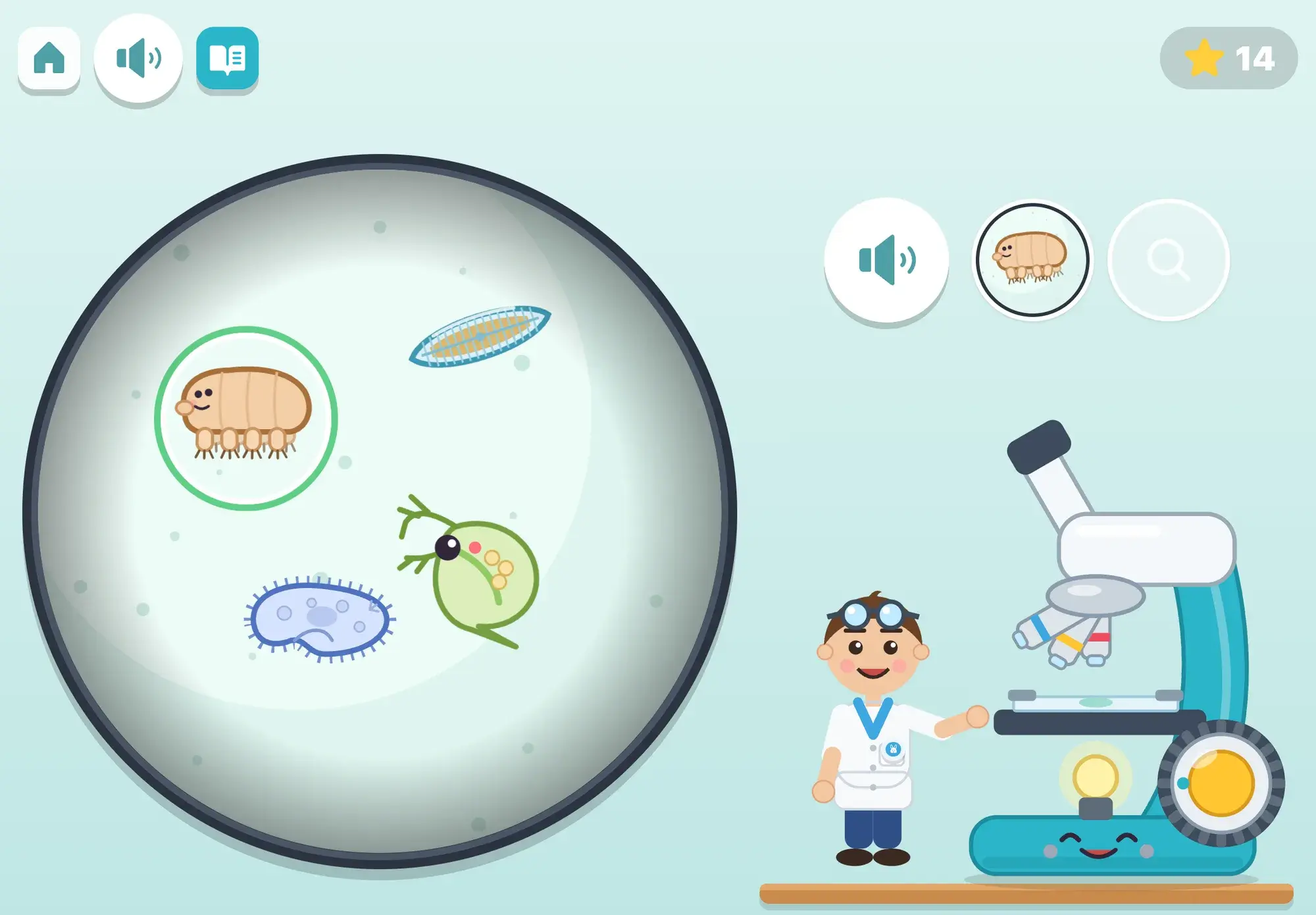
Turn the focus knob, catch a water bear, and find out what soap does.
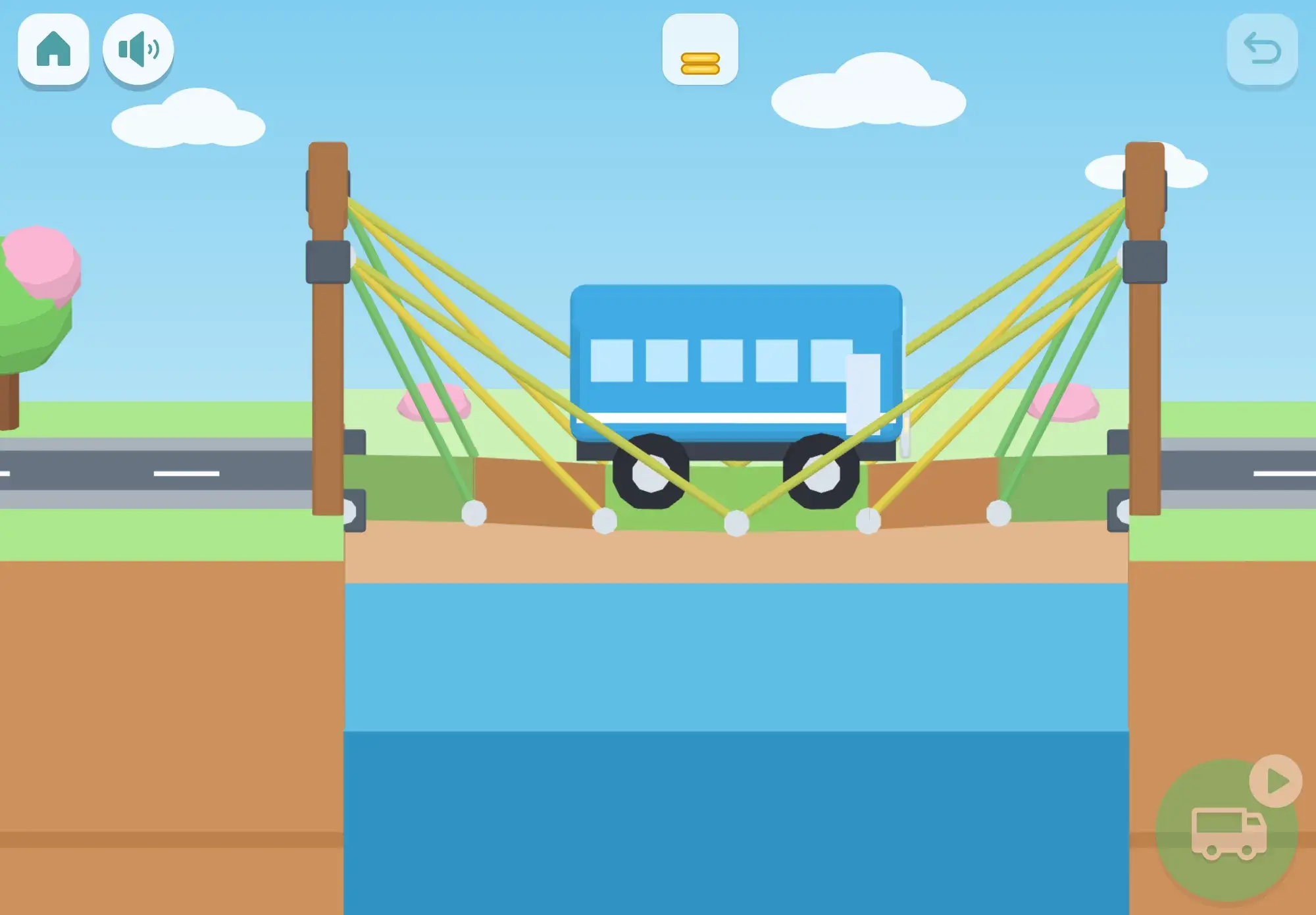
Join the dots, send the truck across, and see what happens
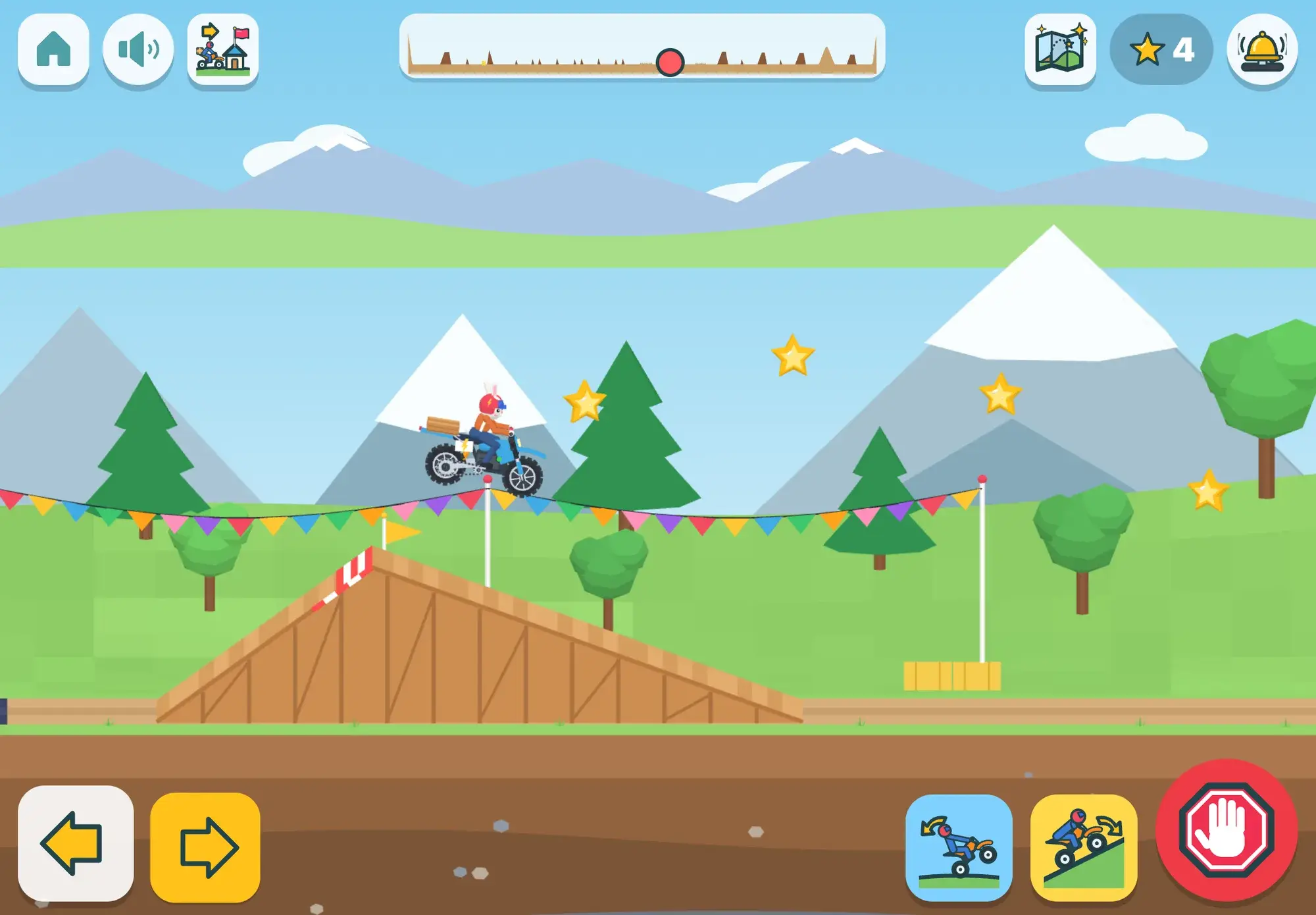
Deliveries by electric dirt bike, and the science of motion in every hill and jump.
Spoken from the first tap, no reading needed, no ads, and progress that stays on your iPad.